Emily · 1 / 7
Chapter I: The Village & Departure
Beneath the suffocatingly beautiful weight of a thousand generations, a watchful girl prepares to trade the safety of the known for the terrifying promise of the horizon.
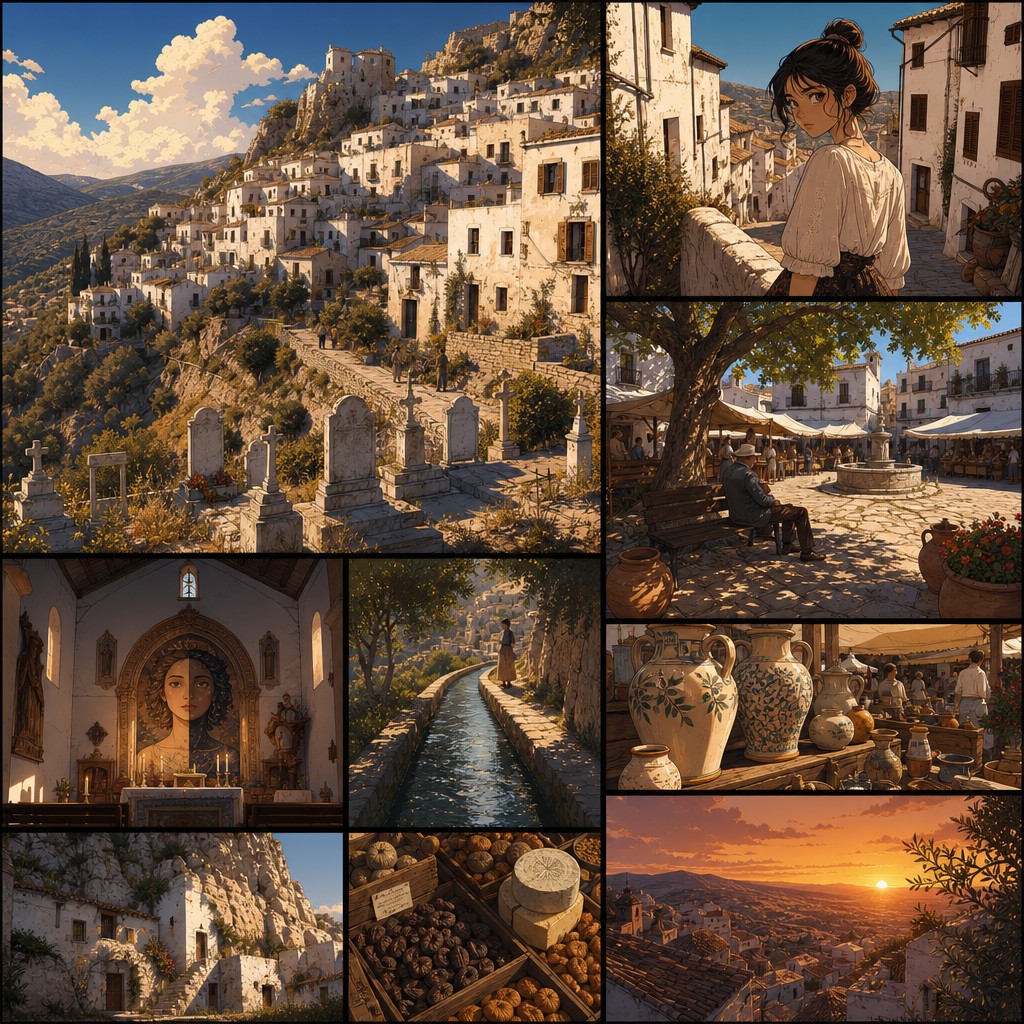
Alcaverde clings to the limestone hills like an ancient, whitewashed memory. It is a place of breathtaking beauty, where water rights are more sacred than church law, and where a thousand generations have left their indelible mark. Yet, for all its warmth, its completeness feels like a beautifully constructed cage.
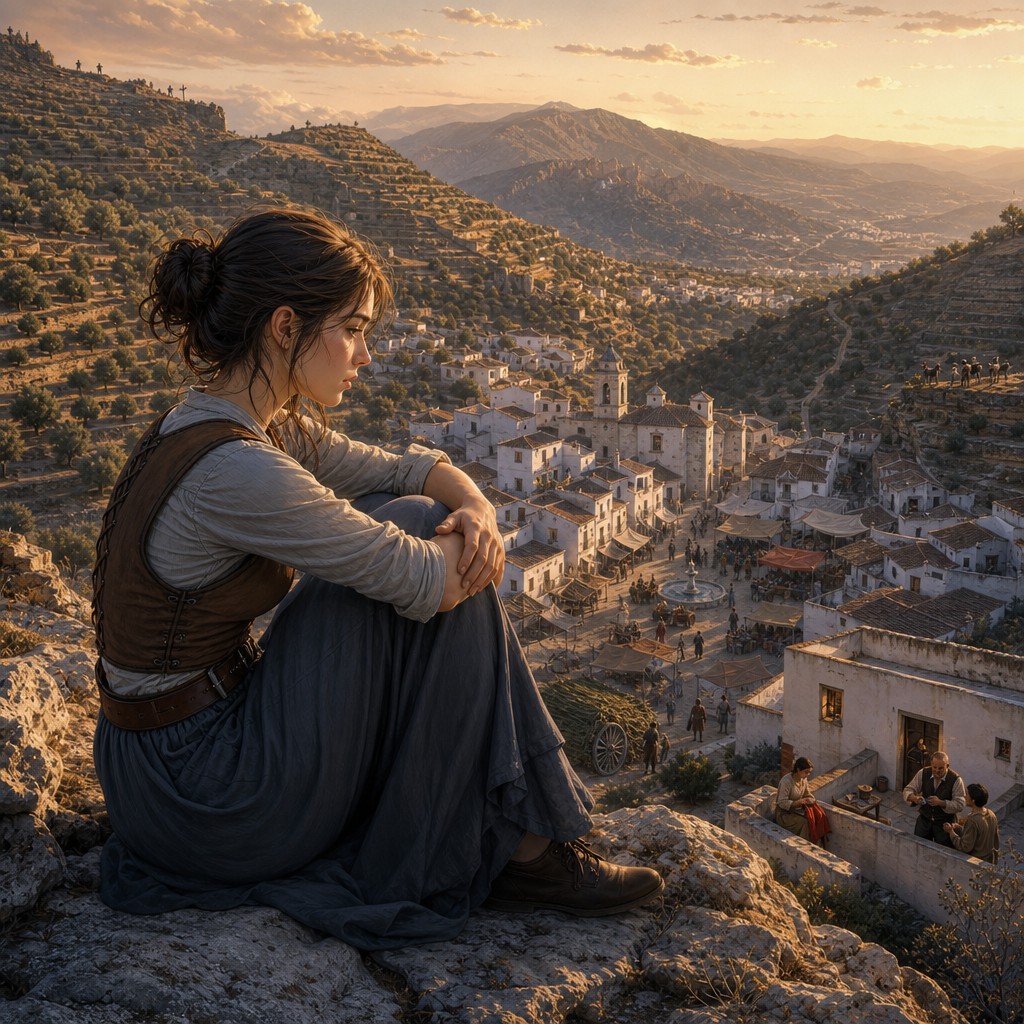
Standing on the high ridge, Emily looks down at the valley of her youth. Every path and olive grove is intimately known, but she realizes she is entirely visible to the village below. Here, community is a suffocating embrace, a landscape where every eye acts as a silent sentry.
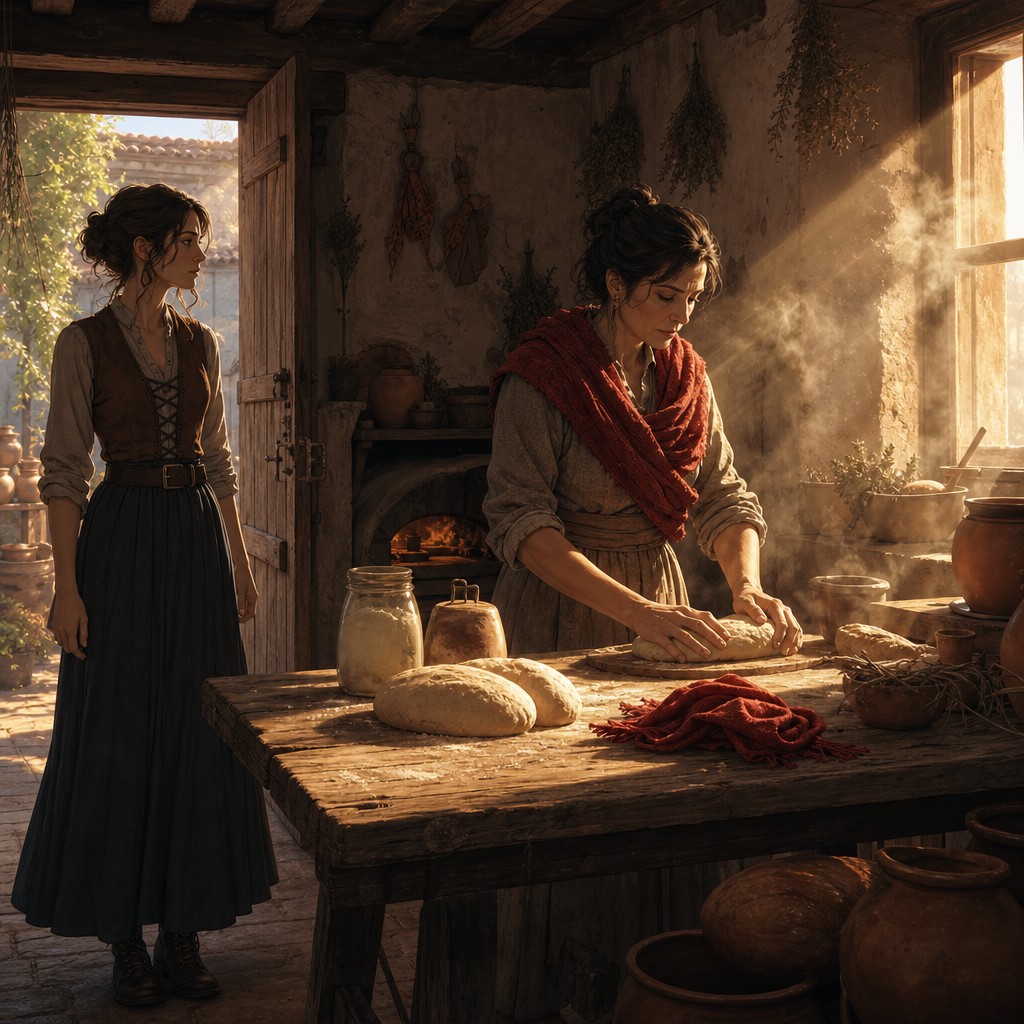
In the pre-dawn quiet of the kitchen, Emily and Catalina share the wordless language of baking bread. Catalina's hands move with absolute precision, kneading love and sorrow into the dough.
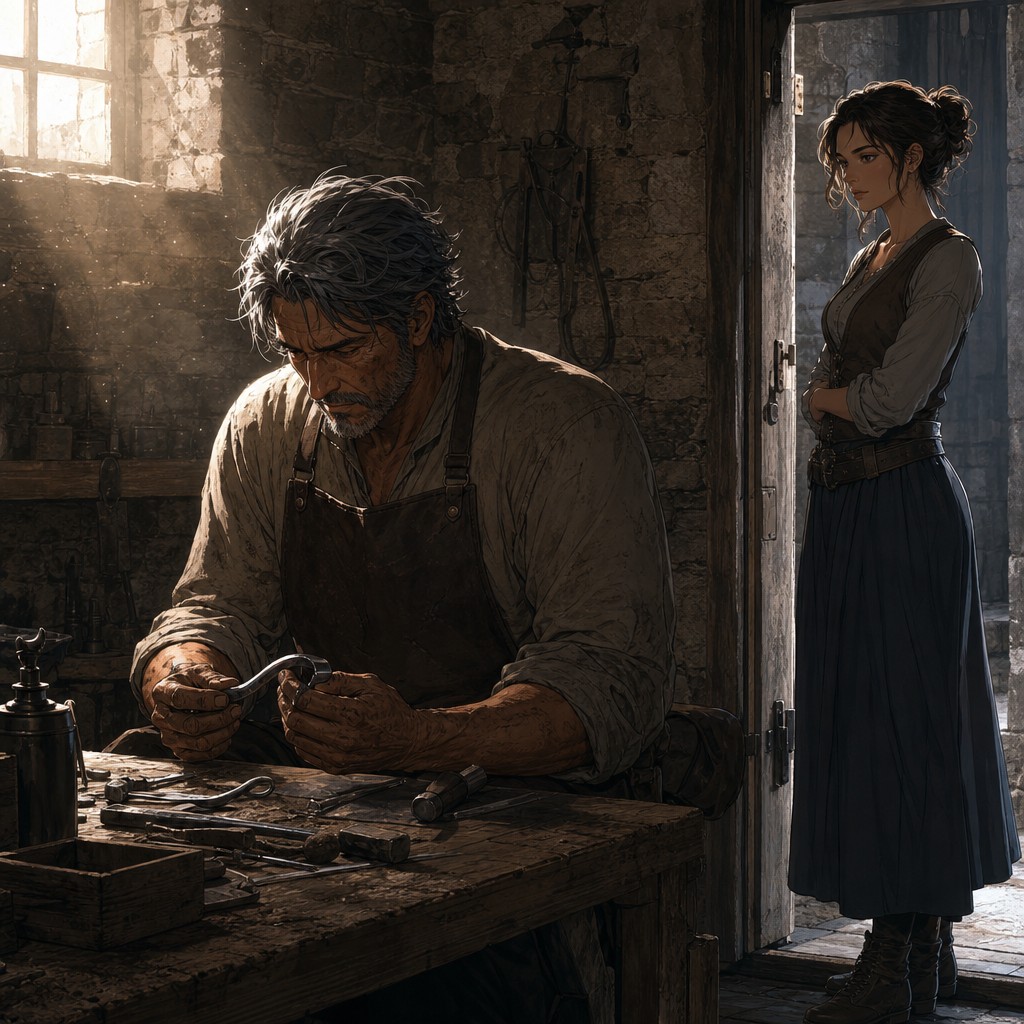
Through the doorway of the workshop, Emily watches her father, Tomás, his hands stained with the oil of a hundred repairs. He tests the joint of a broken tool with trembling fingers, unable to speak the depth of his affection. His meticulous craftsmanship is his only vocabulary for a love that fears her departure.
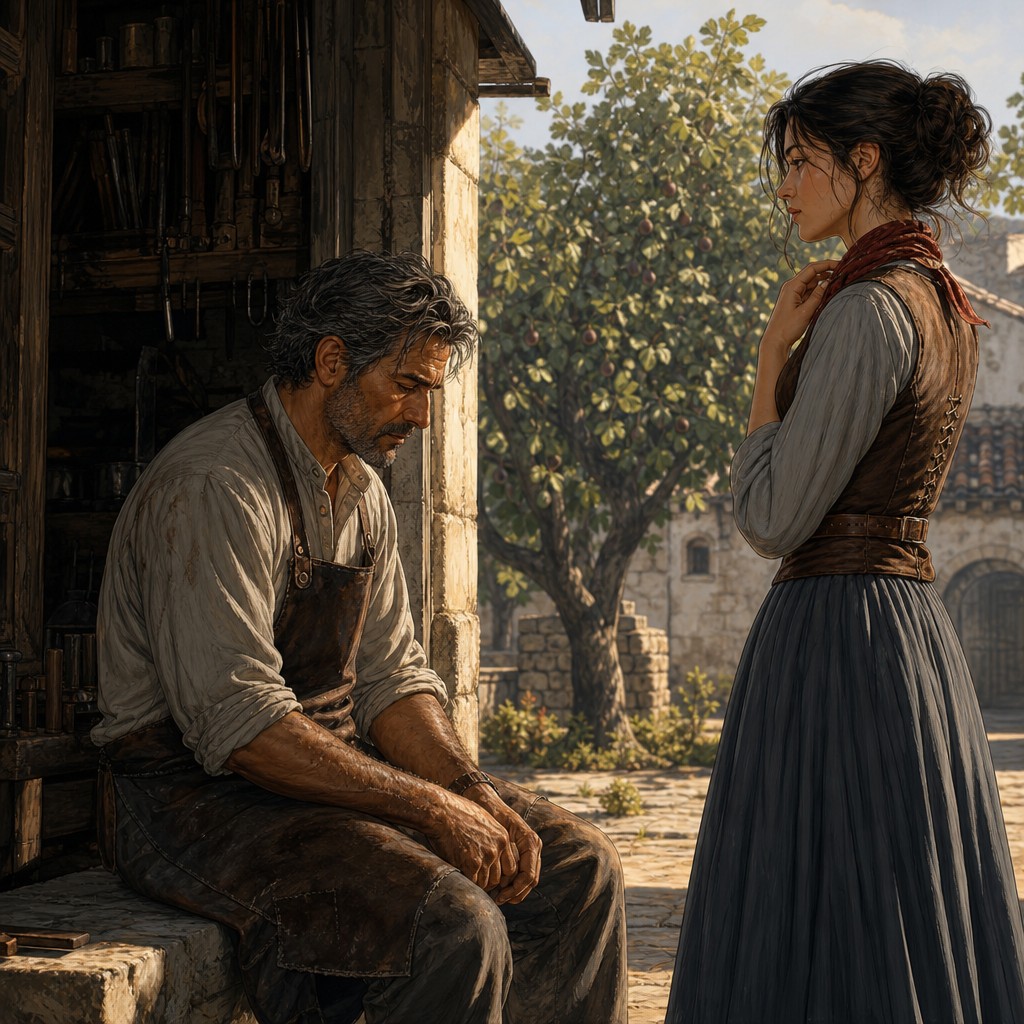
Resting on the worn stone bench, Emily finally speaks the truth that has haunted her quiet moments. She confesses her hunger for the vast world beyond the Caldera Lands, a desire too massive to be contained within the valley's steep walls. It is a declaration of independence, terrifying and profoundly necessary.
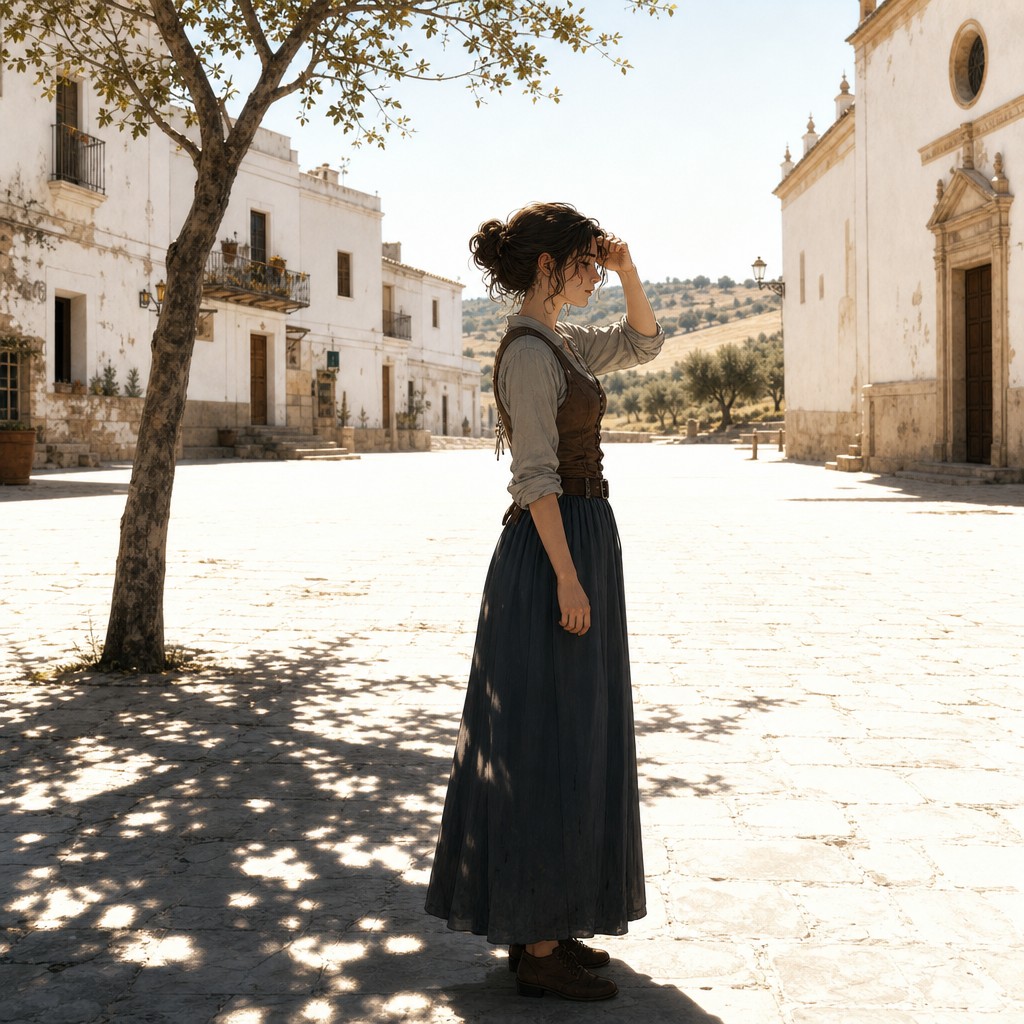
The harsh Mediterranean noon flattens the village, bleaching the shadows from the Plaza de la Tinaja. Emily stands motionless in the oppressive light, her mind entirely consumed by the sprawling, unmapped world waiting just over the horizon. The glare illuminates her singular, unyielding resolve to go.
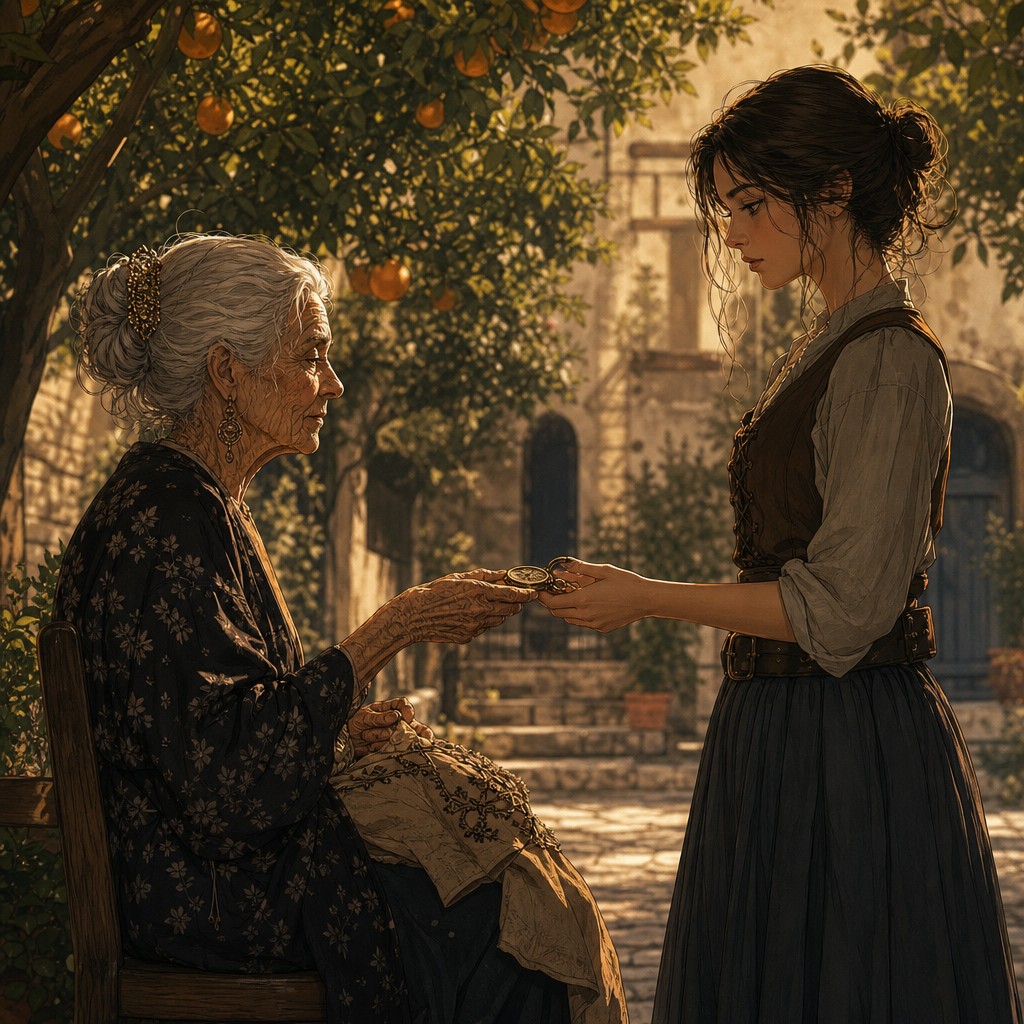
La Rosalía's weathered fingers trace Emily's face, reading the wanderlust etched in her granddaughter's bones. "You are too large for this place," she says, pressing a broken brass compass into Emily's palm. It will not point true north, but it will forever remind her to trust the unwavering compass of her own heart.
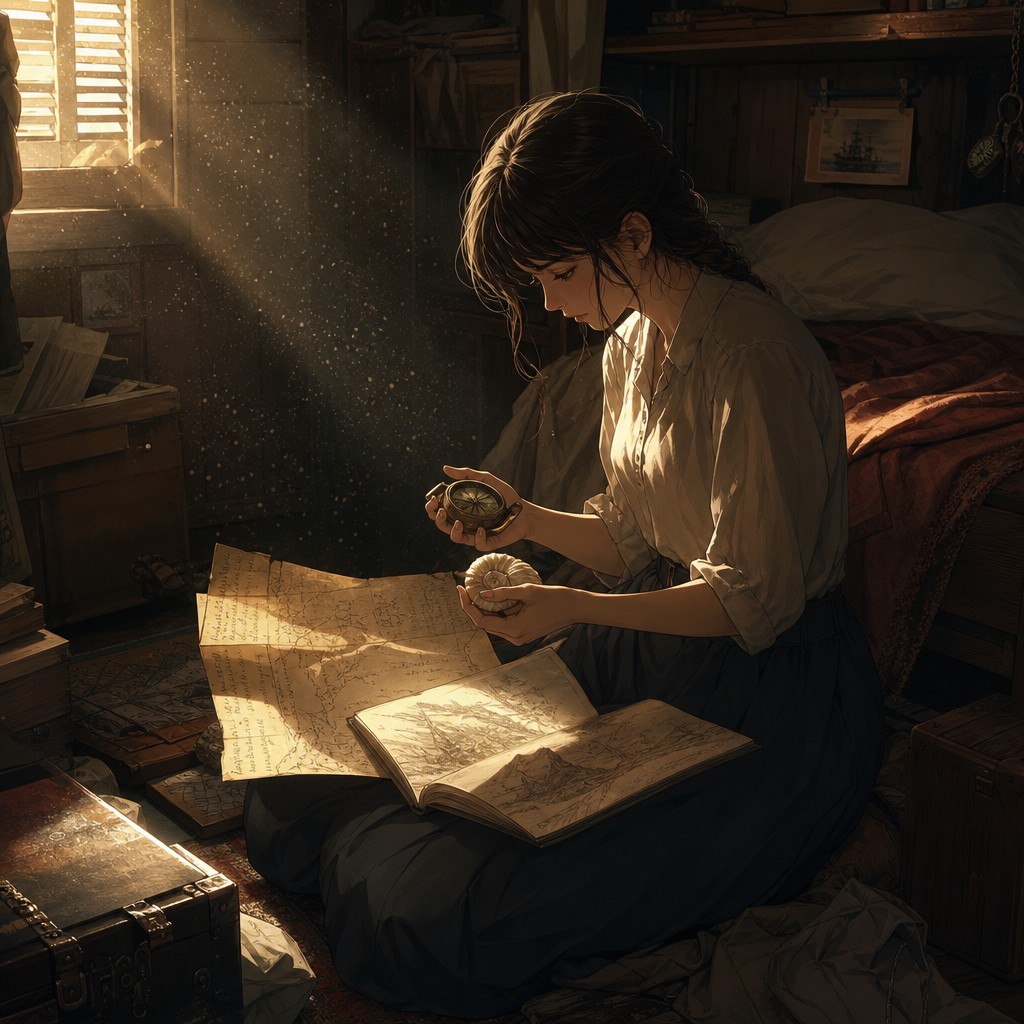
In the quiet dimness of her room, Emily gathers her relics, meticulously organizing the maps, tools, and heavy wools she will need. Every item placed into her pack carries the physical weight of her impending departure. The preparation is a quiet ritual of severing ties, making the abstract dream an undeniable reality.
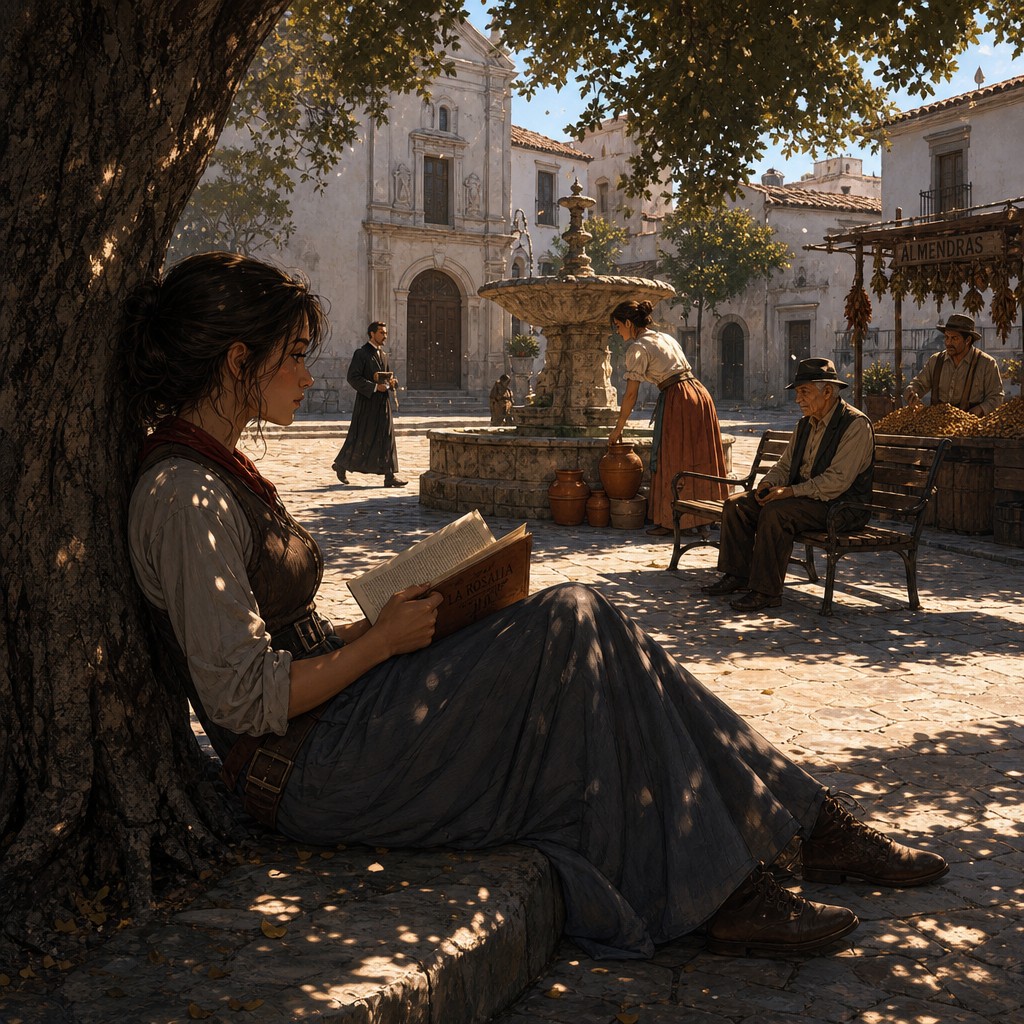
In the calm before the storm of her departure, Emily walks the village paths with new eyes. She looks at the familiar stones, the ancient fig tree, and the worn faces of her neighbors not as permanent fixtures of a cage, but as memories she is already beginning to mourn.
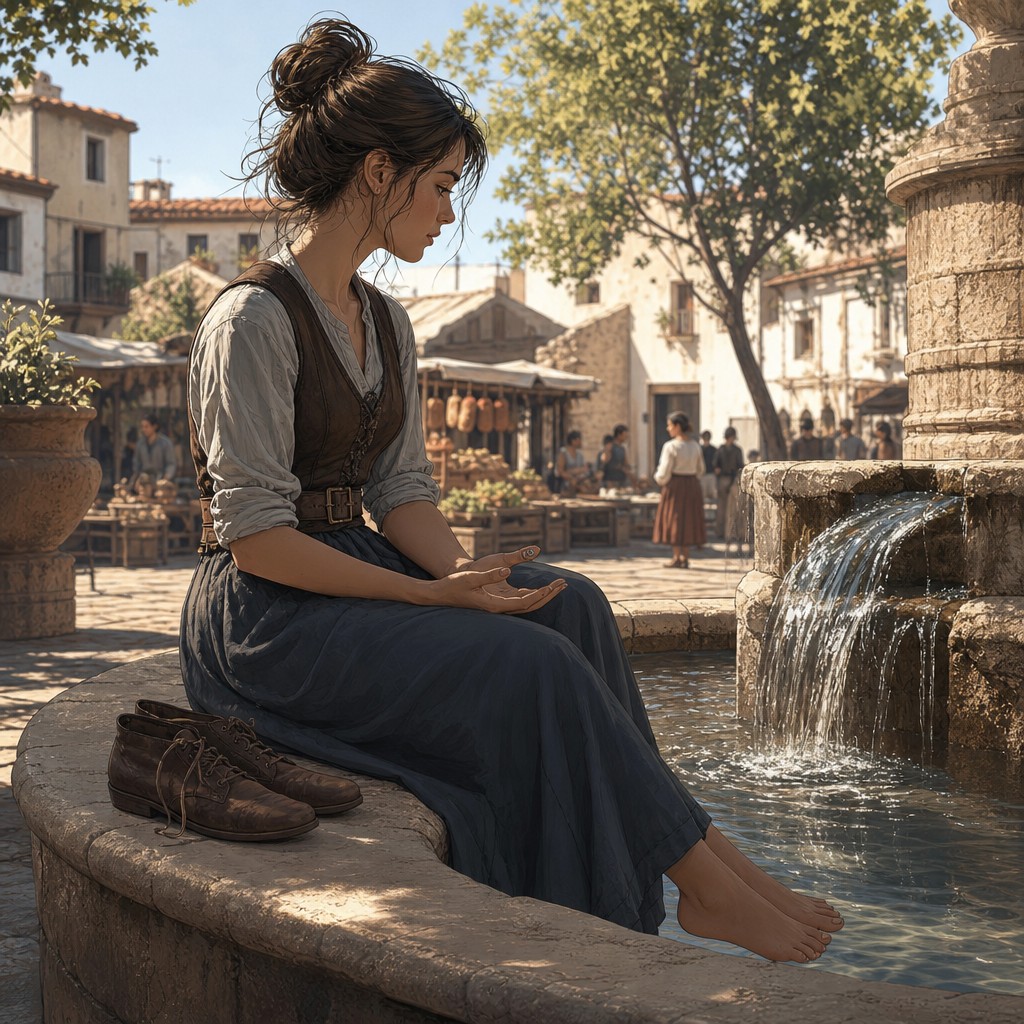
Sitting by the ancient fountain, she listens to the familiar, murmuring rhythm of the spring. A sudden ache catches in her throat as she realizes how deeply she loves this place. Her departure is not born of hatred for her home, but of a necessity to outgrow its complete, suffocating perfection.
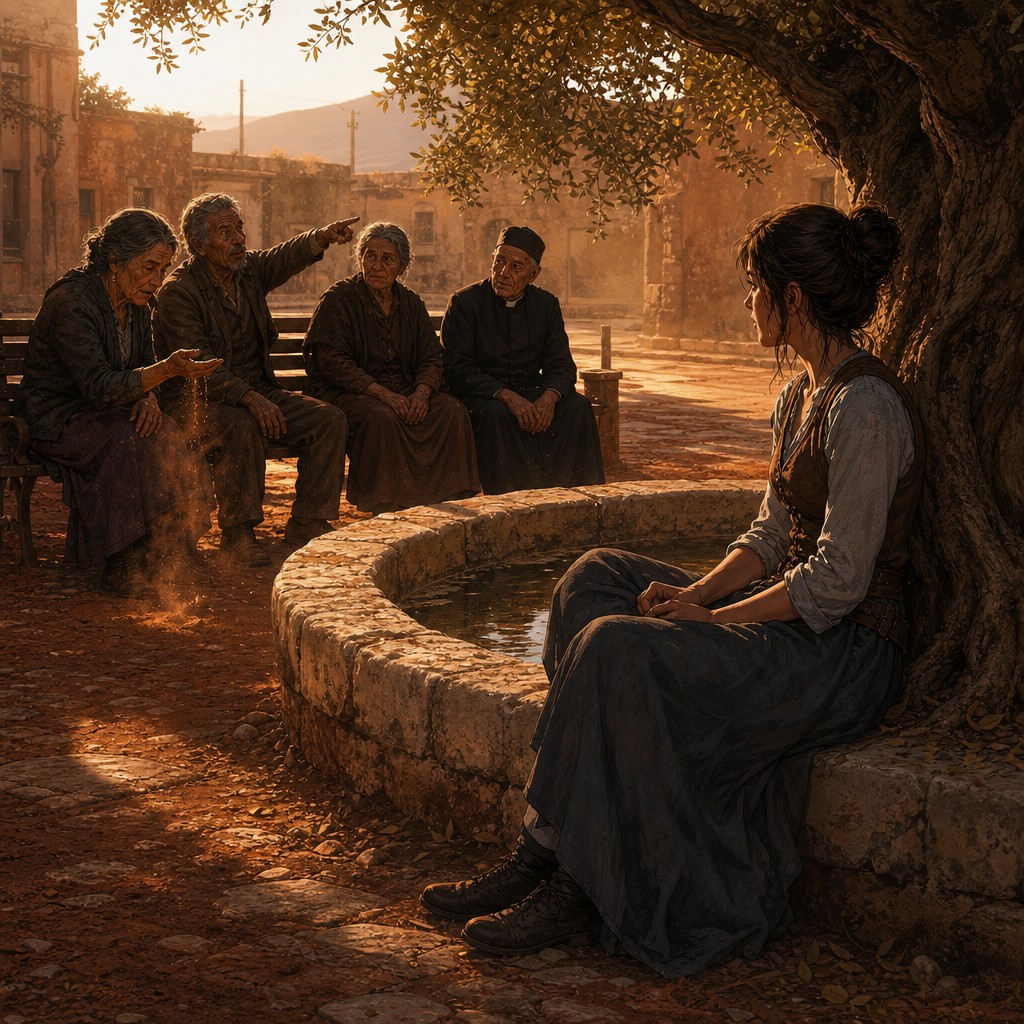
Nearby, the village elders sit in the shade, their voices carrying fragments of old travel stories and youthful adventures beyond the ridges. It is as if the village senses her plans, offering up these ancient echoes of a larger, wilder world just when she needs the courage to step into it.
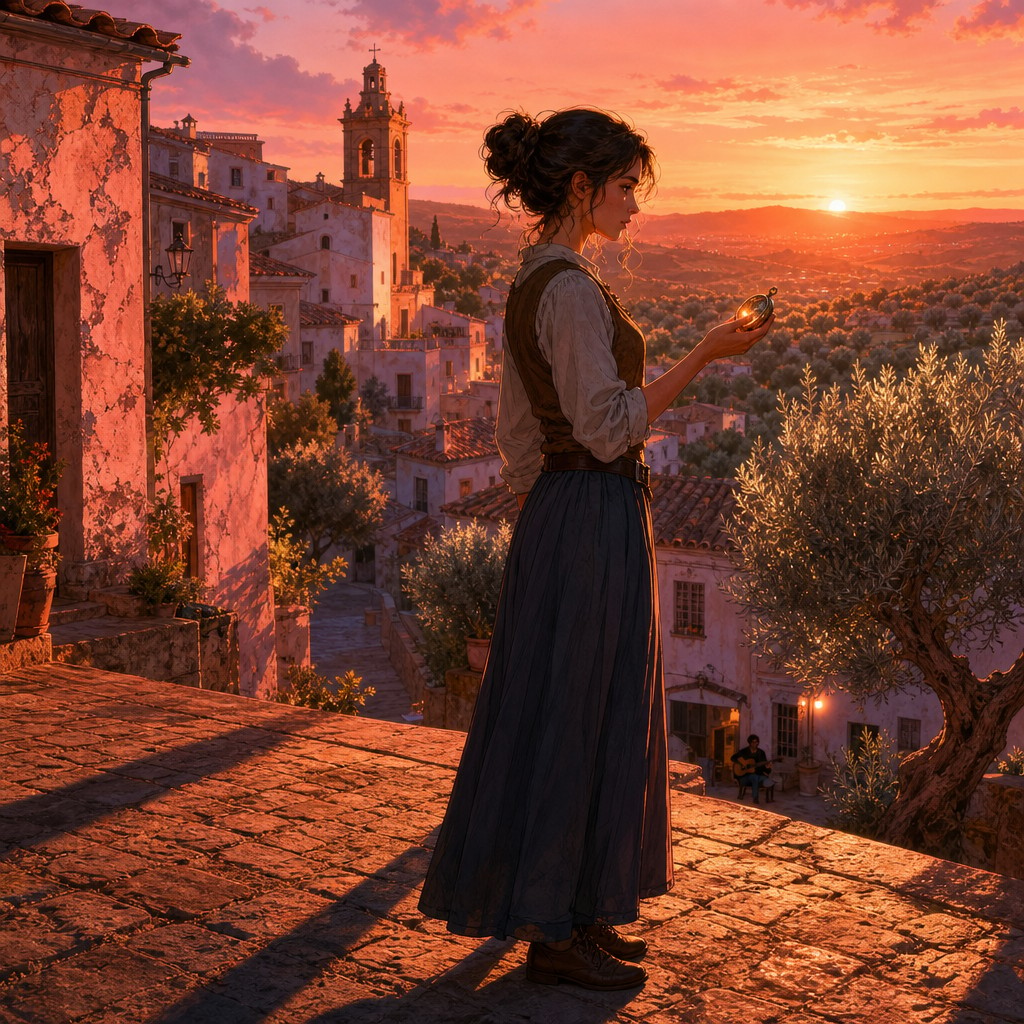
The day evaporates with startling speed, the whitewashed walls transfigured into a luminous, pulsing pink by the setting sun. As dusk settles over the Caldera, Emily stands alone with her racing thoughts. The waiting is over; tomorrow, the vast world finally begins.
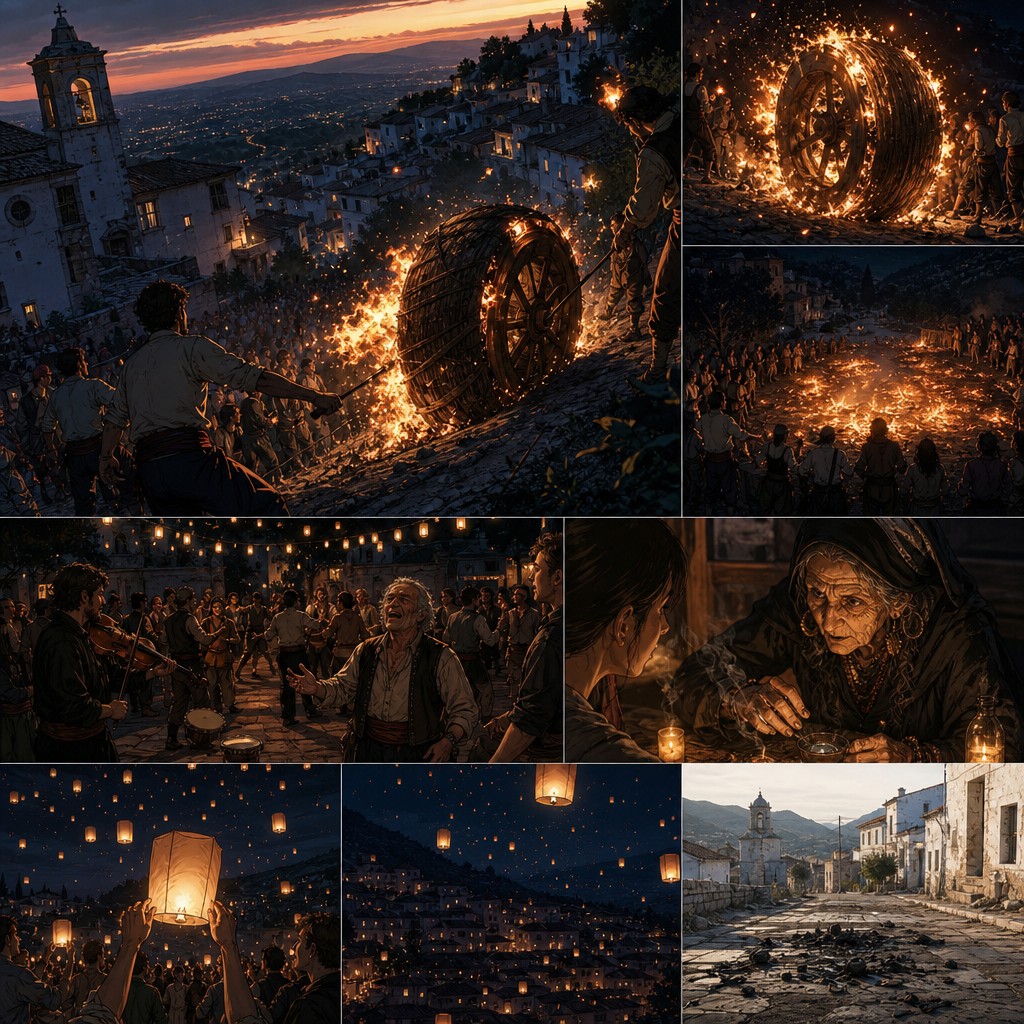
It is the night of El Ruedo, the annual midsummer festival, and the air is thick with anticipation and woodsmoke. It serves as a fiery, chaotic backdrop to Emily's final night in Alcaverde—a celebration that feels entirely meant for her.
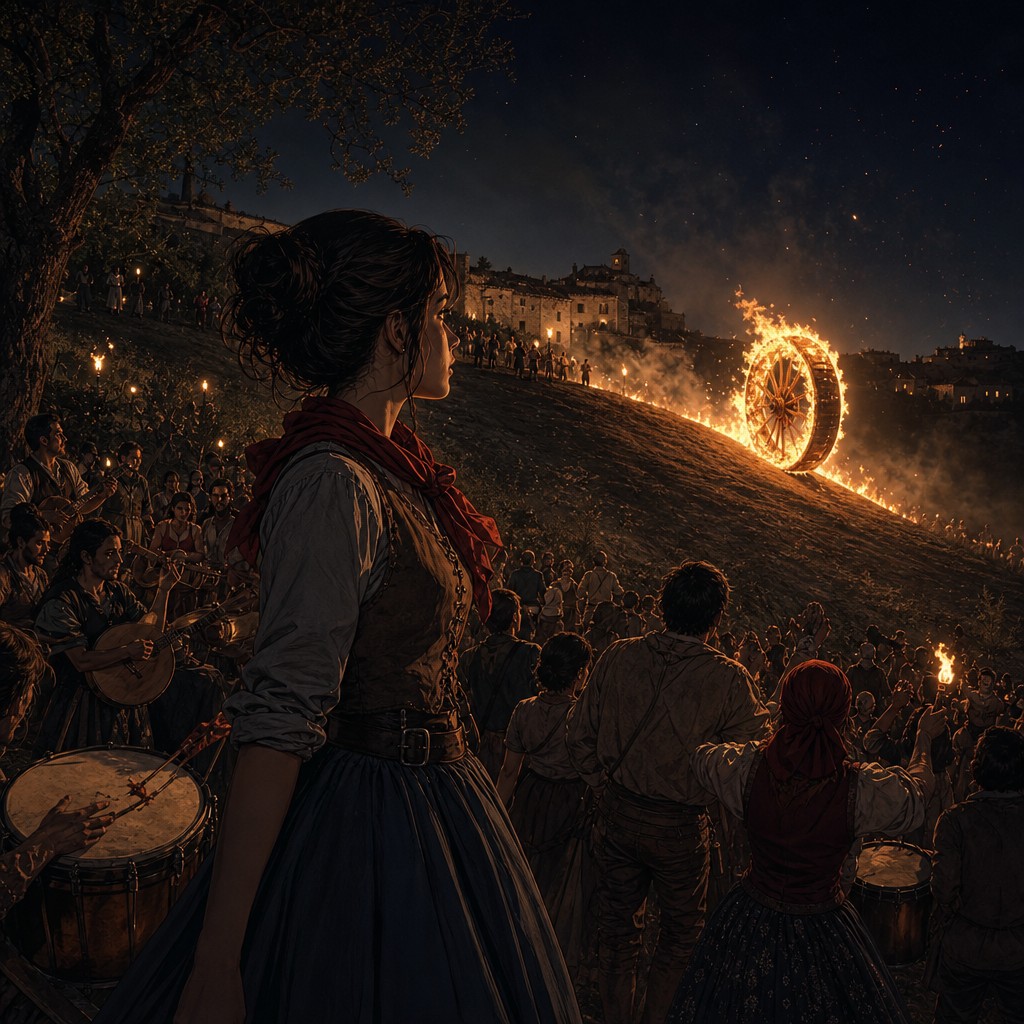
Watching the preparations, Emily becomes lost in the memories of past festivals. She measures the frightened girl she used to be against the traveler she must become by morning. The burning wheel represents the irreversible passage of time, a cycle she is finally ready to break.
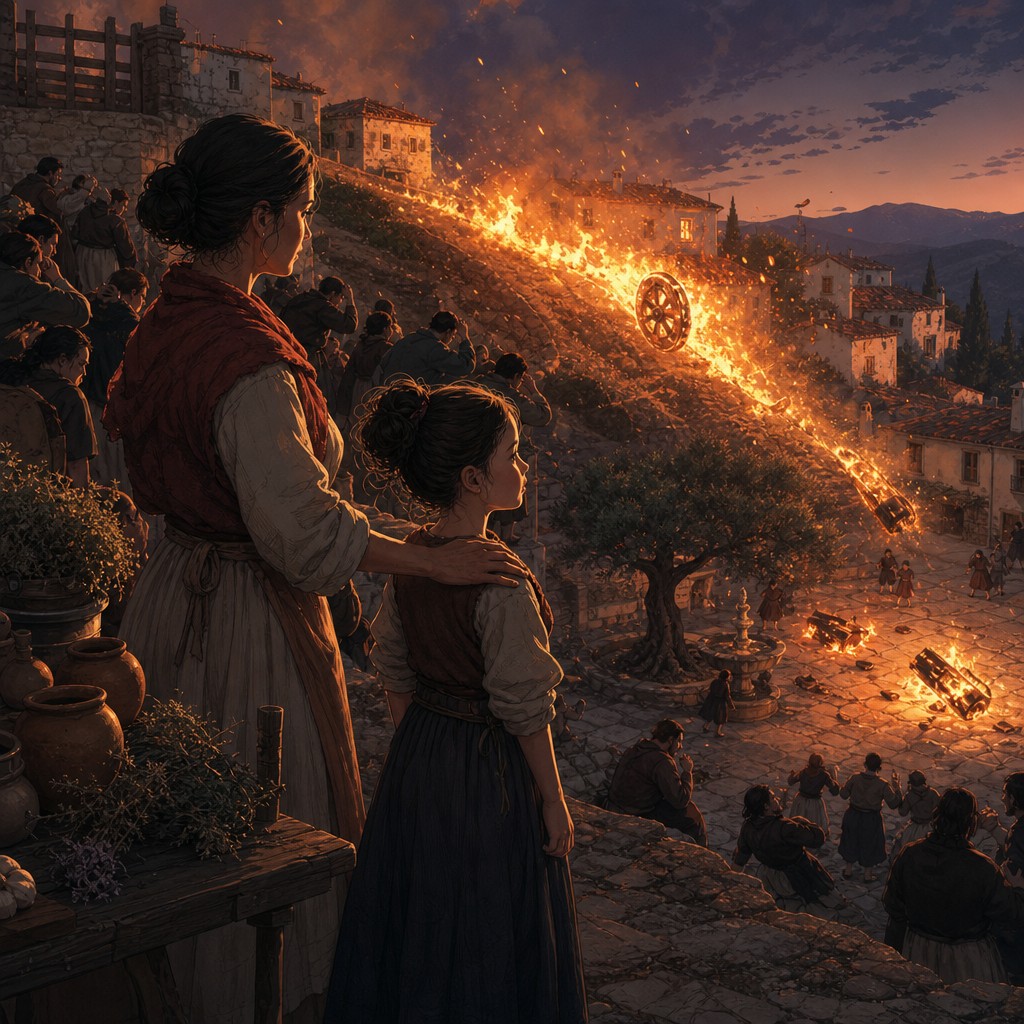
A vivid memory washes over her: she is seven years old, feeling the blistering heat of the burning wheel for the very first time. Standing safe in Catalina's protective shadow, the young Emily refuses to look away from the flames. The spark of her departure was born in that single, unflinching gaze.
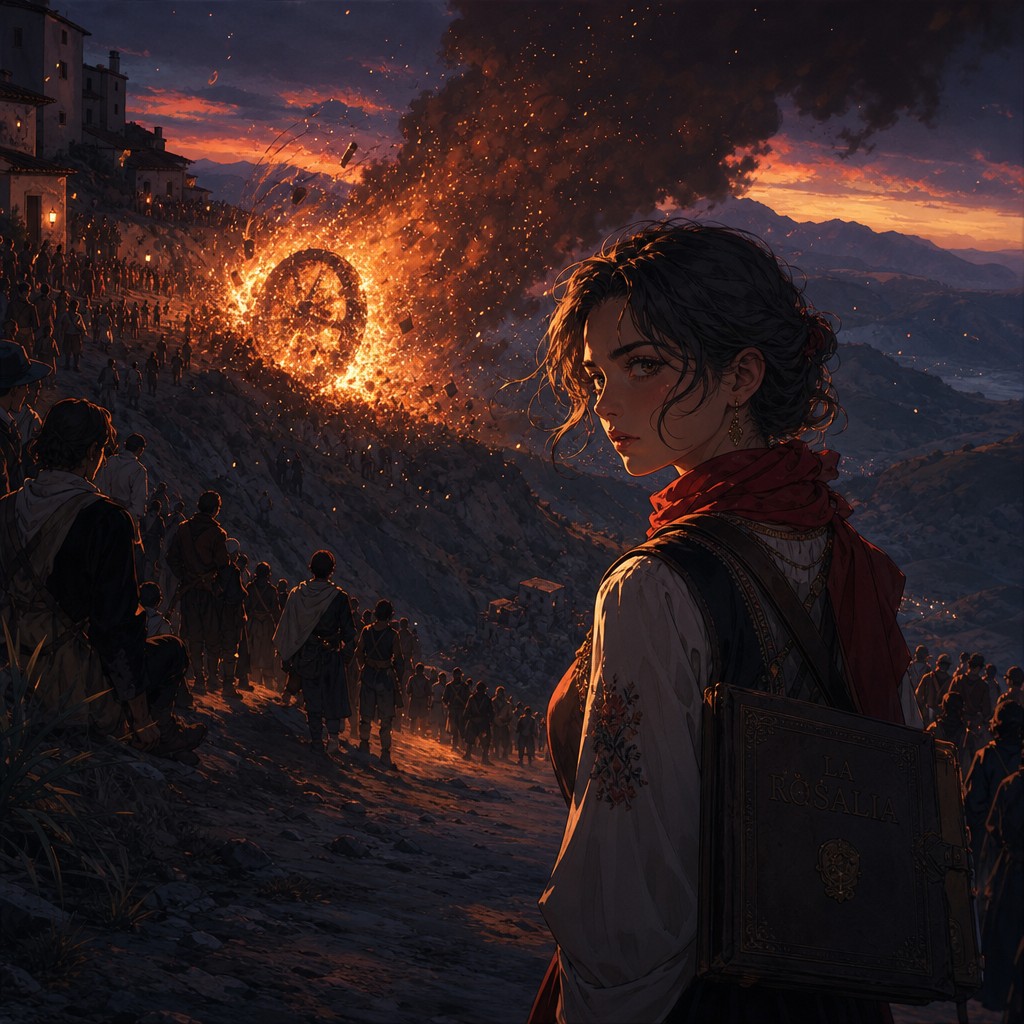
As the massive wooden wheel catches fire and rolls down the slope in a roar of sparks, the crowd cheers into the dark. Emily realizes the chaotic noise and brilliant light provide the perfect cover for her exit. It is her own private, unspoken farewell celebration.
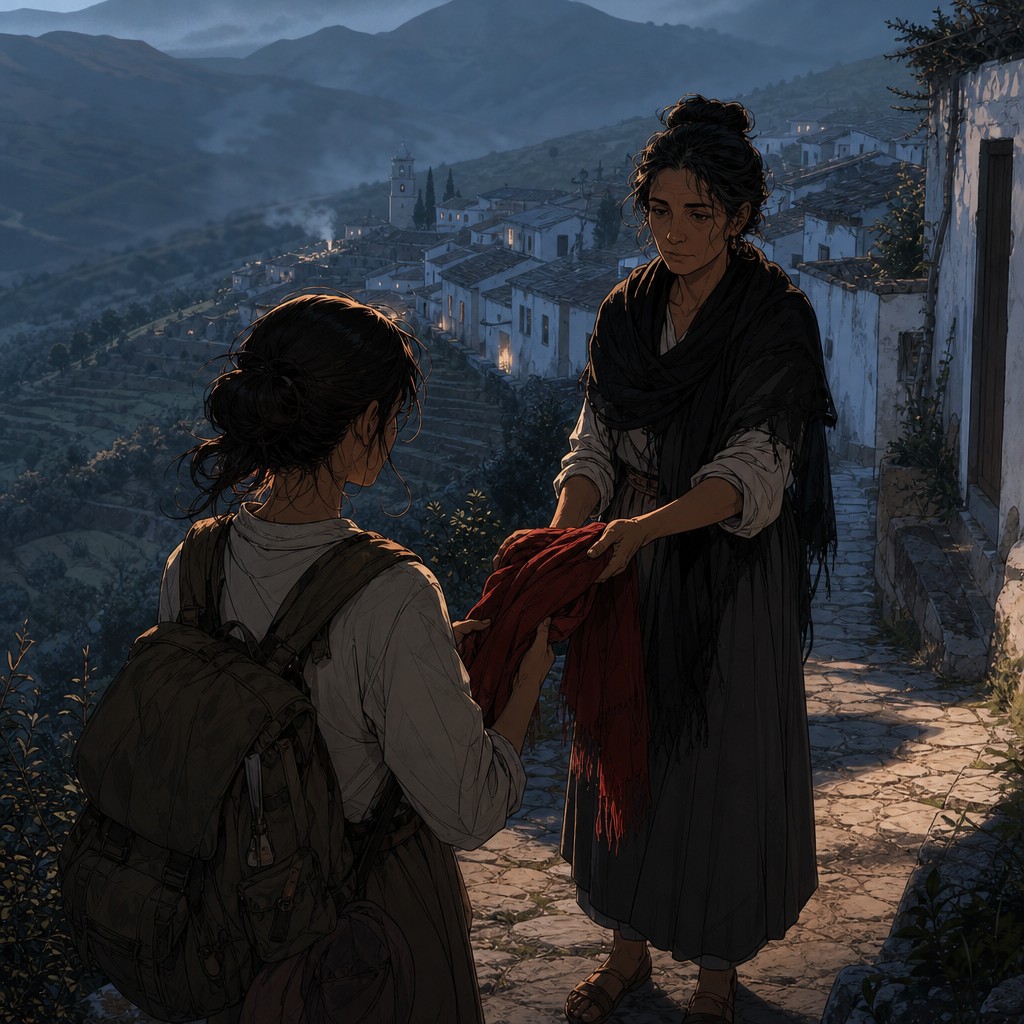
After a short, restless sleep, Emily stands in the pre-dawn grey, her pack heavy on her shoulders. Catalina emerges from the shadows to say a final goodbye, once again affirming the gift of the red scarf. In the quiet morning, her mother's blessing is the ultimate act of release.
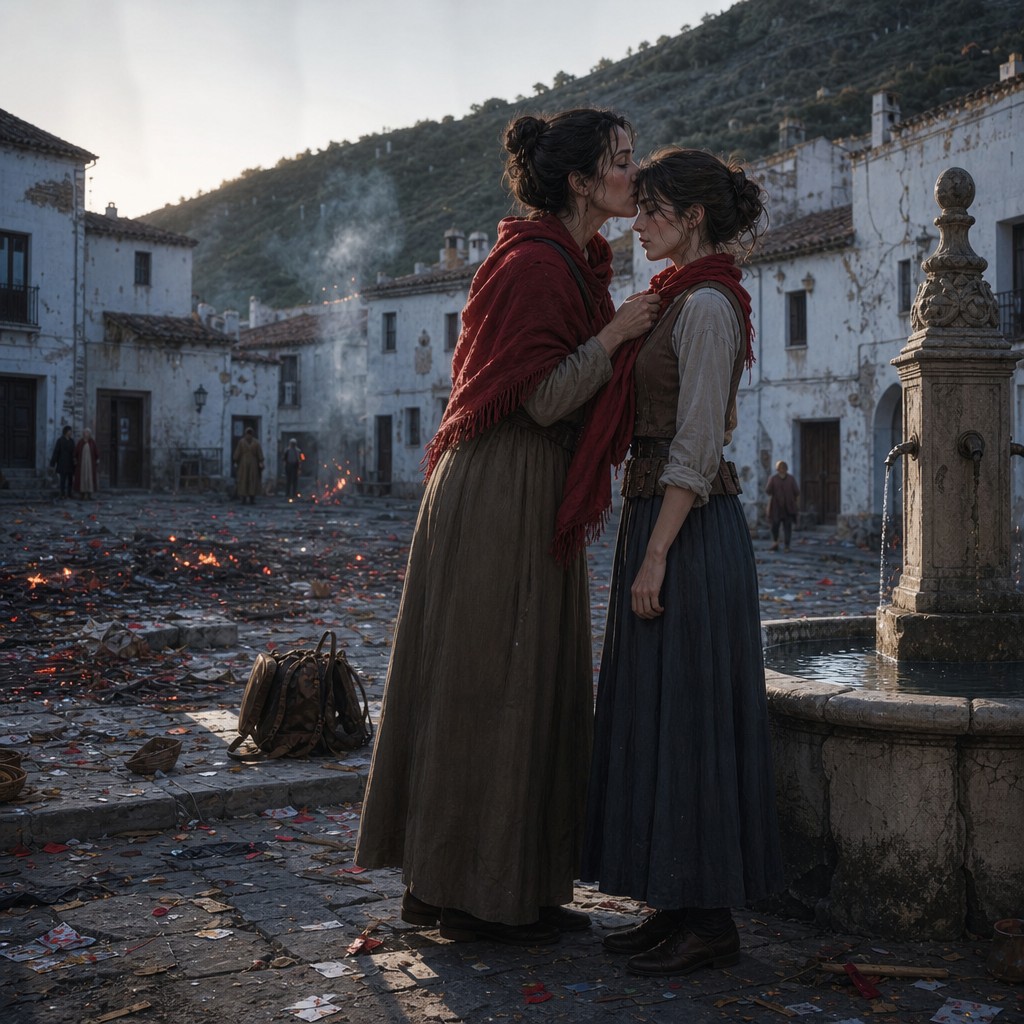
Catalina leans in and presses a gentle kiss to Emily's forehead. "I love you," she whispers into the cold air. "Take good care." It is an act of profound maternal love—the strength to let a child walk away toward the horizon without holding her back.
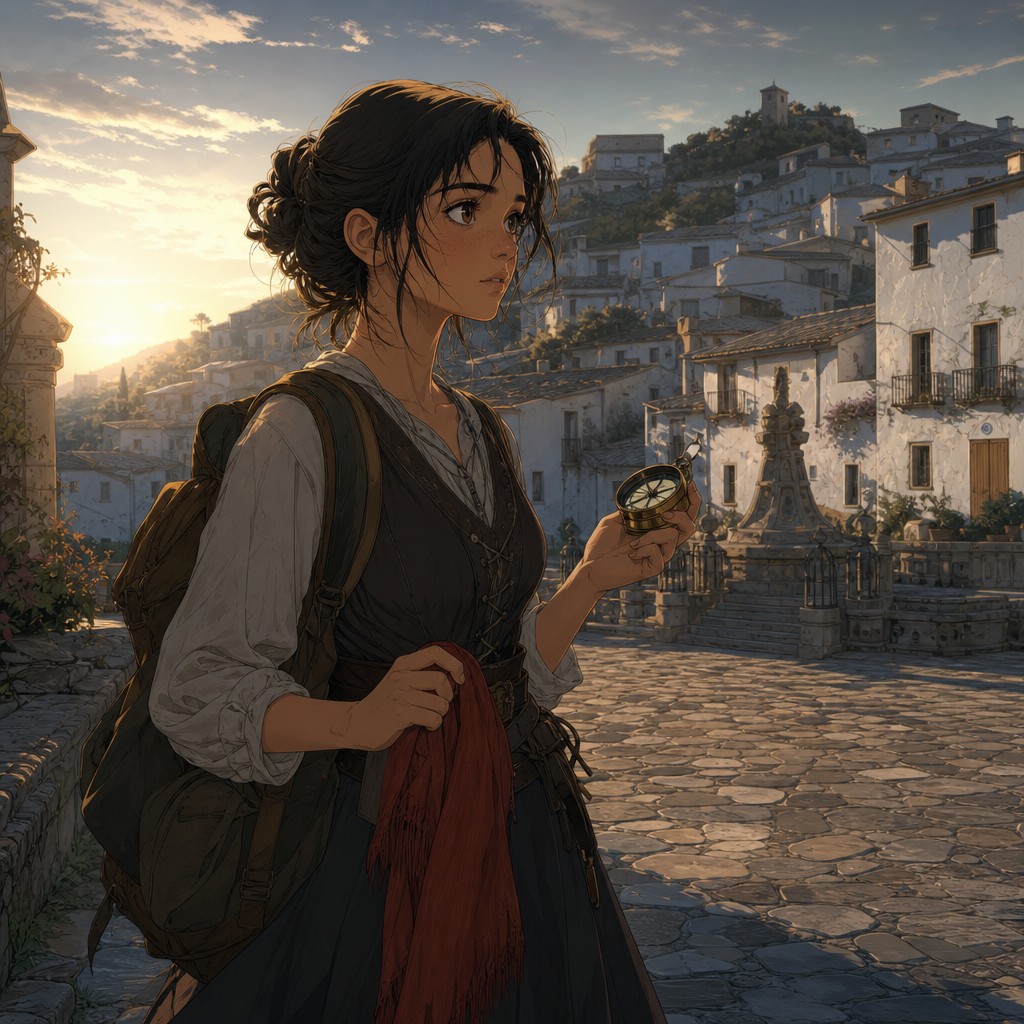
Seventeen years old and standing at the threshold of the known world, Emily takes a deep breath of the vast, open air. The village still sleeps behind her, nestled in its protective valley. She turns her face toward the unknown, entirely ready for the road.
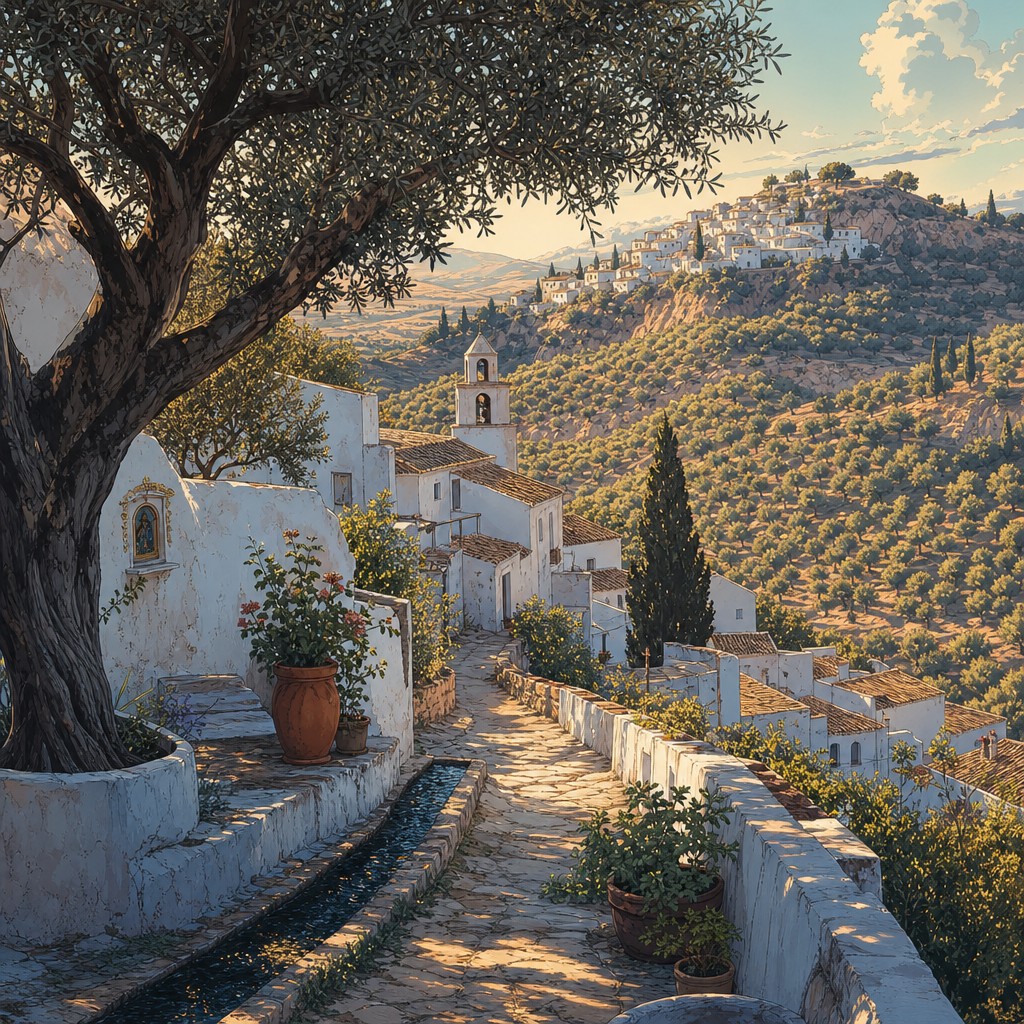
With one final look at the silver olive leaves and rust-red soil of the Caldera Lands, Emily steps out onto the open road. She is leaving behind the beautiful, suffocating history of a thousand generations. The landscape expands before her, terrifying and wonderfully indifferent.
❦ FIN ❦