Emily · 4 / 7
Chapter IV: Portcaldia Festival & Affairs
Amidst competing philosophies and the intoxicating rhythm of a masked coastal festival, the act of truly seeing another soul proves to be the most dangerous uncharted territory of all.
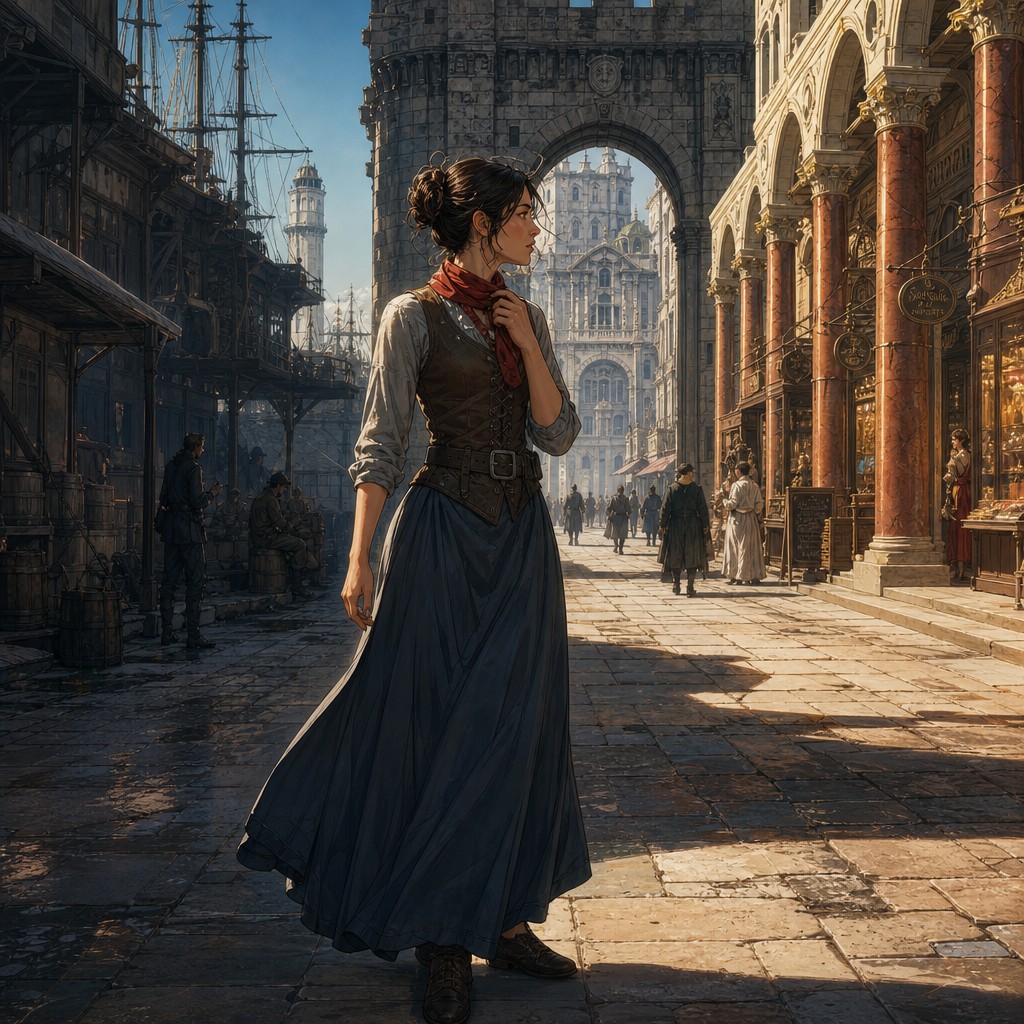
Standing at the intersection of the Merchant, Sailor, and Scholar districts, Emily has a sudden epiphany. She realizes these differing worldviews are not contradictions, but different instruments used to measure the same world. It is her first synthetic understanding of the city's complex machinery.
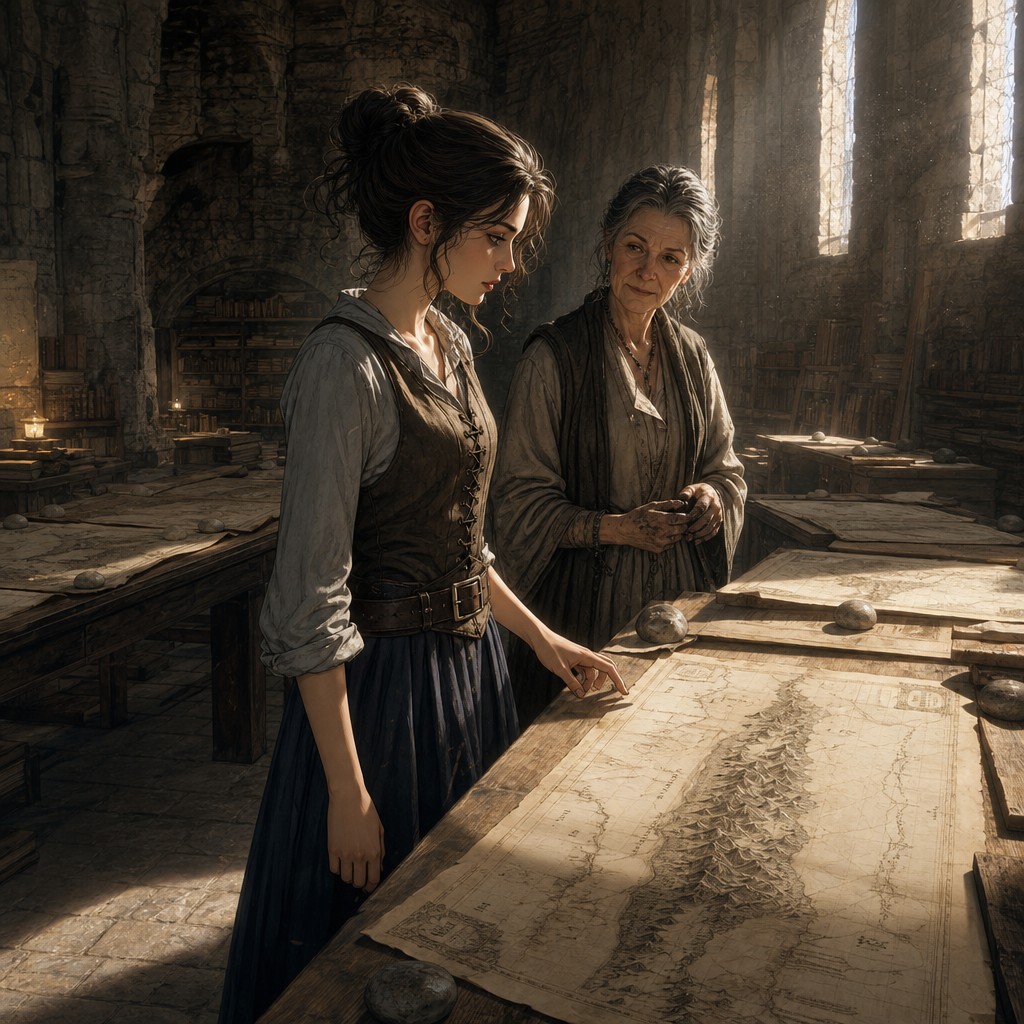
Deep in an ancient library carved into the cliff face, Emily examines maps where her home village has been entirely erased or misdrawn. The librarian teaches her a vital lesson: maps that claim to show everything are often the most deceptive. Truth is also found in what is missing.
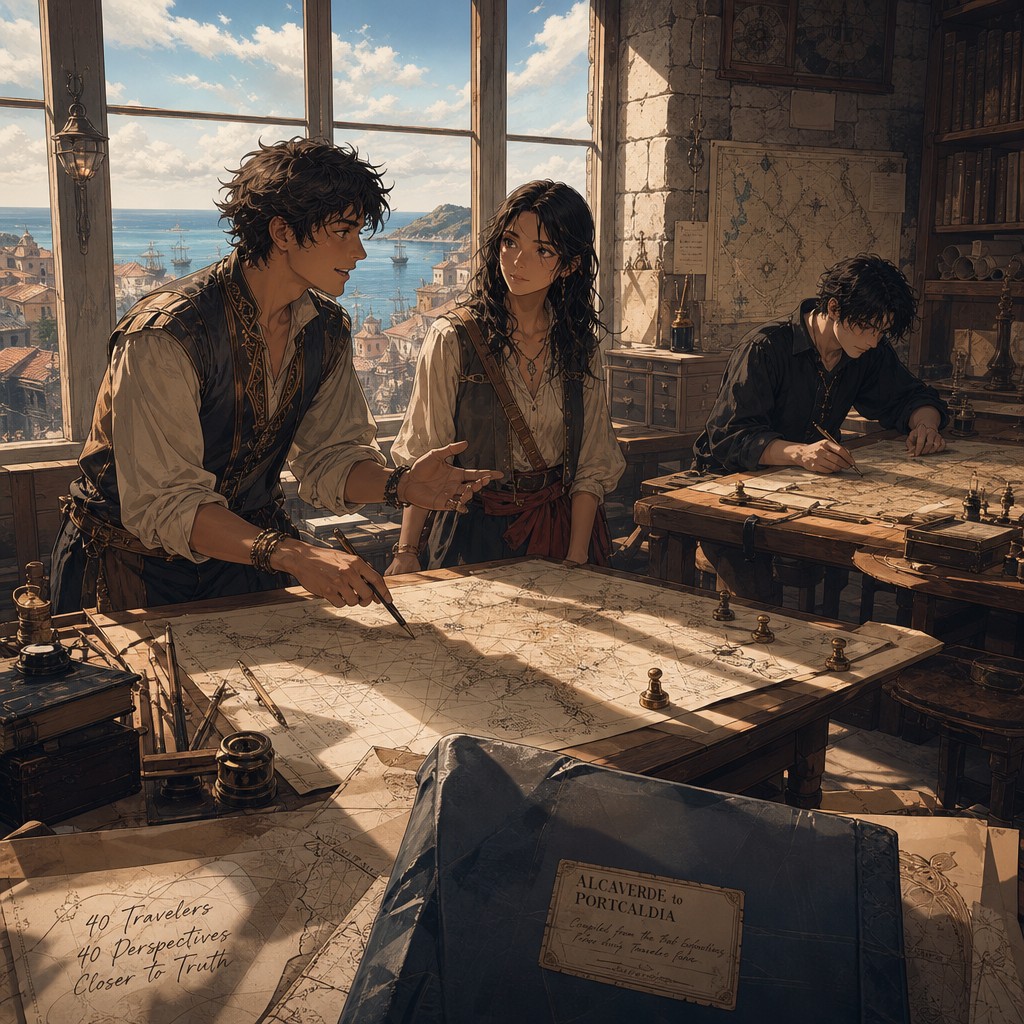
In the sunlit cartographer's workshop, Emily contributes her own precise observations of the mountain roads to a collaborative map. Being treated as a reliable source of data shifts her internal perspective; she is no longer just a wanderer, but an intellectual contributor.
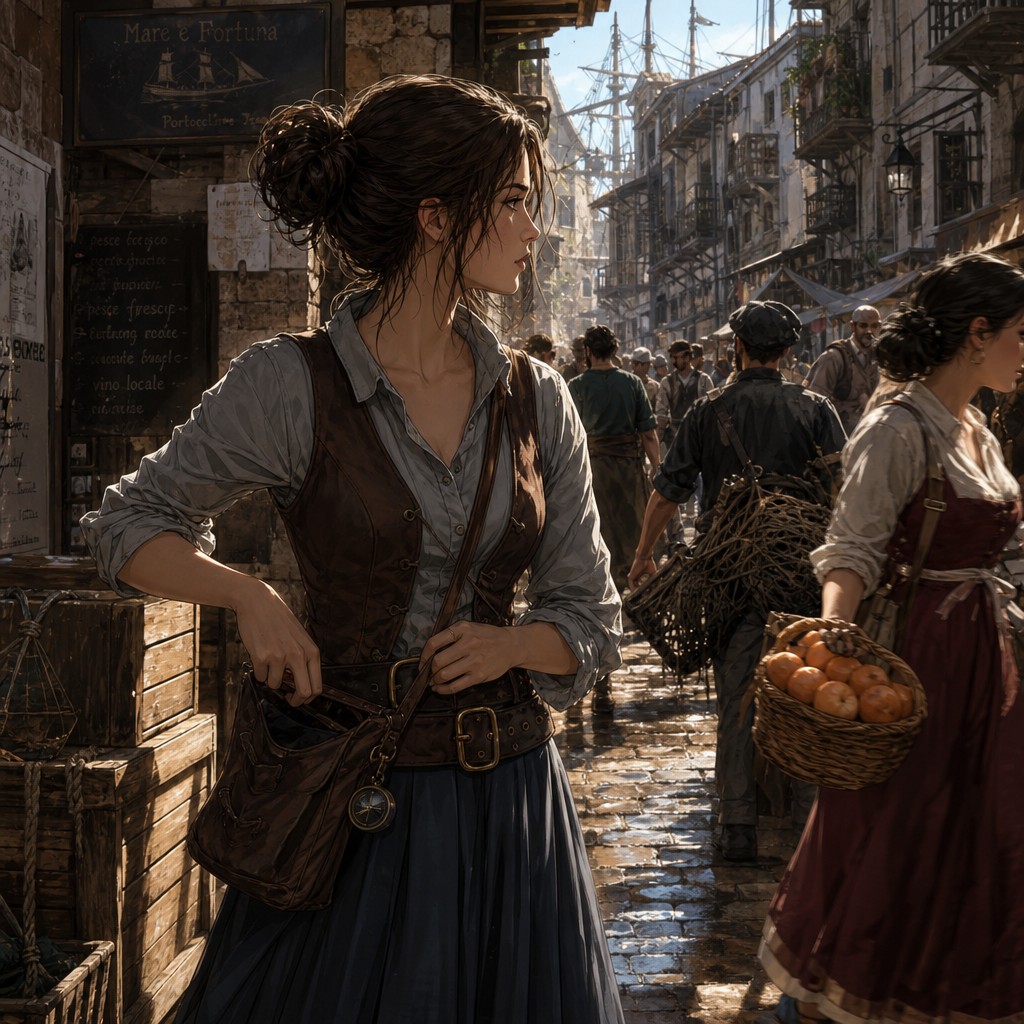
Emily walks confidently through the bustling city streets, transitioning smoothly from the cartographers to the upper-city cafeteria. She absorbs the dense urban life without fear, proving her growing familiarity and ease within Portcaldia's overwhelming environment.
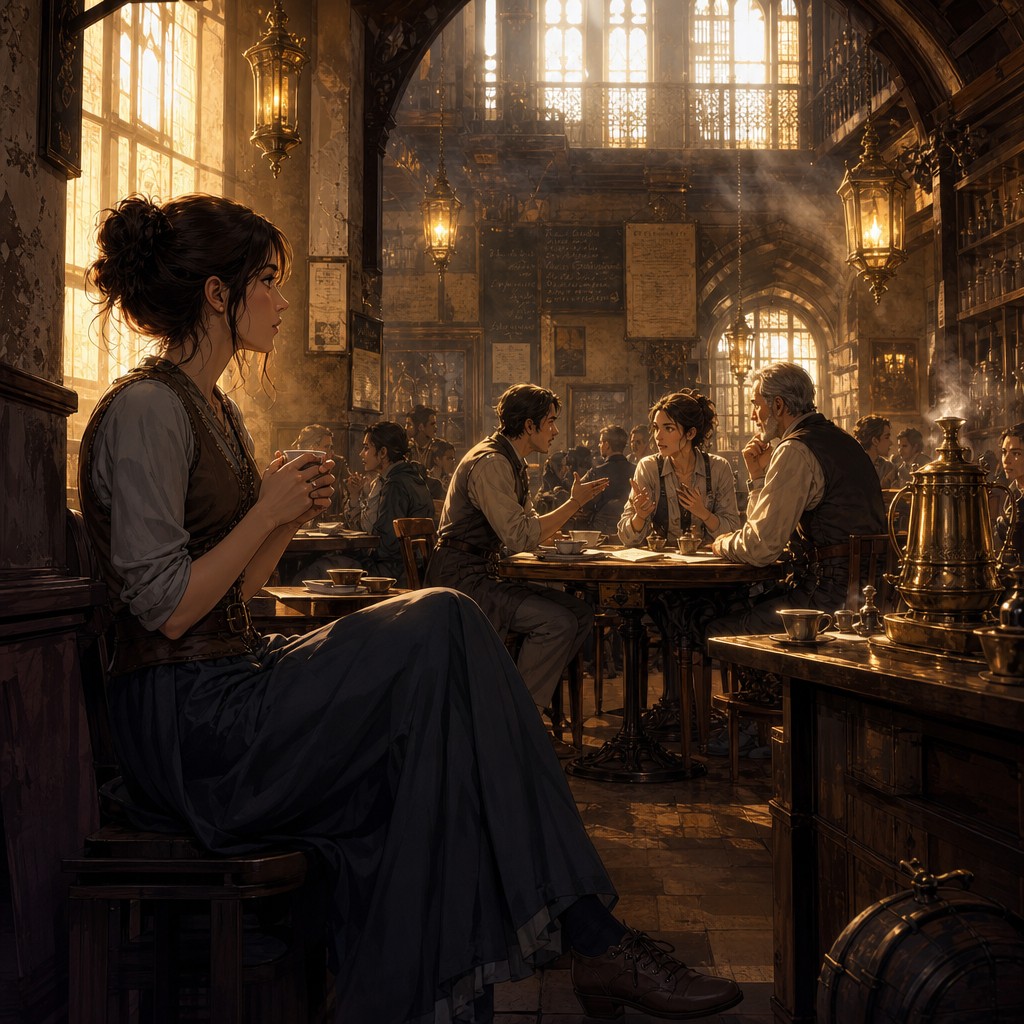
During a heated scholarly debate in an upper-city coffee house, Emily respectfully interjects with her unique, lived insight on Alcaverde’s acequia system. Her practical contribution silences the room, earning her the immediate respect of the intellectuals and validating her journey.
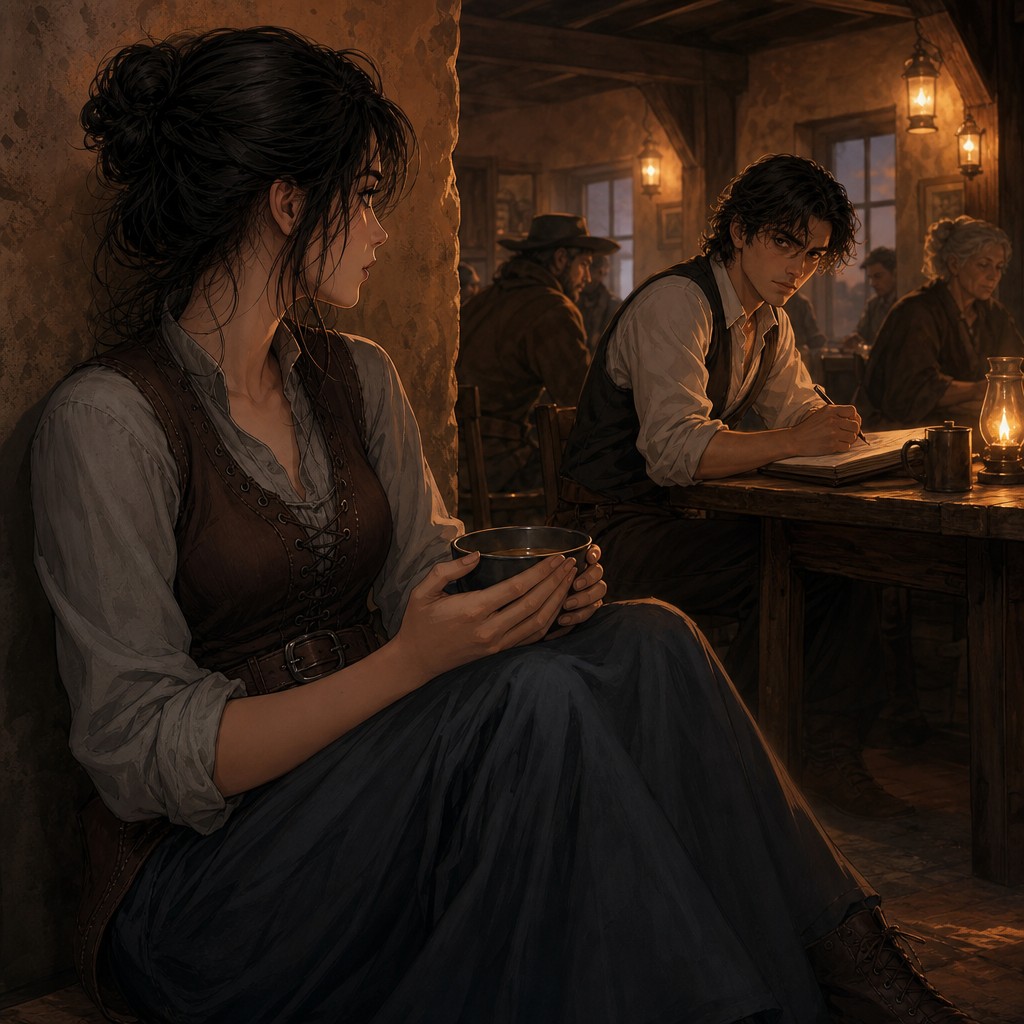
Sitting in the corner of the cafeteria, Emily notices a young cartographer named Theo secretly drawing her. When she confronts him, he doesn't apologize, but simply turns the page around. The sketch captures a hidden, fierce capability in her face that she had never fully recognized.
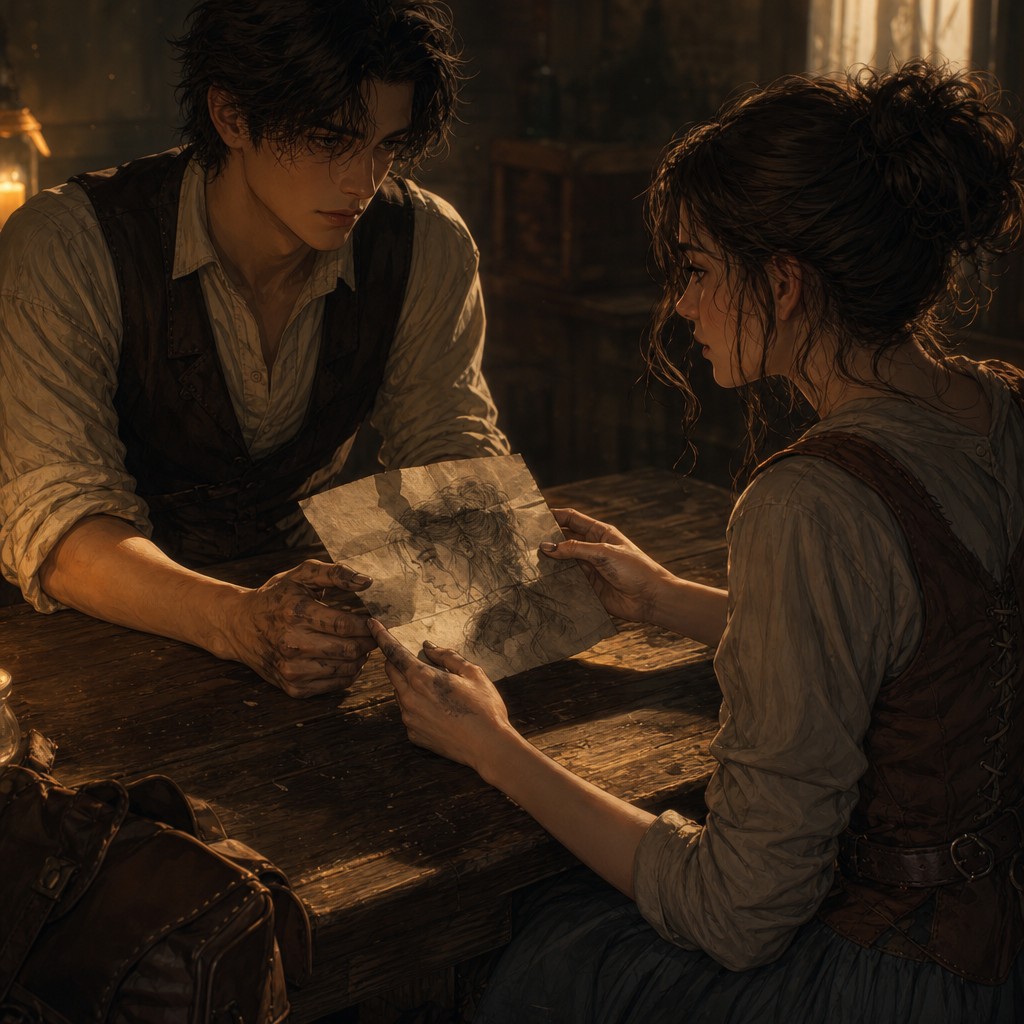
Theo reveals the detailed charcoal sketch, highlighting her ink-stained hands and the sheer intensity of her attention. The act of truly seeing and being seen strips away their defenses, leaving them both suspended in a fragile, profoundly silent intimacy.
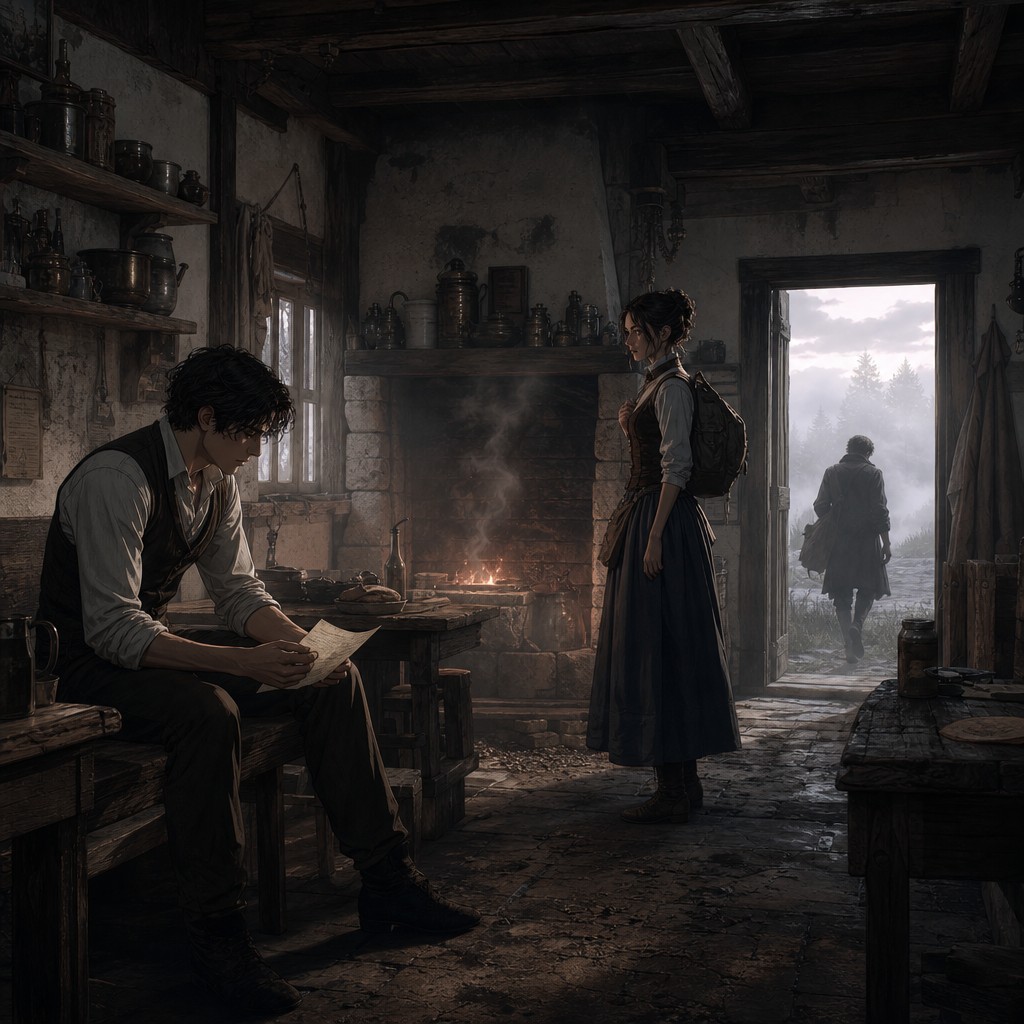
Caught off guard by the sudden vulnerability of their connection, Emily and Theo part ways in a clumsy, hesitant exchange. Fueled by youthful insecurity, both retreat to process the encounter in solitude, wondering what just shifted between them.
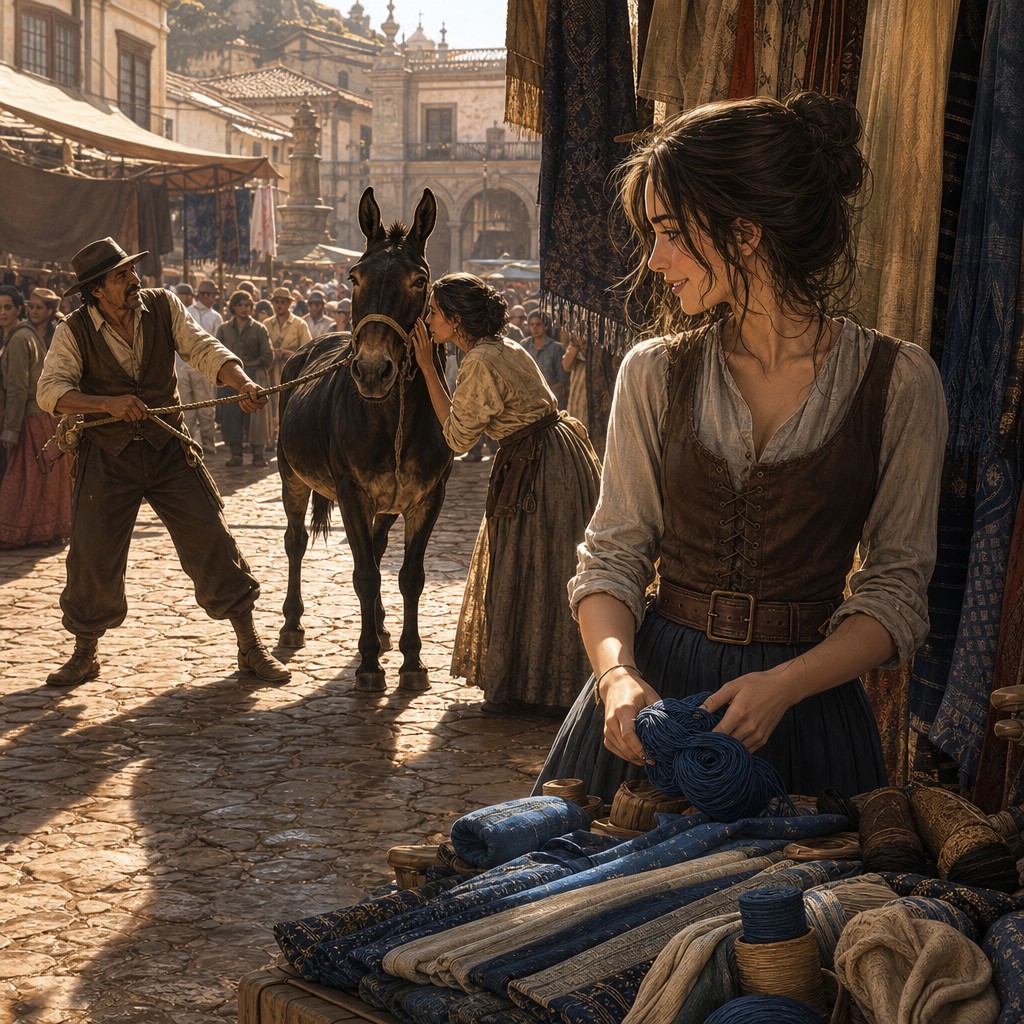
Navigating the Thursday market, Emily witnesses a notoriously stubborn mule being coaxed into motion by a wife's secret, whispered command. The sheer ridiculousness of the moment causes Emily to burst into a suppressed laugh, feeling truly alive and present for the first time in months.
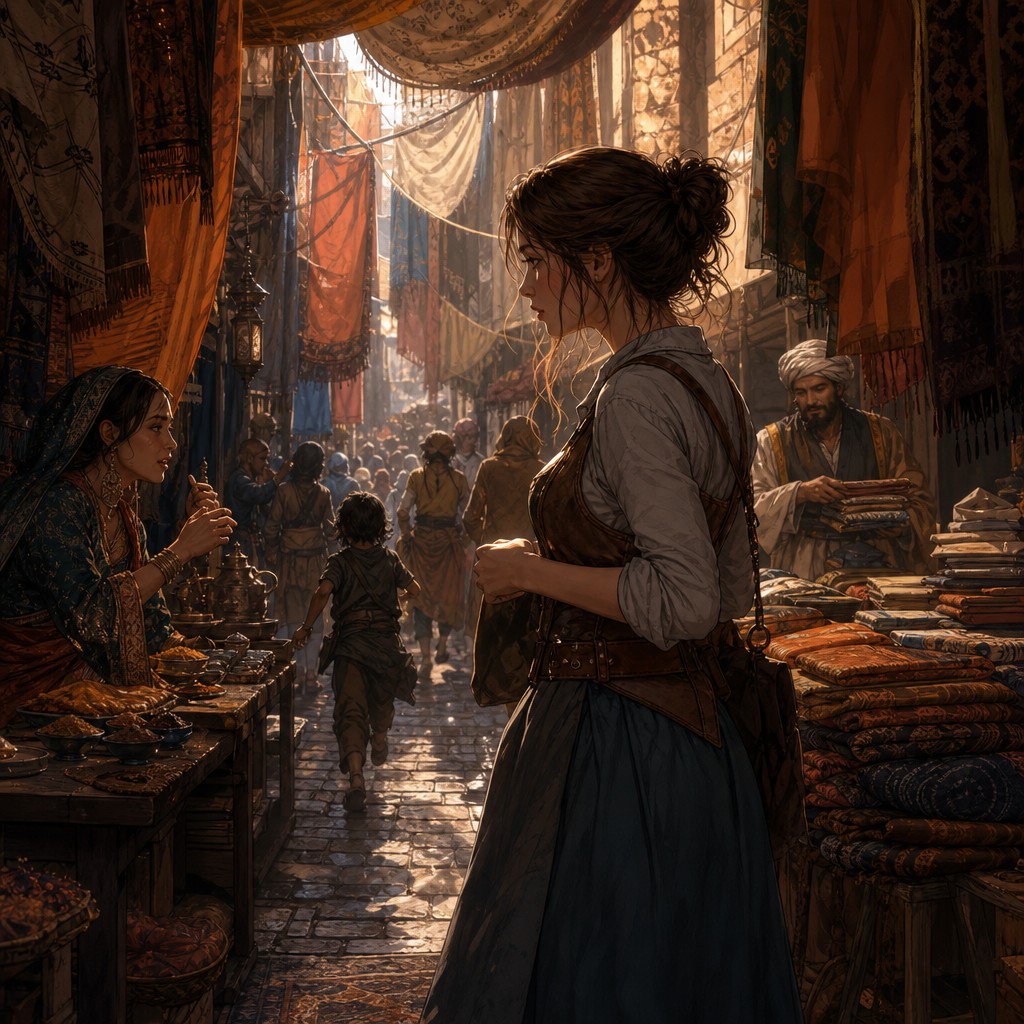
Moving through the labyrinthine fabric stalls, Emily realizes she is no longer lost, but actively reading the city's social currents like a text. She understands that her anonymity here is not a failure, but a form of absolute permission to observe and survive.
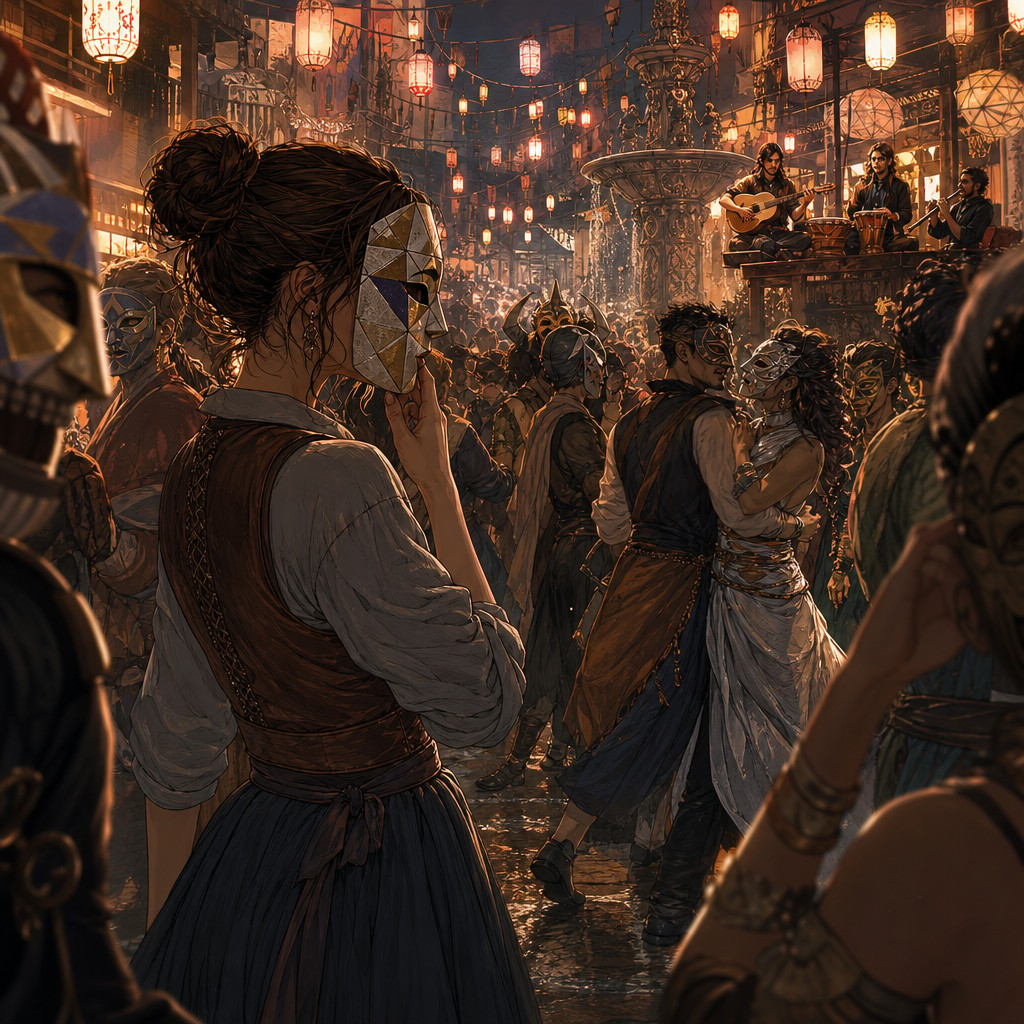
At the Festival of the Reversed Face, Emily dons an indigo geometric mask that completely erases her identity. Paradoxically, losing her face allows her to feel powerfully present. She spots Theo in the crowd by his movements alone, desiring him without the burden of being witnessed.
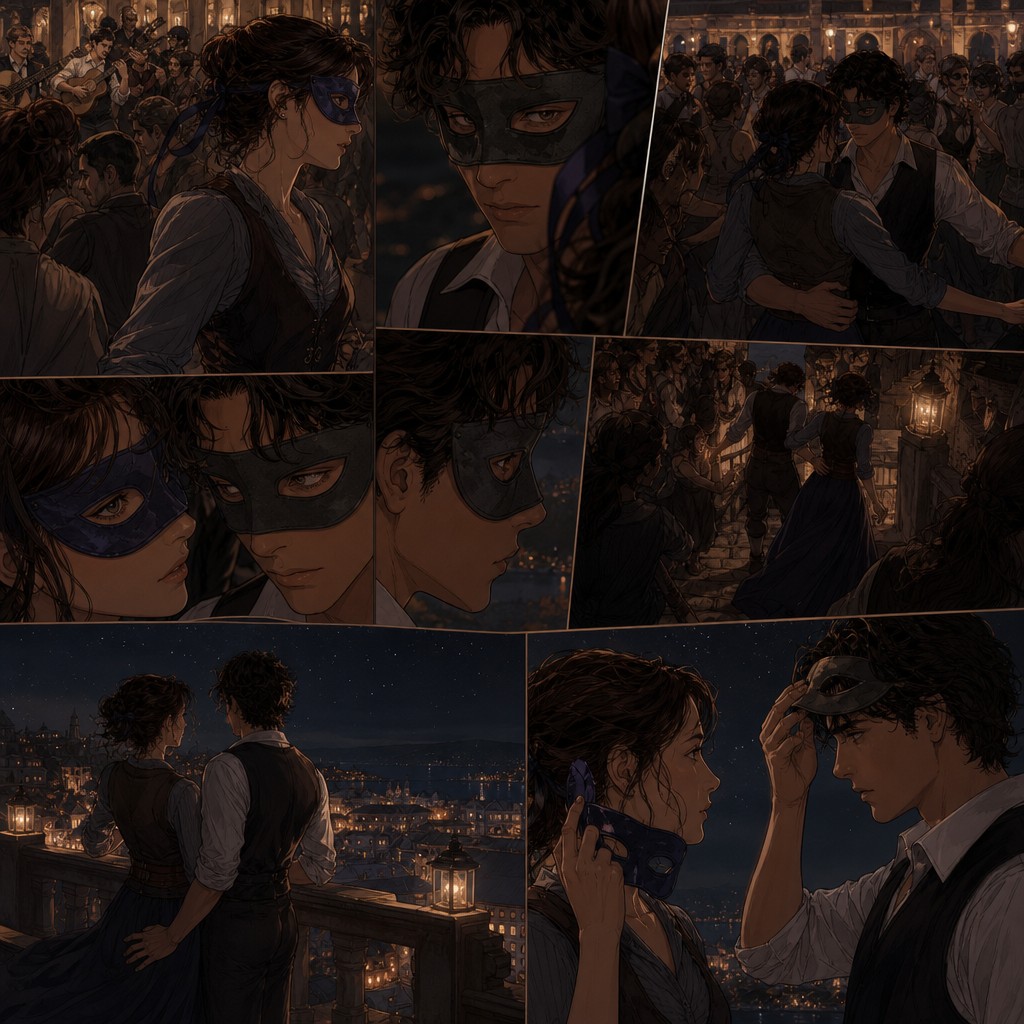
Emily and Theo find each other in the chaotic, pulsing festival crowd, communicating entirely through the kinetic language of their dance. The physical closeness serves as an undeniable acknowledgment of their bond, pulling them toward a terrace to finally face the vulnerability of speech.
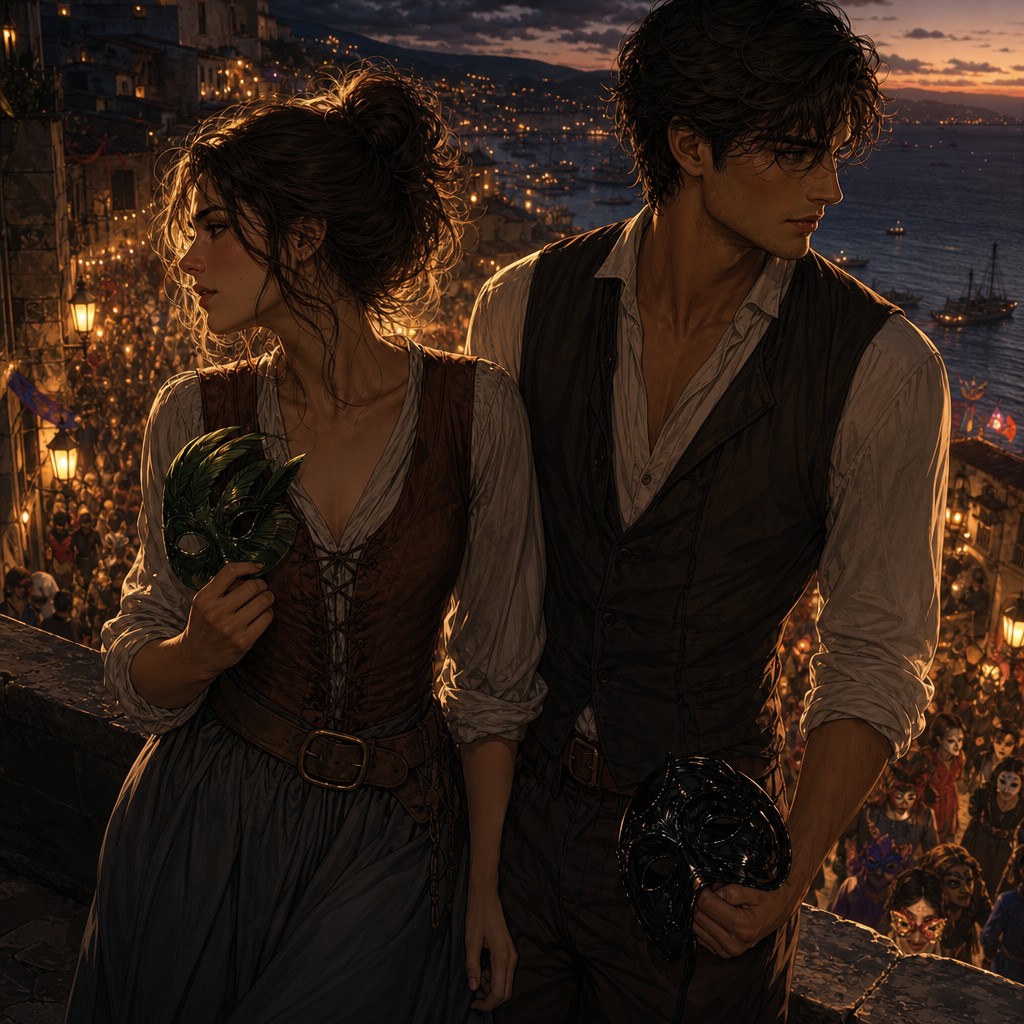
The masked festival transforms Isla Cendral into a playground of deliberate strangers, where bodies speak louder than words. As the music slowly fades, Emily and Theo stand together under the stars, preparing to articulate the truths their movements have already confessed.
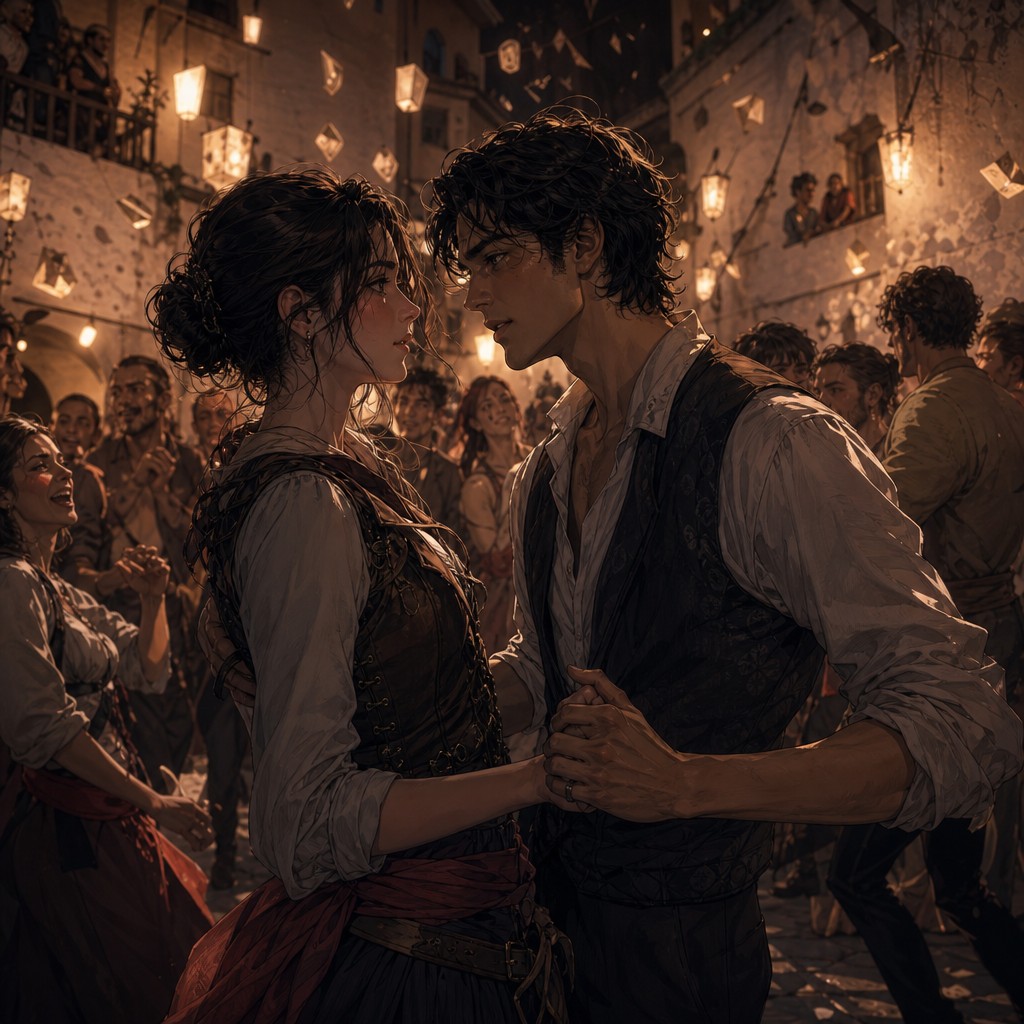
As the masks finally come off, Emily and Theo face each other in the sudden, sobering clarity of the night air. They grapple with the bittersweet joy of their reunion, heavily shadowed by the painful reality that Emily is leaving Portcaldia on the morning tide.
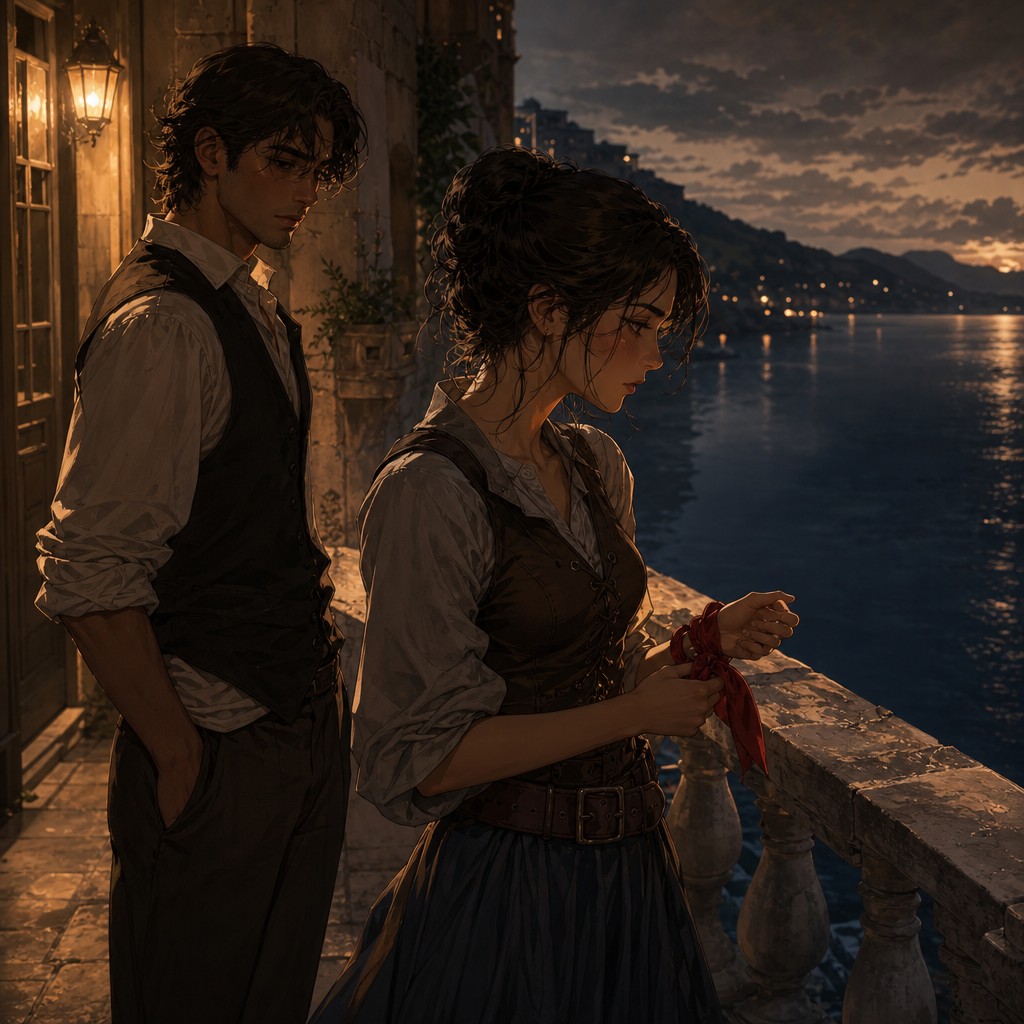
Emily confronts Theo with the unyielding truth of her departure. She firmly ties her mother's red scarf around her wrist, turning her back on an incomplete love to walk toward the harbor at dawn. She chooses the cold, necessary clarity of her quest.
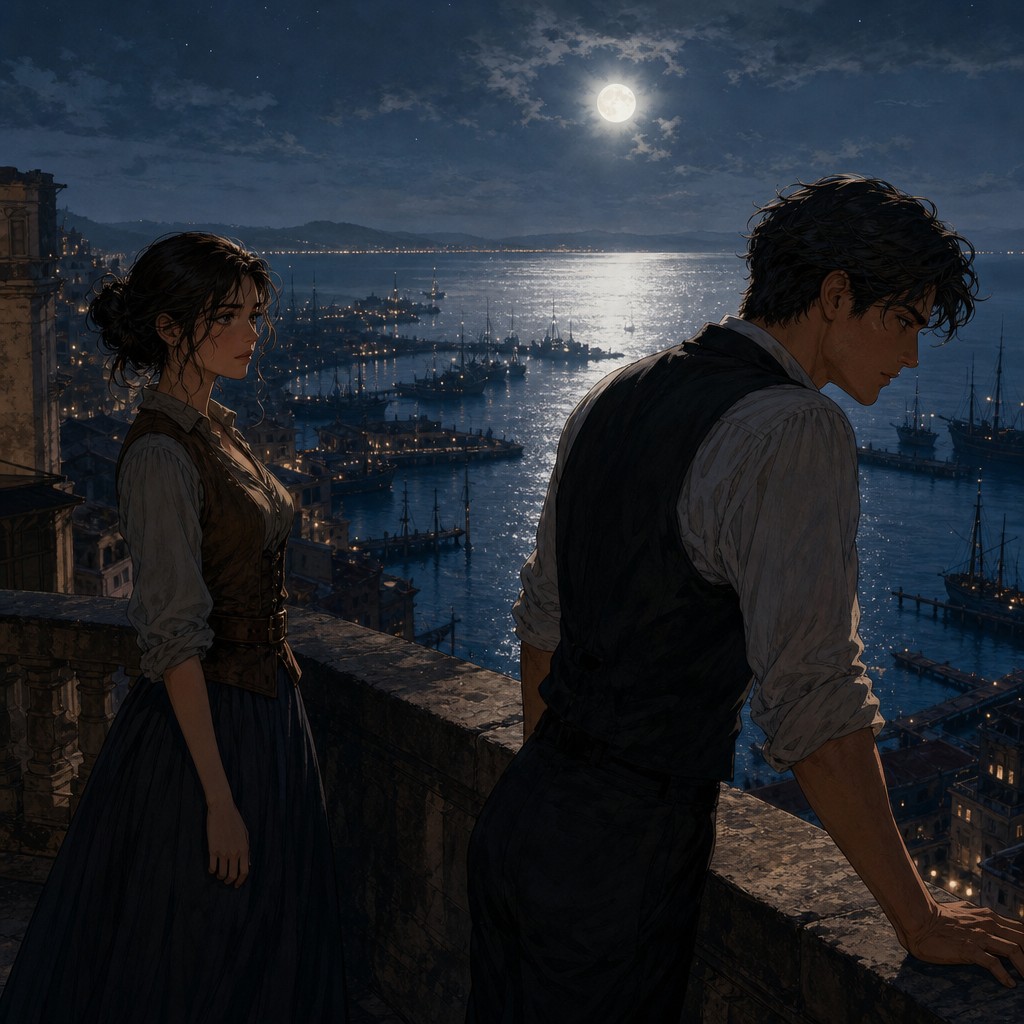
On the moonlit terrace, Emily asks Theo a piercing question about the unspoken guilt he carries, which he refuses to answer. His kind but hollow deflection solidifies an emotional distance between them that feels as vast and uncrossable as the dark harbor below.
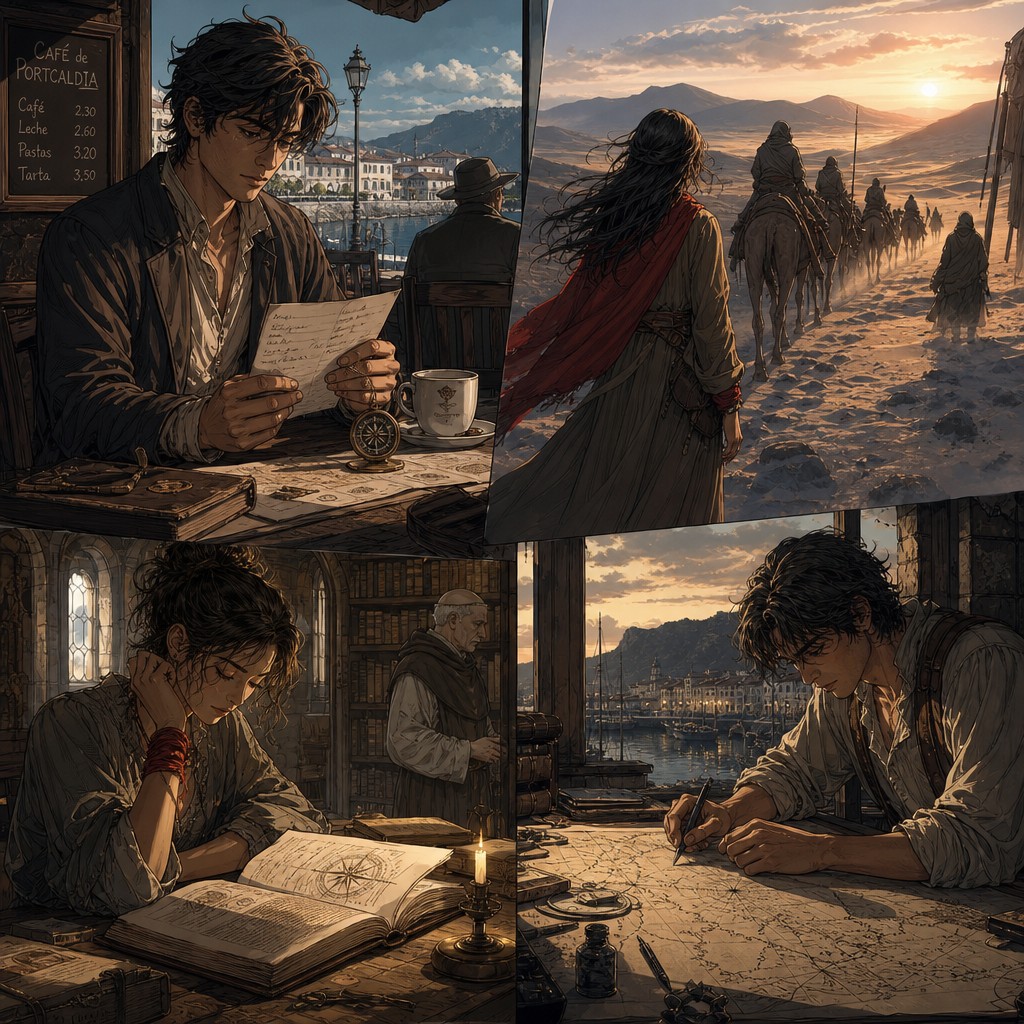
Emily and Theo part ways, moving into completely separate landscapes, yet the weight of the other remains a constant, heavy pressure. Their separation is not an absence, but a lingering presence that shapes their individual solitudes like water moving around stone.
❦ FIN ❦