Emily · 3 / 7
Chapter III: Coast, Dinner & New Lands
Thrown into the overwhelming sensory collision of a towering harbor city, a stranger discovers the unexpected, healing grace of being truly welcomed.
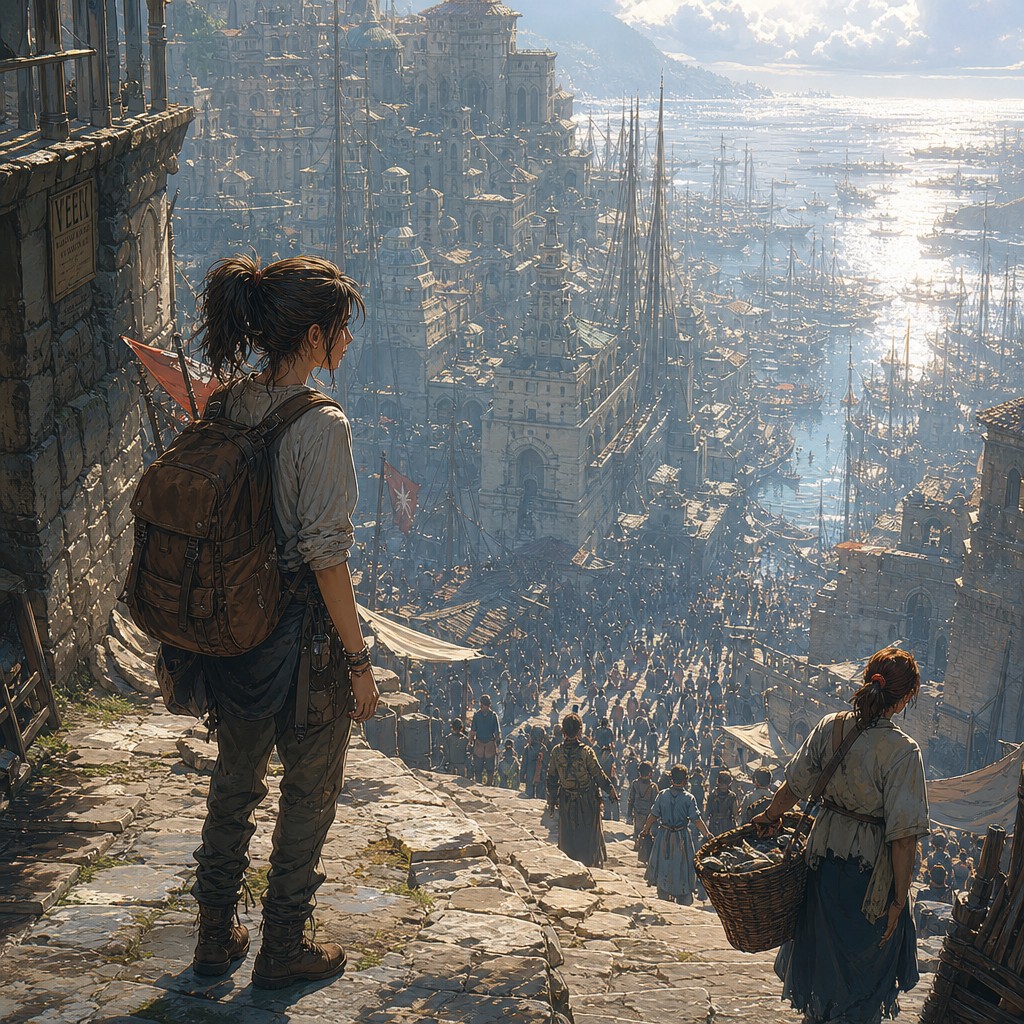
Emily rounds the final coastal ridge and Portcaldia descends before her—a massive, layered city of stone, sea, and chaos. She experiences a profound realization: in this crowded, ancient place, her absolute insignificance is a beautiful form of permission to start anew.
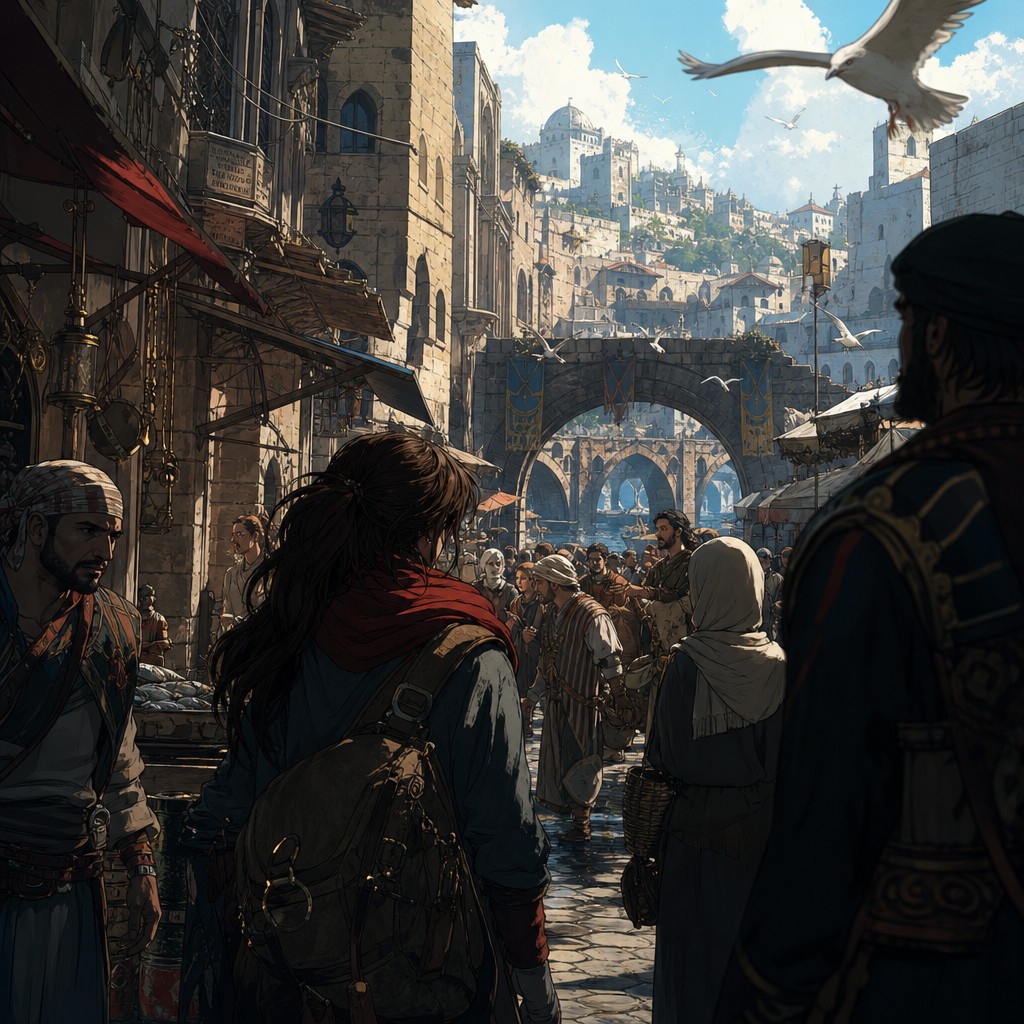
The chaotic architecture and crushing crowds of the lower city hit Emily like a physical blow. The sensory onslaught teaches her immediately that the city's honest, bustling indifference is the exact opposite of the suffocating, watchful eyes of her home village.

Gazing out past the harbor, she takes in the Archipelago scattered across the Middle Sea. It is a world where navigation is a confident negotiation with the deep blue water, and where the volcanic islands rise like dark, ancient teeth against a horizon that refuses to end.

Emily steps onto the dockside stones into a thick, breathable atmosphere of pitched rope, rotting kelp, and exotic spice. Walking unremarked among thousands of laborers and merchants, she discovers that being invisible in a crowd feels unexpectedly like pure freedom.

Standing at the stone breakwater, Emily practices her powers of observation, deconstructing the harbor's chaos into specific layers. She separates the crash of waves from the creak of wood and the shouts of sailors, learning to read the overwhelming environment with her entire body.
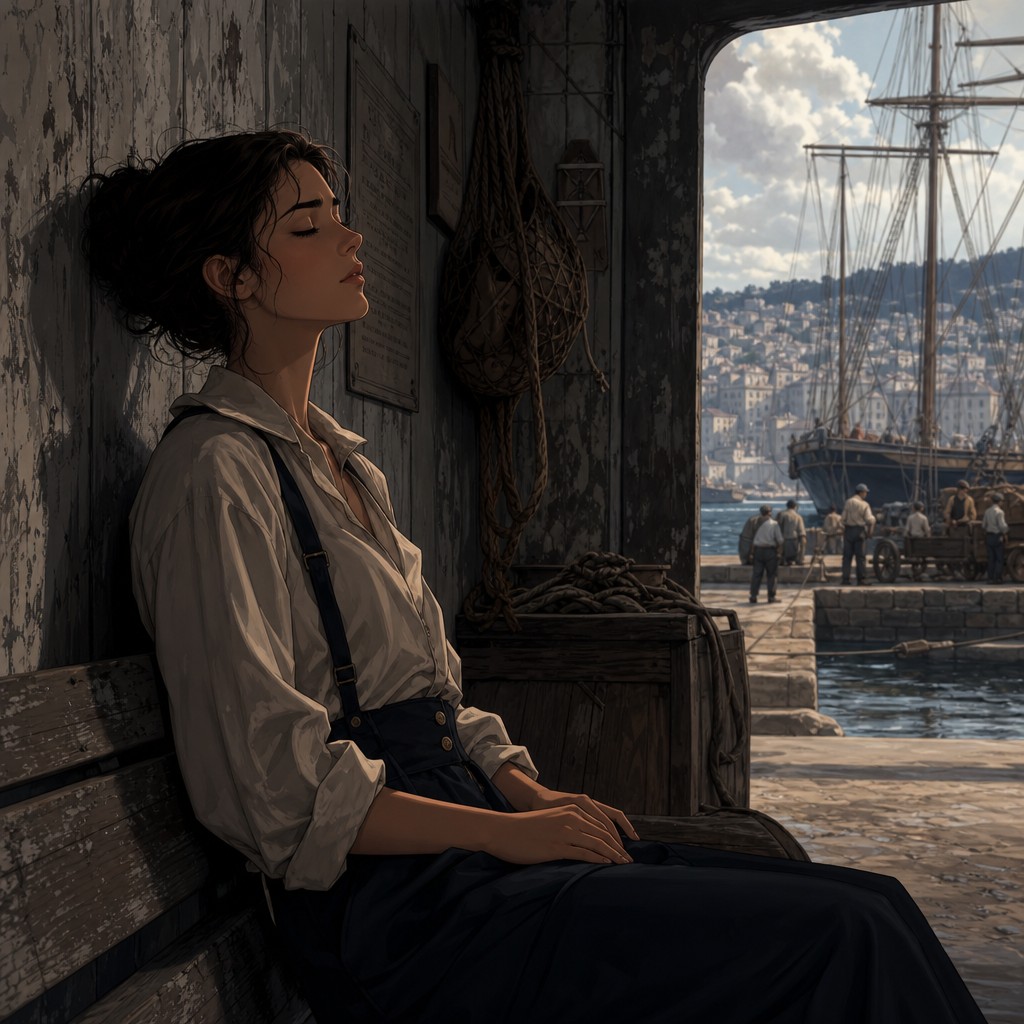
Finding a quiet corner inside a salt-stained warehouse, Emily practices the discipline of sustained attention. Her jaw tightens with concentration as she learns to perceive the hidden, comprehensible order beneath the harbor's roaring, overlapping noise.

Refusing to be intimidated by the urban maze, Emily makes a definitive, conscious choice to move deeper into Portcaldia. She walks with a new certainty, choosing to embrace the city's uncertainty rather than retreat to the safety of the known.
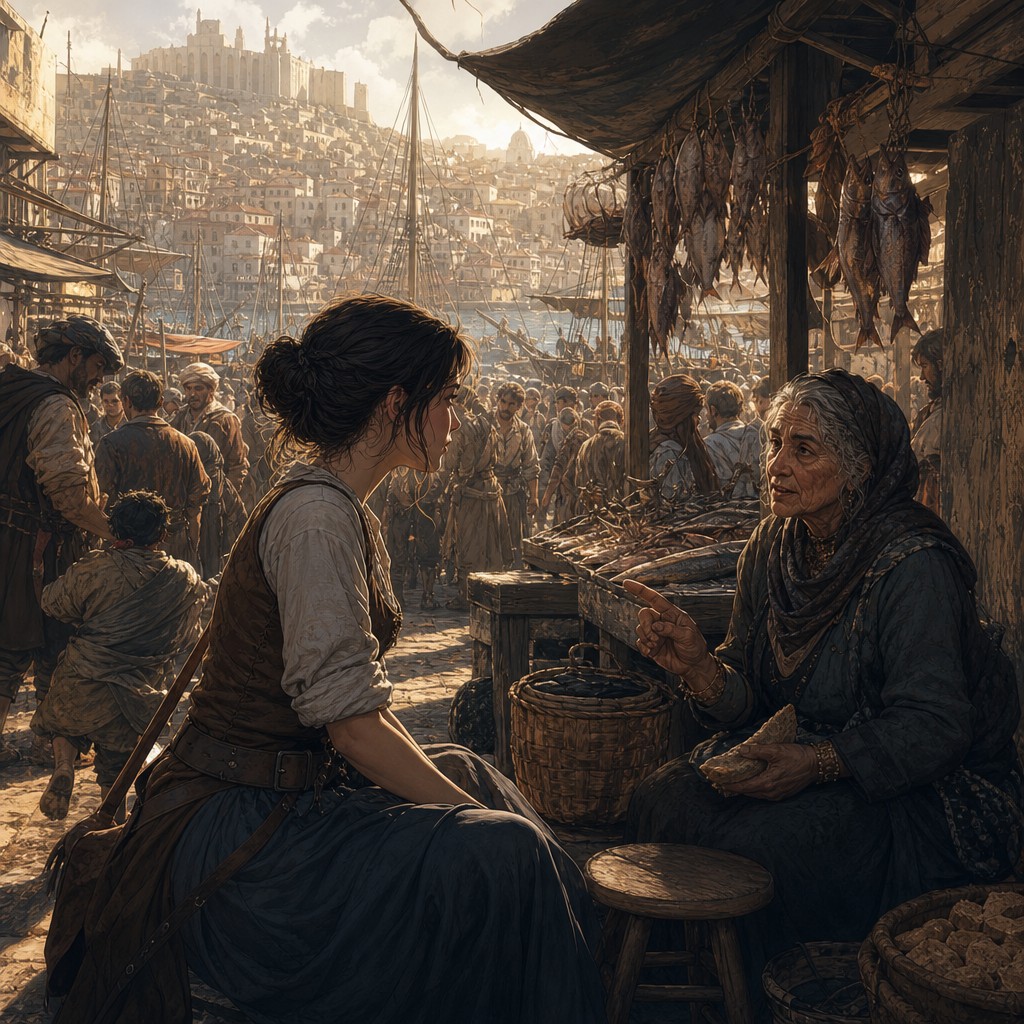
In the bustling fish market, Emily crosses paths with an older woman whose forearms are thick with muscle from years of labor. Recognizing the weary look of a new traveler, the woman offers Emily a nod of solidarity and a crucial introduction to the local dockside community.
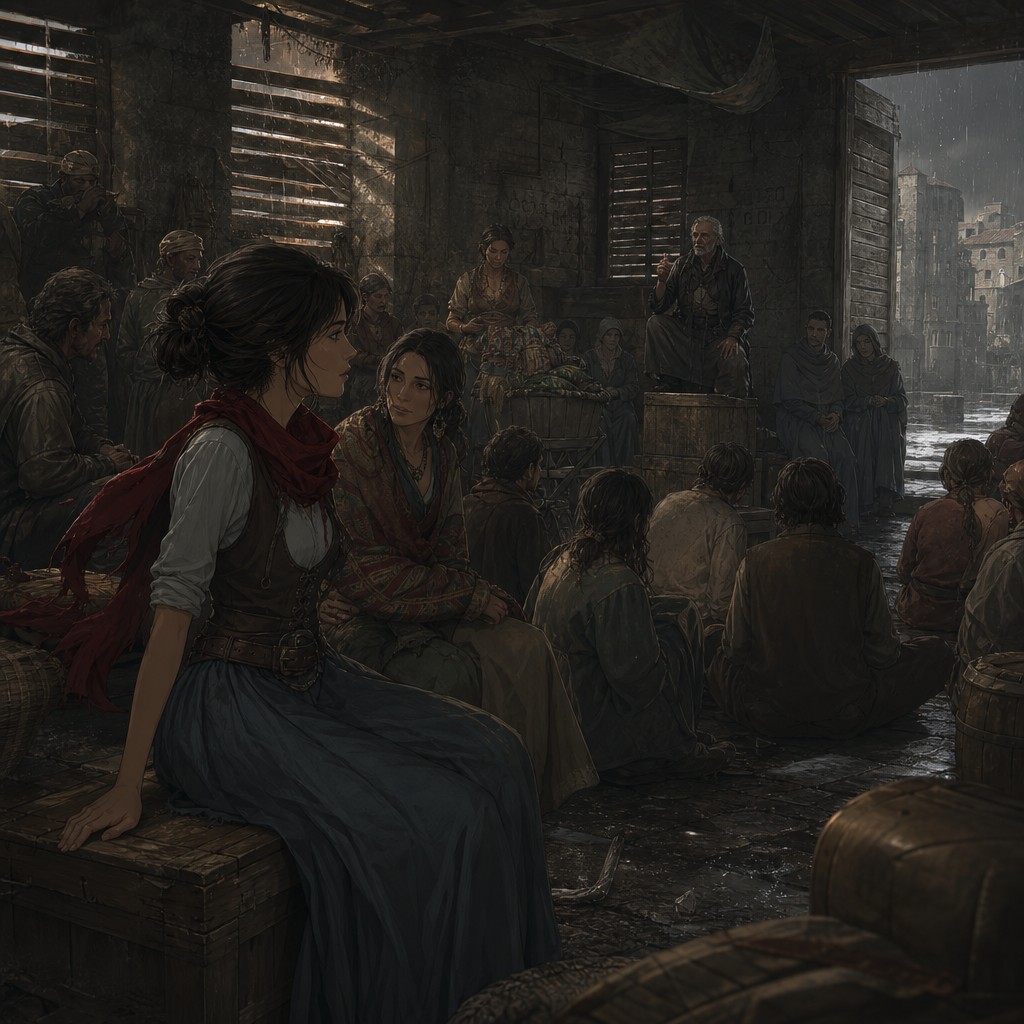
Guided by her new ally, Emily is given temporary refuge in a weathered stone warehouse. Surrounded by the quiet scent of dried herbs and old timber, she is granted a rare moment of reflection and a safe harbor to finally catch her breath.
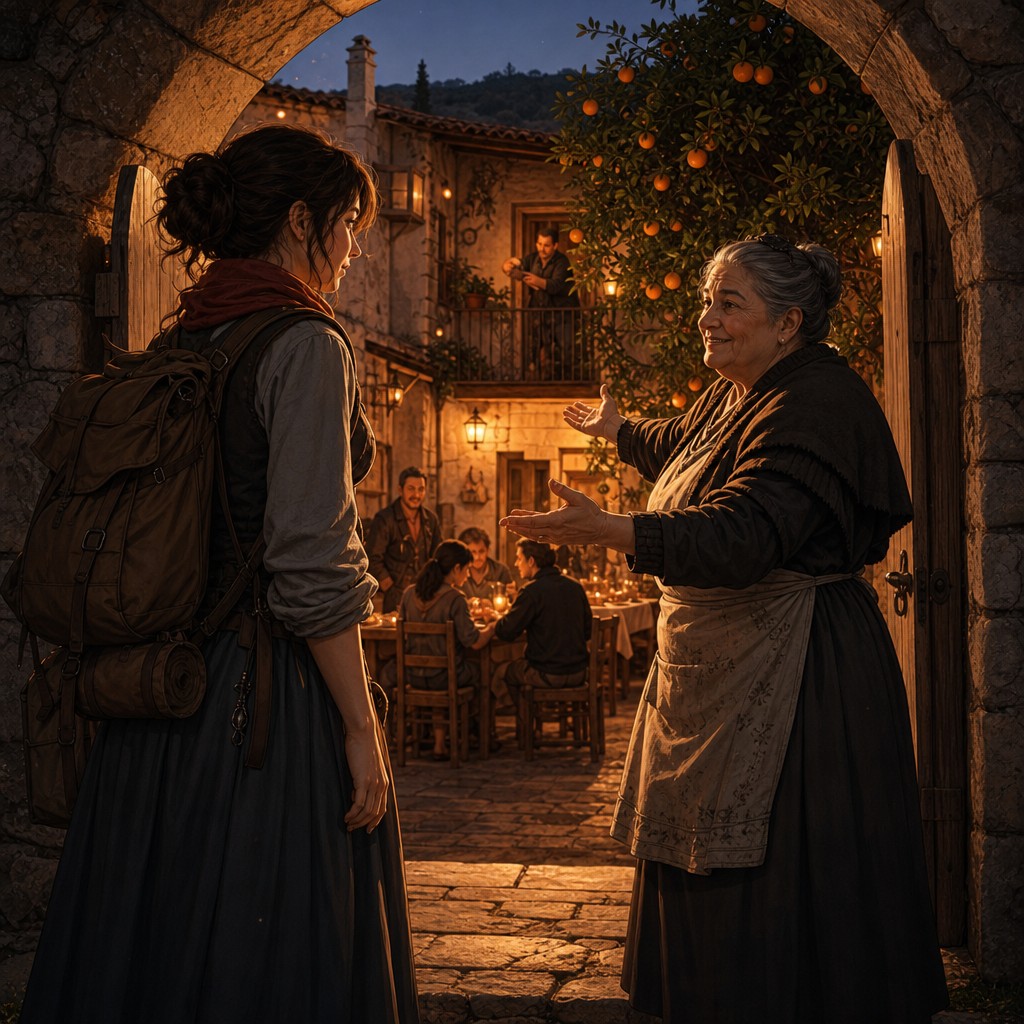
Following her time at the warehouse, Emily is warmly greeted at a village gate by Senyora Ferrer, the family matriarch. She is invited into a wide, whitewashed courtyard filled with the overwhelming, chaotic warmth of a loud, multi-generational family.
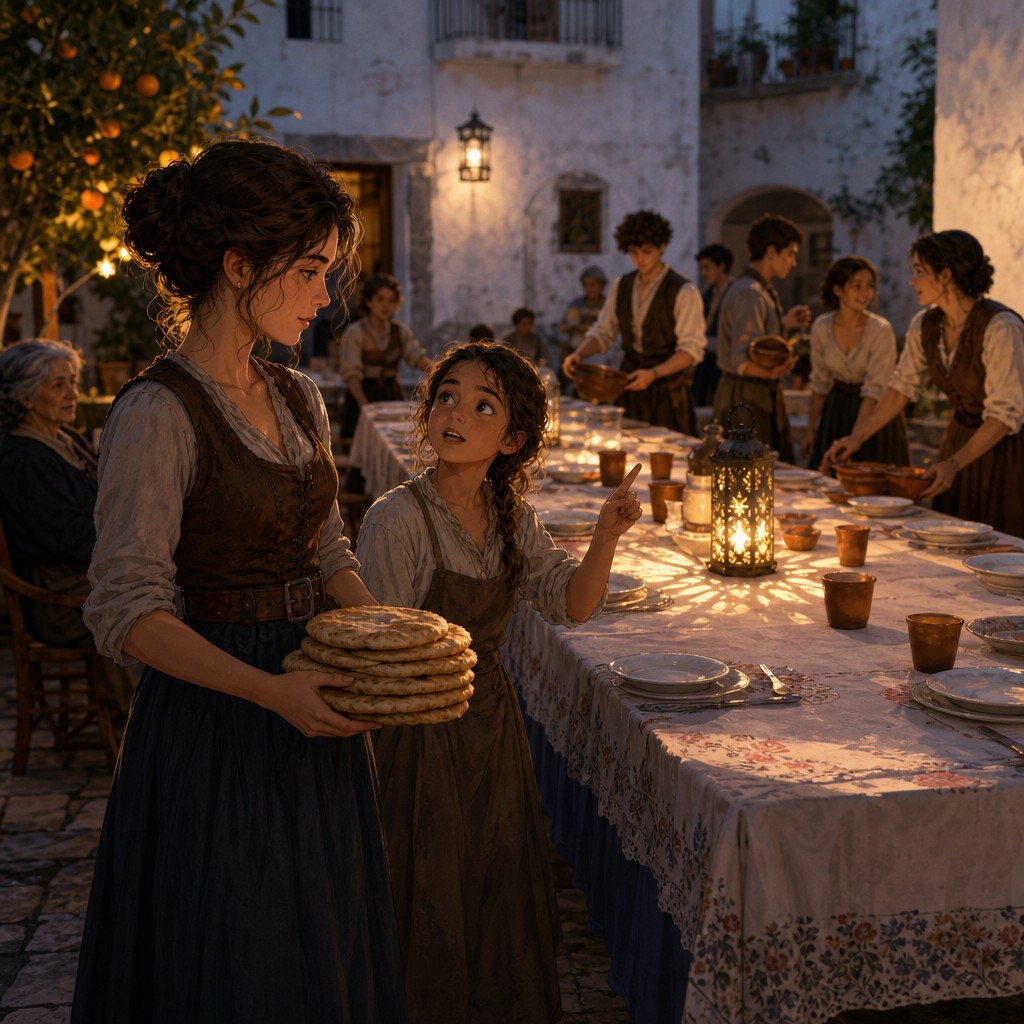
Emily immediately pitches in, assisting in the communal ritual of setting a massive, improvised outdoor table. Guided by a smiling small girl, Emily begins to seamlessly find her place within the family's complex, beautiful social choreography.
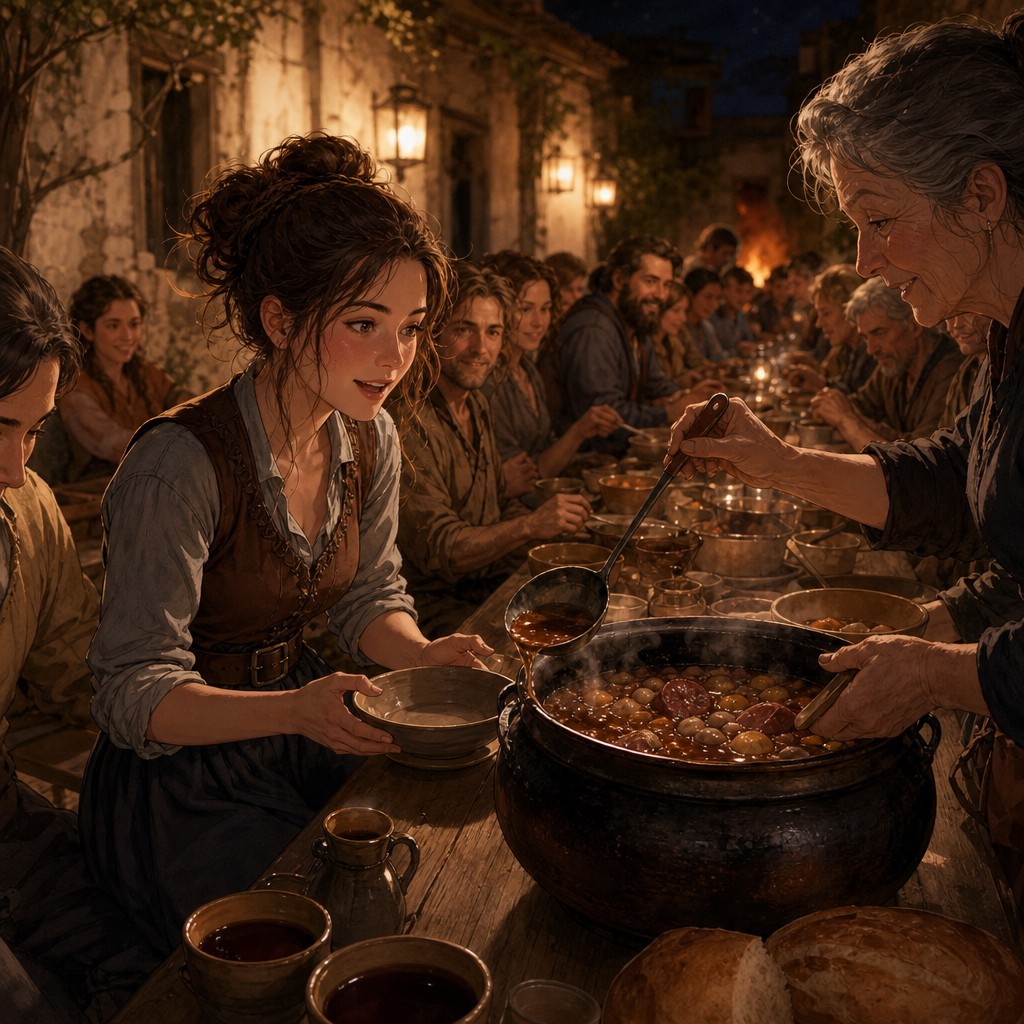
Two strong sons carry the family’s ancient clay pot, the olla ferrerana, to the center of the table. The grandmother ceremoniously ladles the first steaming bowl of stew for Emily, a profound gesture of hospitality that formally welcomes her into their circle.
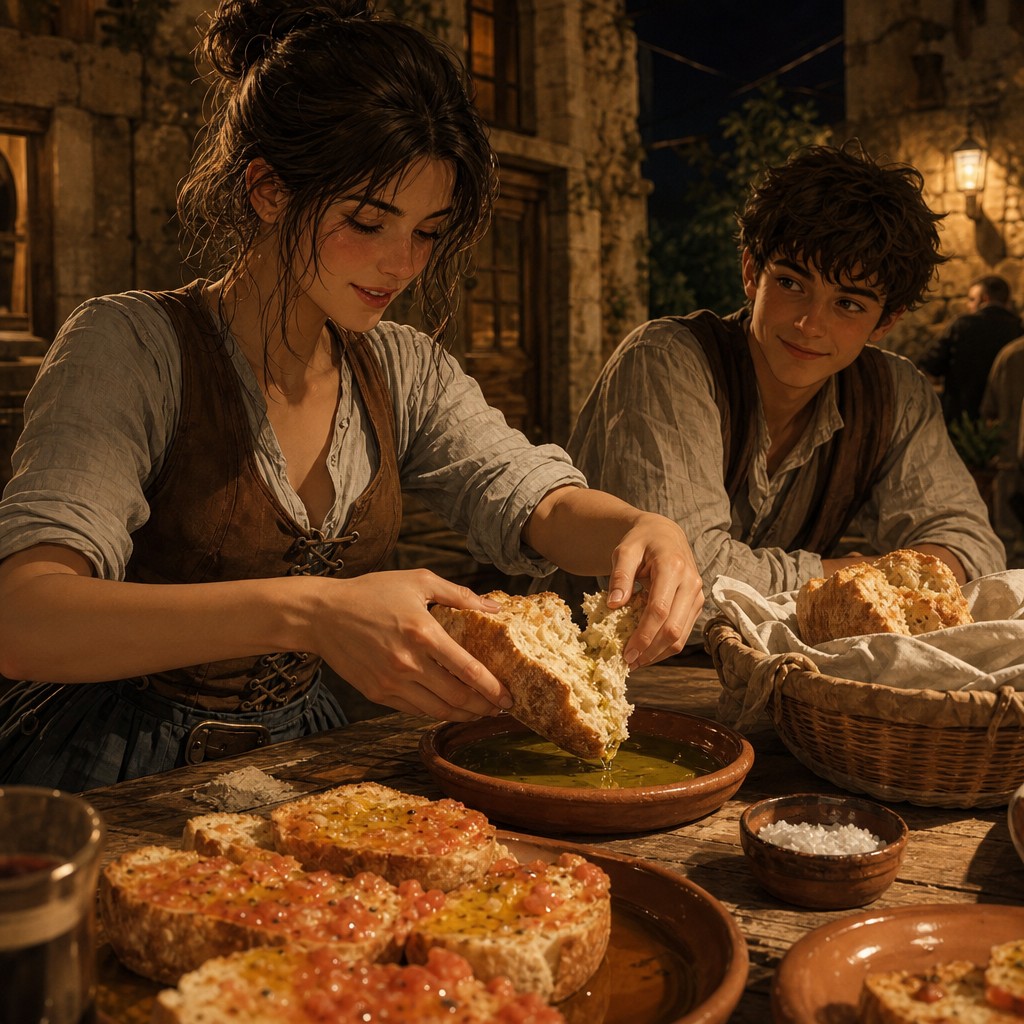
Emily is initiated into the local ritual of tearing the thick-crusted pa de pages and dipping it into vibrant, family-grown olive oil. The simple act provides an intense sensory connection to the land, grounding her in the deep traditions of the coast.
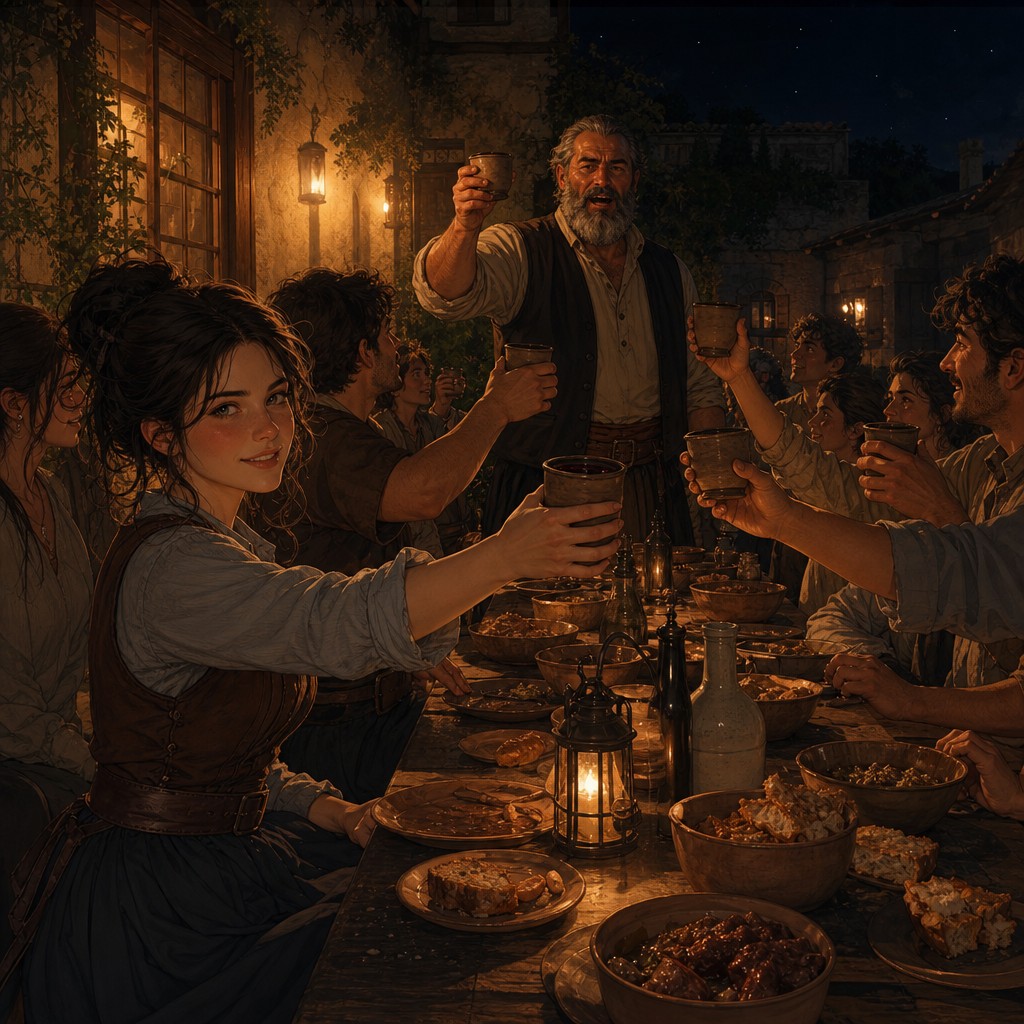
The father stands to lead a boisterous toast, pouring a dark, tannic local wine that tastes of iron-clay soil. Emily raises her ceramic cup with the others, swept up in a joyous wave of inclusion that ripples down the length of the long table.
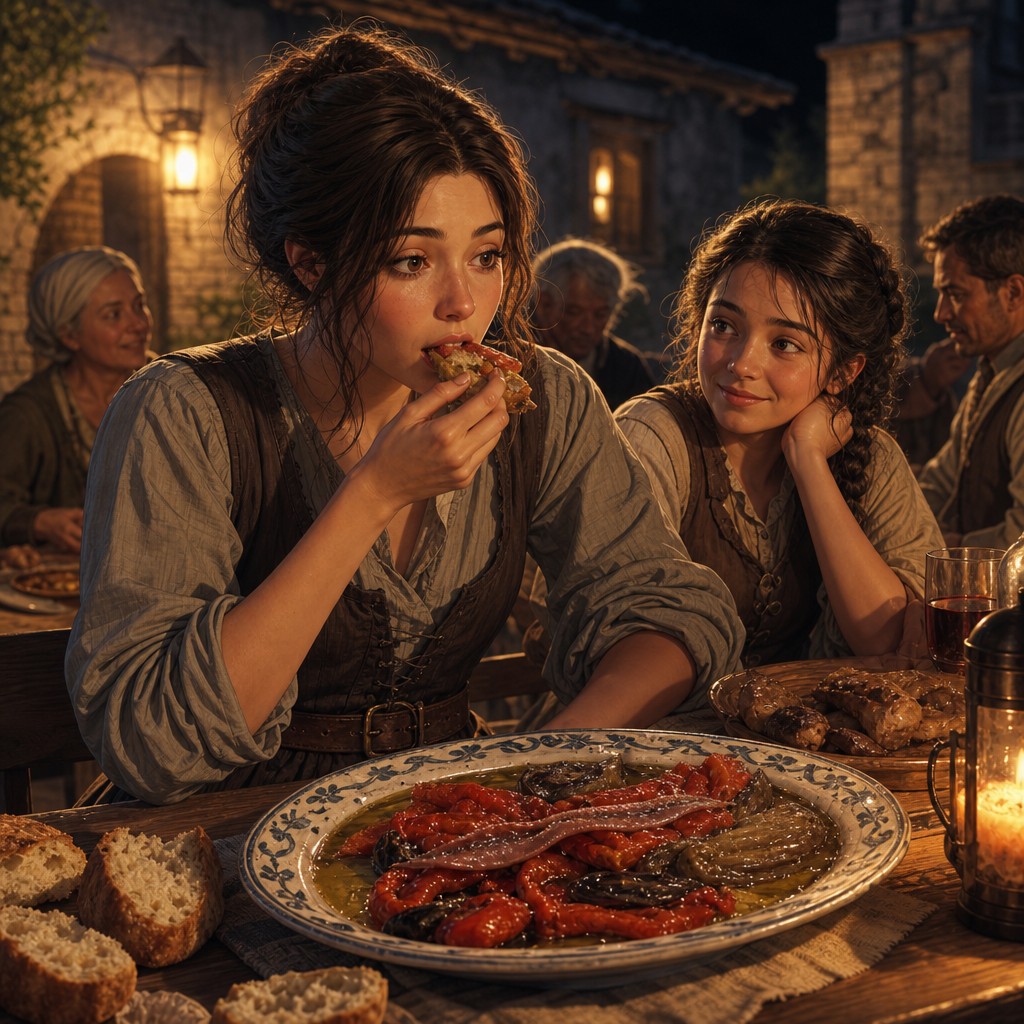
Emily tastes the escalivada—smoky roasted vegetables charred directly in the hearth embers. As the sweet, complex flavors hit her palate, she recognizes the region's history distilled into a single dish, feeling the silent, proud observation of her generous hosts.
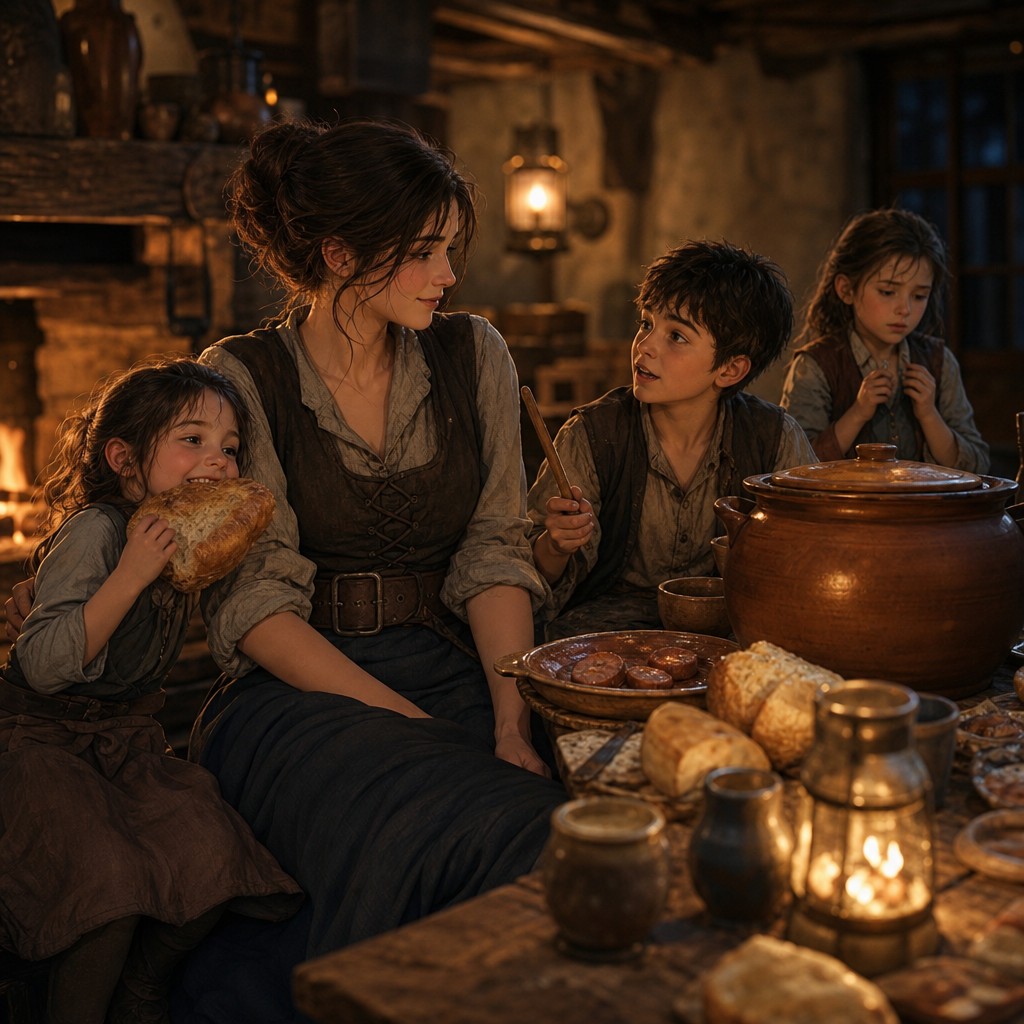
Moving to the children's end of the table, Emily listens to the oral history of the ancestral cooking pot. A five-year-old leans against her shoulder in a display of effortless, unearned trust, filling Emily with a profound, quiet warmth.
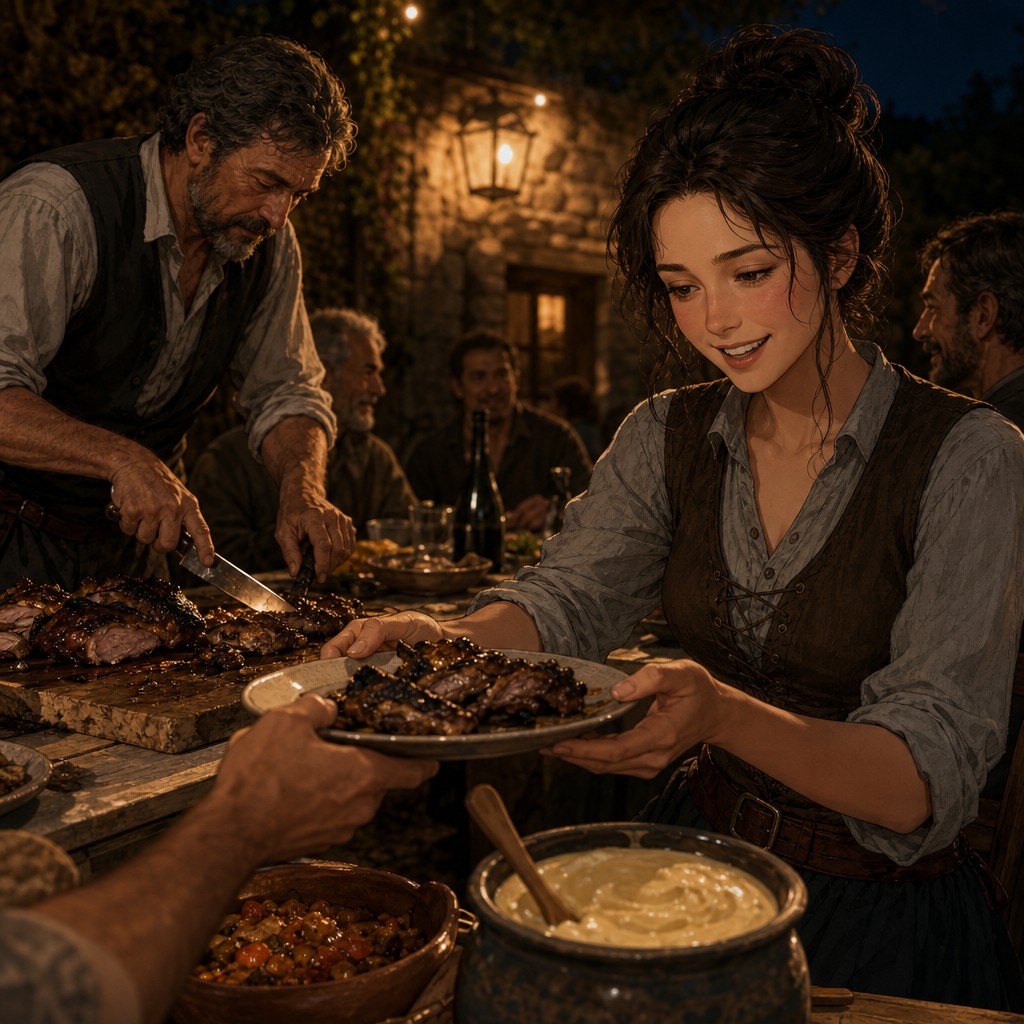
The father carves a garlic-rubbed grilled lamb using a bone-handled knife passed down through generations. Mid-argument over an ancient fence dispute, he hands the very first cut to Emily—a subtle, undeniable sign of ultimate respect for the traveler.
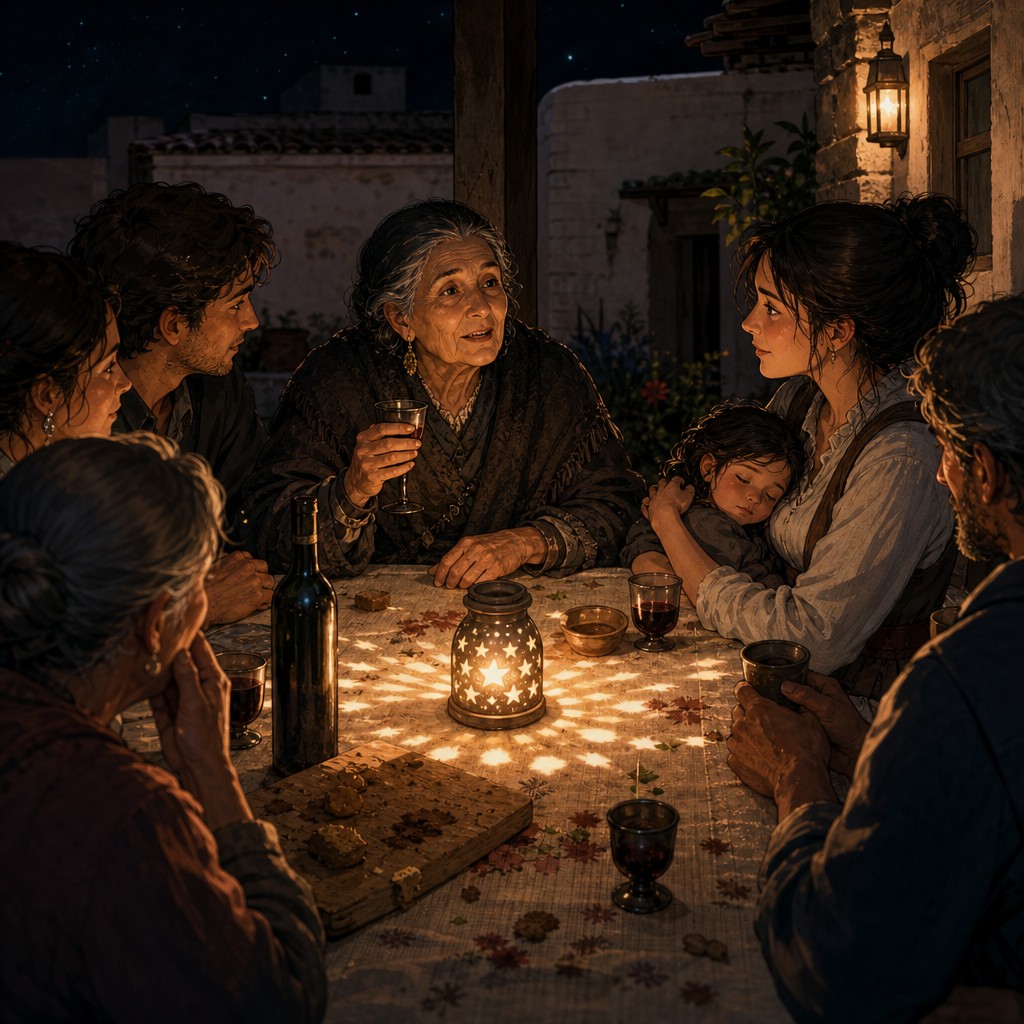
As the wine flows, the grandmother tells a hushed story of a stranger who was fed during a bitter drought before she could ever give back. Emily listens intently, realizing with sudden clarity that she is currently the stranger being sustained by this community's grace.
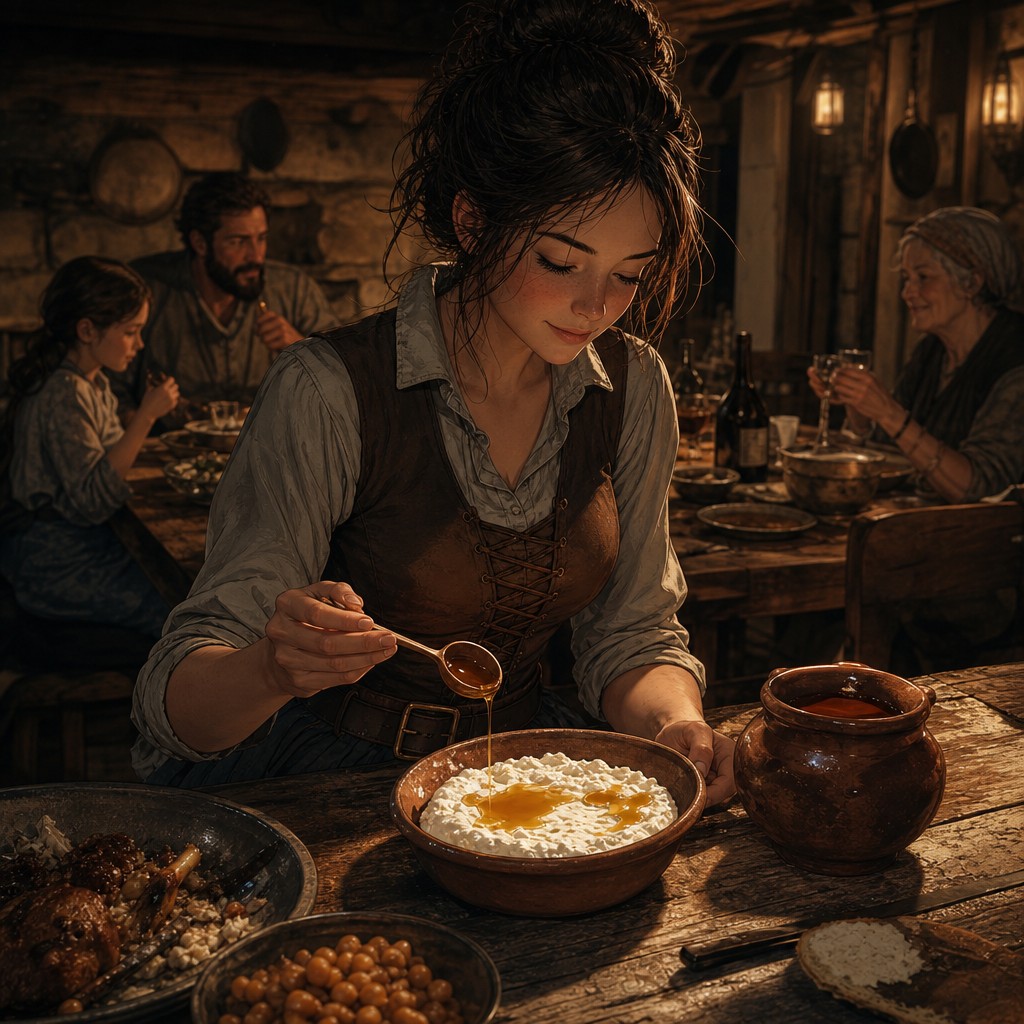
The heavy feast concludes with mel i mato—simple fresh white cheese drizzled with golden honey. The floral, sweet reset produces a reverent silence across the table, providing a moment of cool, delicious surrender to end the night.
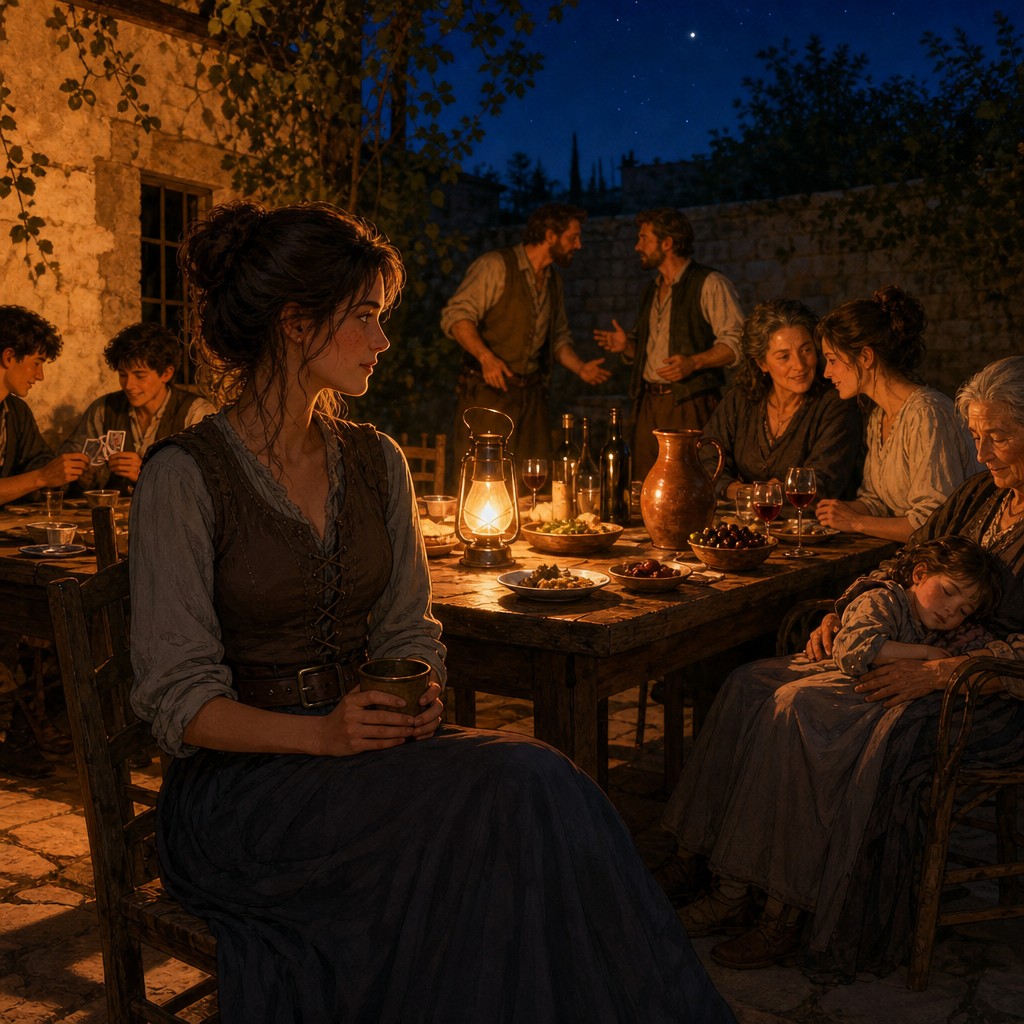
As the meal lingers deep into the blue night, Emily sits quietly with a cup of lemon verbena. She witnesses a thriving family ecosystem in perfect balance, one that offers her a seat at the table and asks absolutely nothing in return.
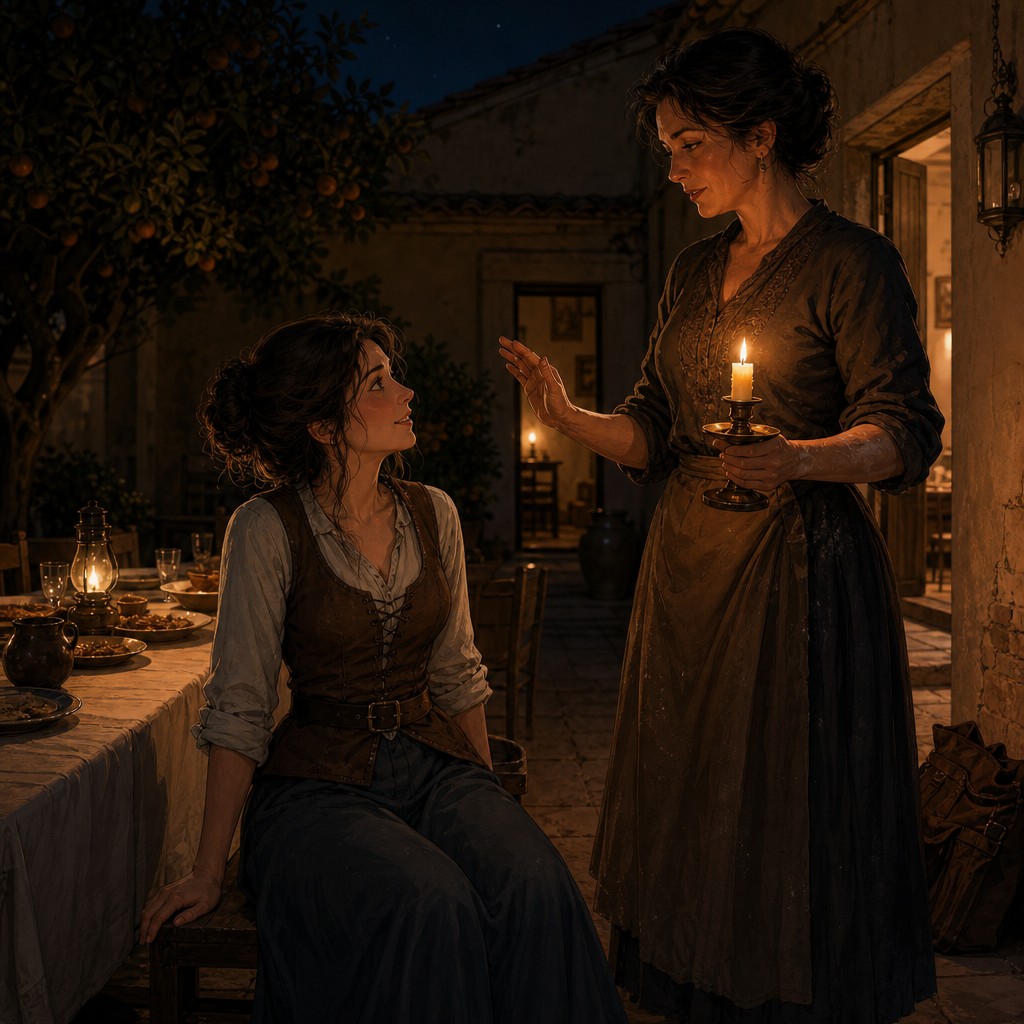
The table cleared, a flour-dusted daughter-in-law of the house offers Emily a room and fresh water for the night. The offer is delivered as a practical, unceremonious statement of care, gifting Emily with a rare, desperately needed sanctuary.
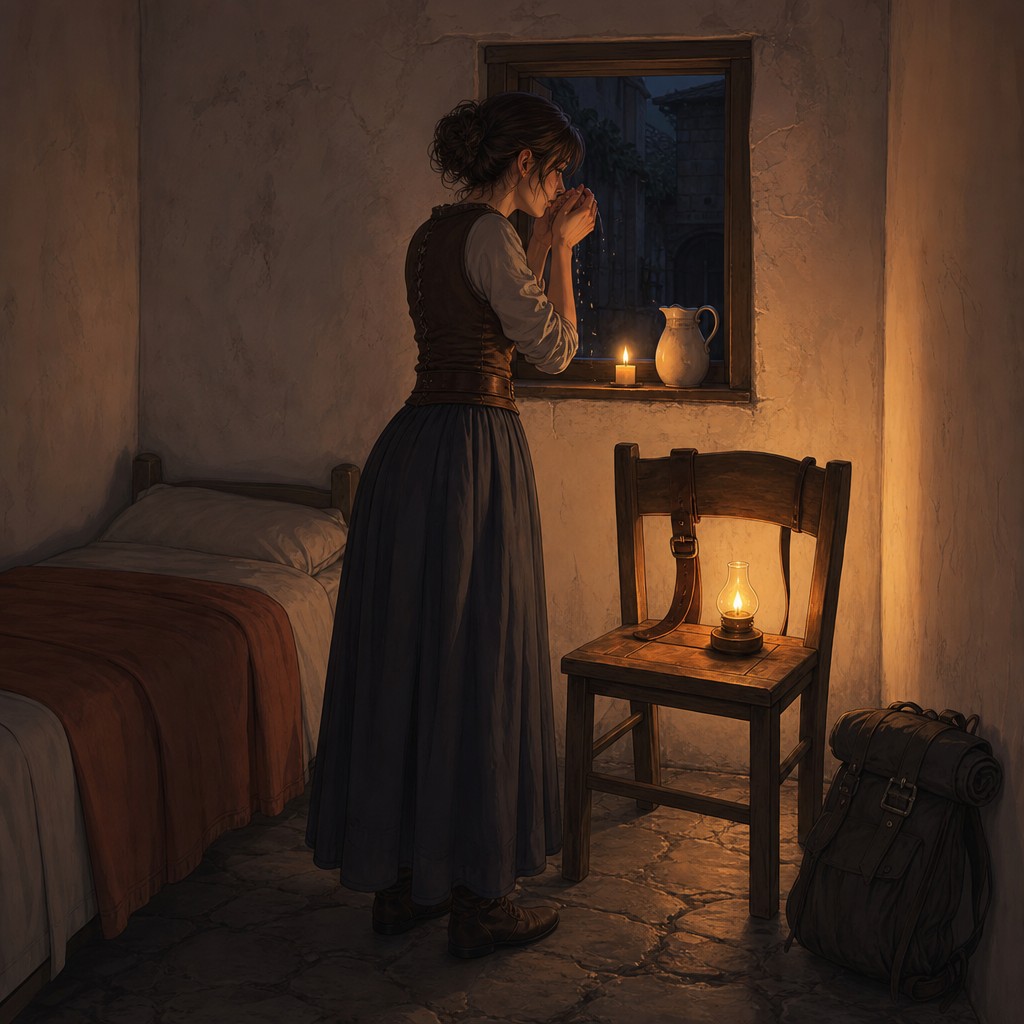
Standing in the small, whitewashed guest room, Emily washes the day's dust from her face with water from a ceramic pitcher. She absorbs the unique, comforting silence of a sleeping house, a domestic warmth she hasn't felt since leaving Alcaverde.
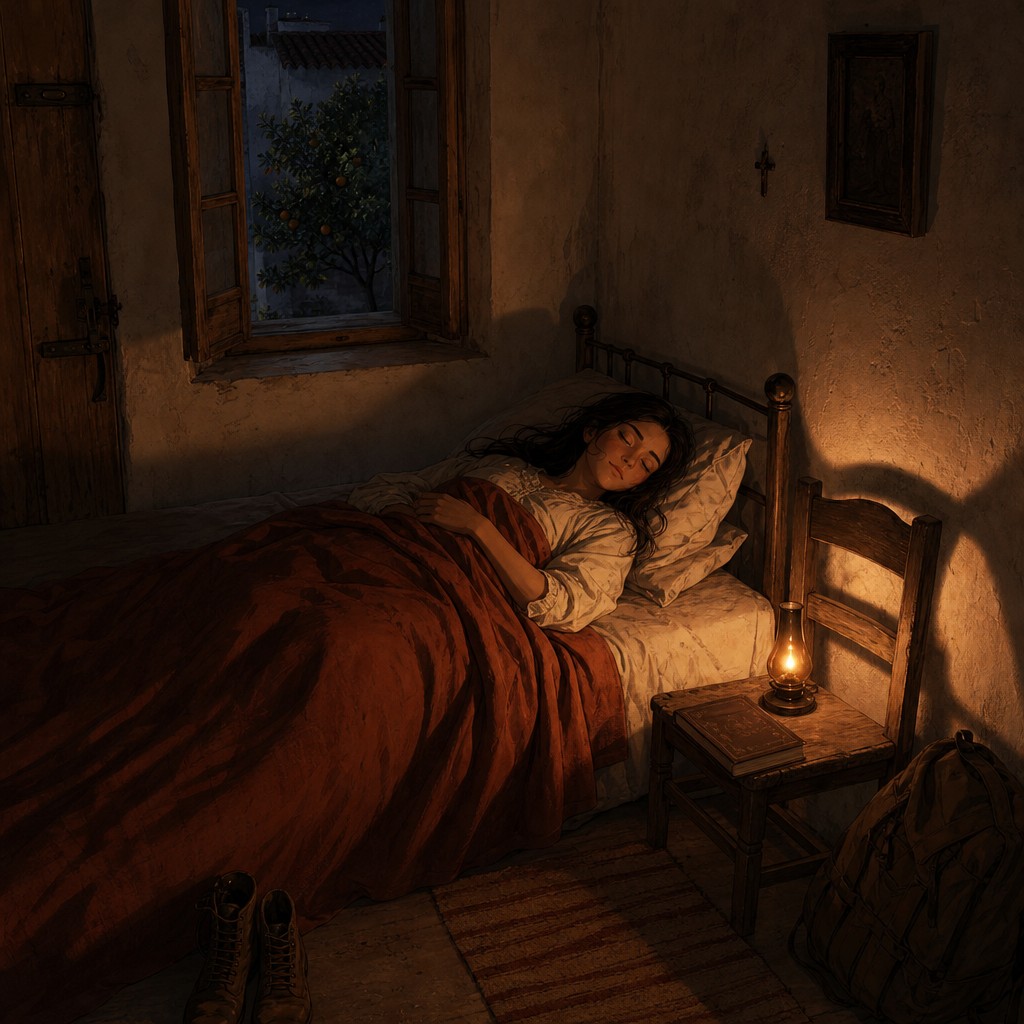
Emily climbs into a proper, narrow bed, pulling the rust-colored blanket to her chest. She lets her hair loose against the pillow, setting down her heavy physical and emotional burdens for one night of complete, temporary safety and restful sleep.
❦ FIN ❦