FAUST · 1 / 10
Chapter I: The World Before the Fall
In the celestial machinery of heaven and the suffocating silence of a scholar's tomb, a wager is struck and a mind breaks open — Faust's intellectual despair becomes the engine of everything that follows.
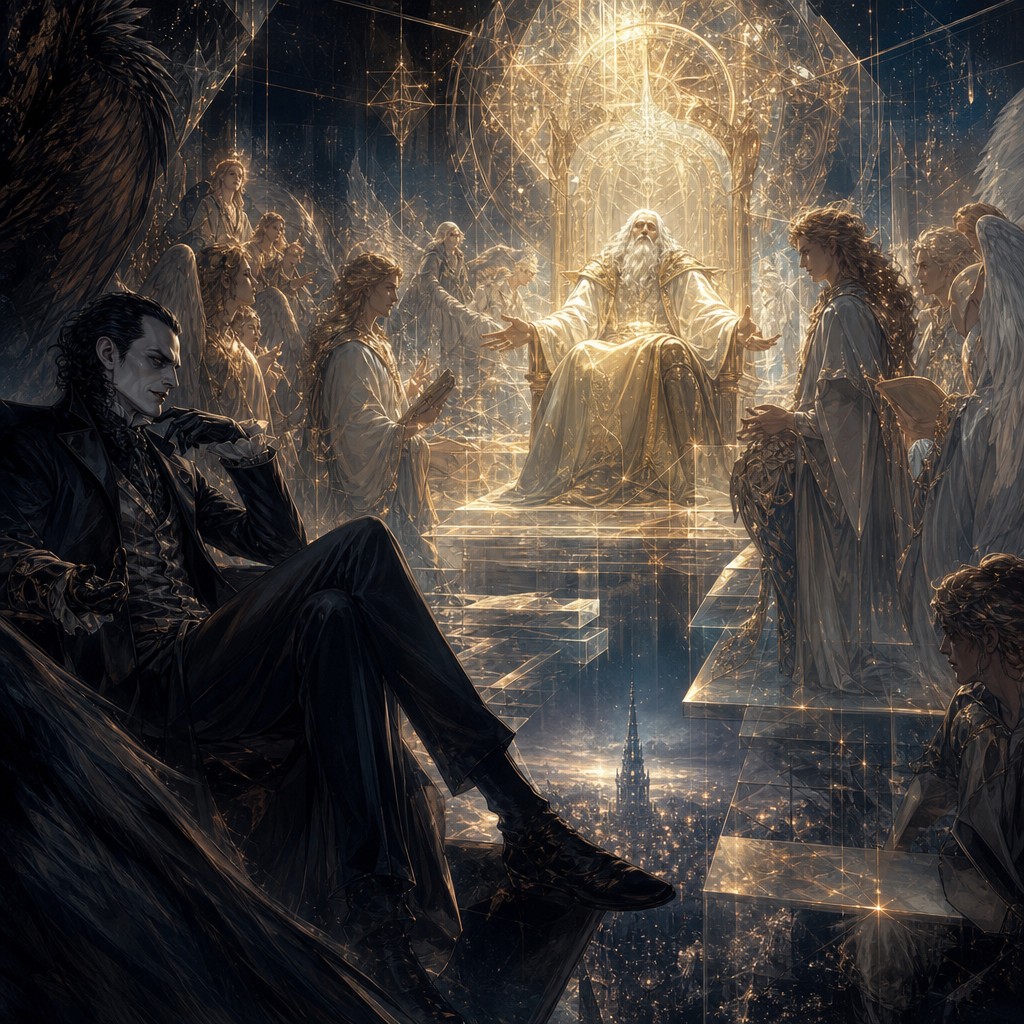
Before Faust draws his first tortured breath in the study below, the cosmic wager is already struck. God and Devil meet not in thunder but in a drawing-room of eternity — Mephisto lounging with the ease of one who has observed human failure across every age, the angels singing their patient antiphonal praise, the Lord serenely certain of what the restless scholar's hunger will ultimately reveal. The wager is not about damnation. It is about whether striving itself — blind, unappeasable, magnificent — constitutes a form of faith. Mephisto bets on ruin. God bets on reaching. The difference between them is not power but patience. Faust, oblivious in his tower of books below, has already become the stage for an ancient argument he has not been asked to join. Heaven and Hell agree on one thing alone: that his soul belongs to neither — until he chooses.
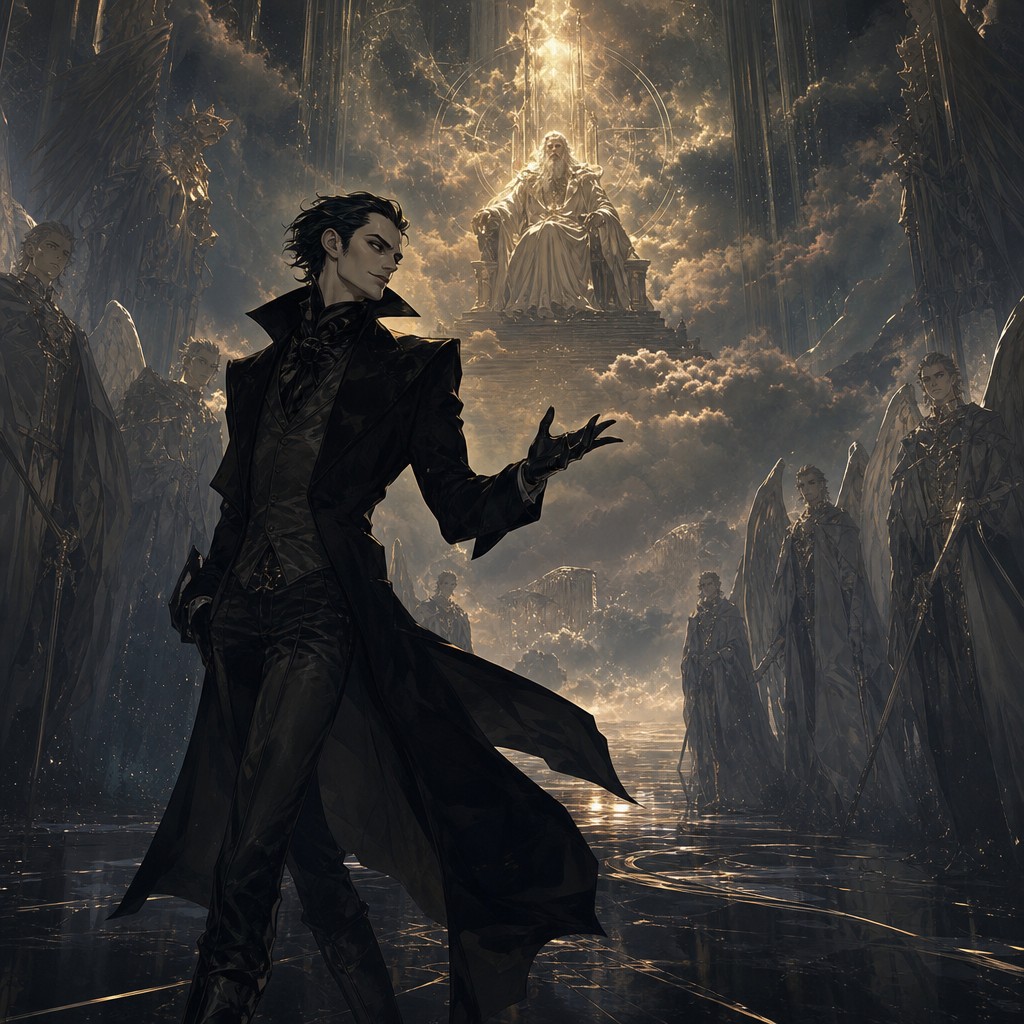
Mephisto does not arrive in heaven with fire and ultimatum. He arrives with a smirk and an argument — the eternal contrarian, the thorn who makes the rose garden honest. His contempt for Faust is a performance: what he truly offers is a wager he already believes he has won. He has watched a thousand scholars break on the wheel of knowledge-without-wisdom. He has seen the pattern. He knows the hunger. What he has not calculated — what he cannot calculate — is that the hunger itself might be the point. The angels sing on, undisturbed. The Lord listens, untroubled. And Mephisto, brilliant and wrong, paces across the floor of heaven like a salesman about to lose the only sale that ever mattered.
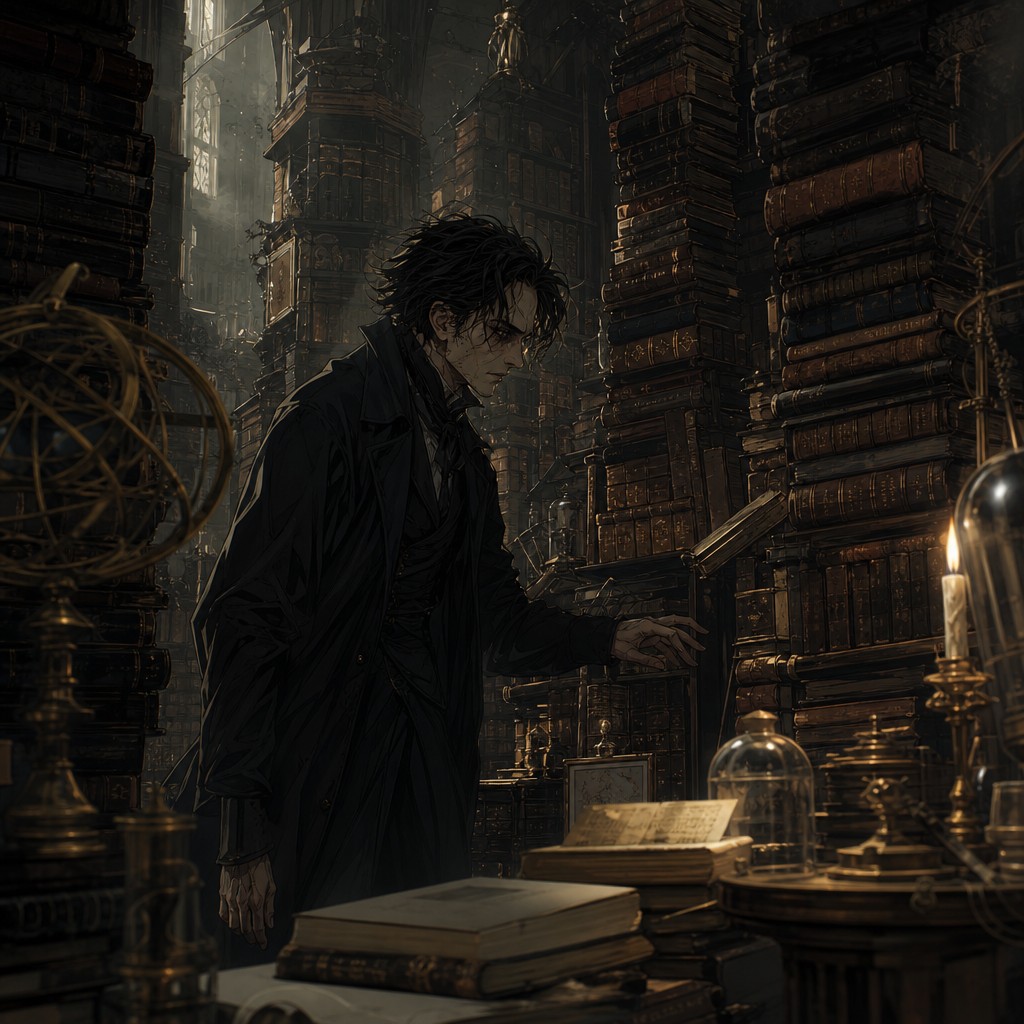
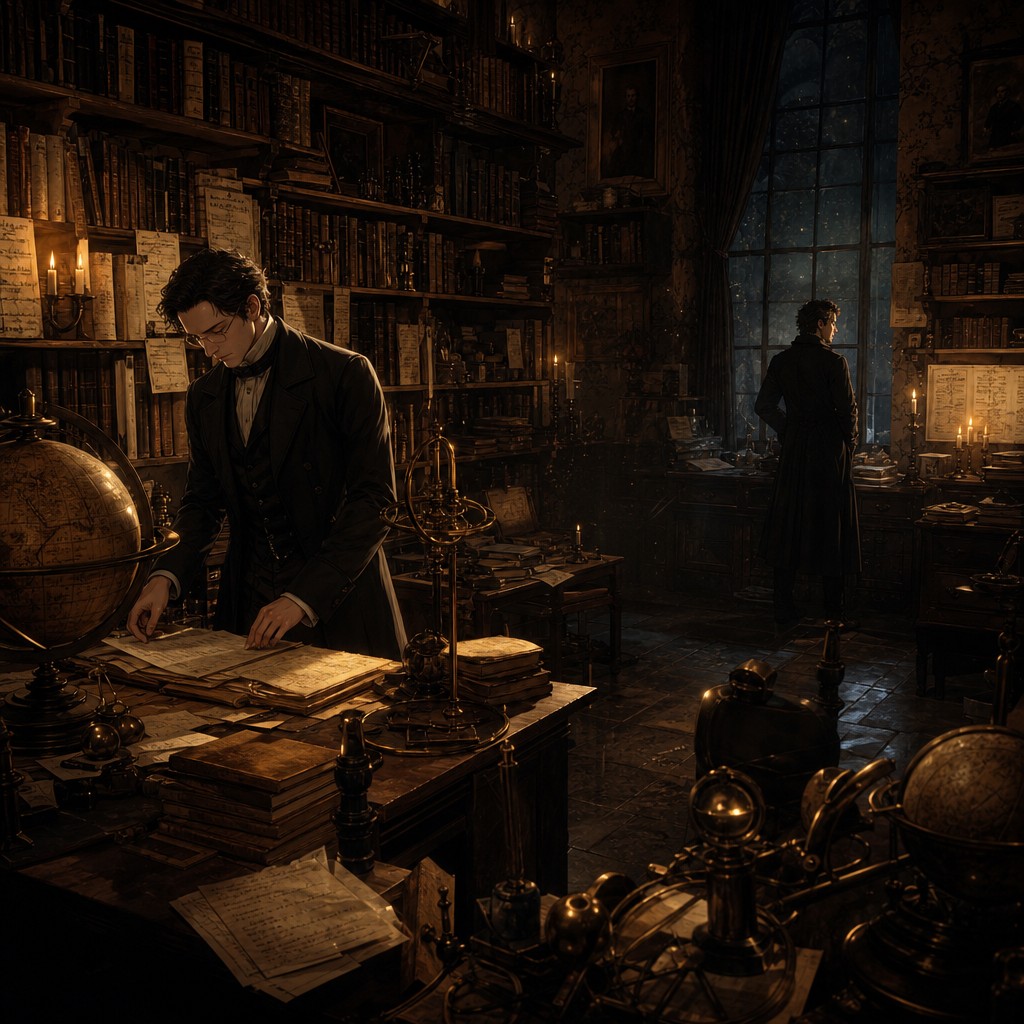
The books have become the walls of a prison the prisoner built himself. Faust has mastered theology, philosophy, law, and medicine — four kingdoms of inherited truth — and stands before the accumulated treasure of human thought knowing only that he knows nothing that matters. The instruments catch pale light and mock him. The astrolabes measure distances he cannot cross. The crucibles have reduced everything to ash. This is the moment before the bargain, the moment before the fall: not despair yet, but something worse — the lucid recognition that knowledge without contact is a beautiful corpse. He does not rage. He stands among his books the way a man stands in a house he has outgrown: measuring the walls, understanding at last that the only way forward is through them.
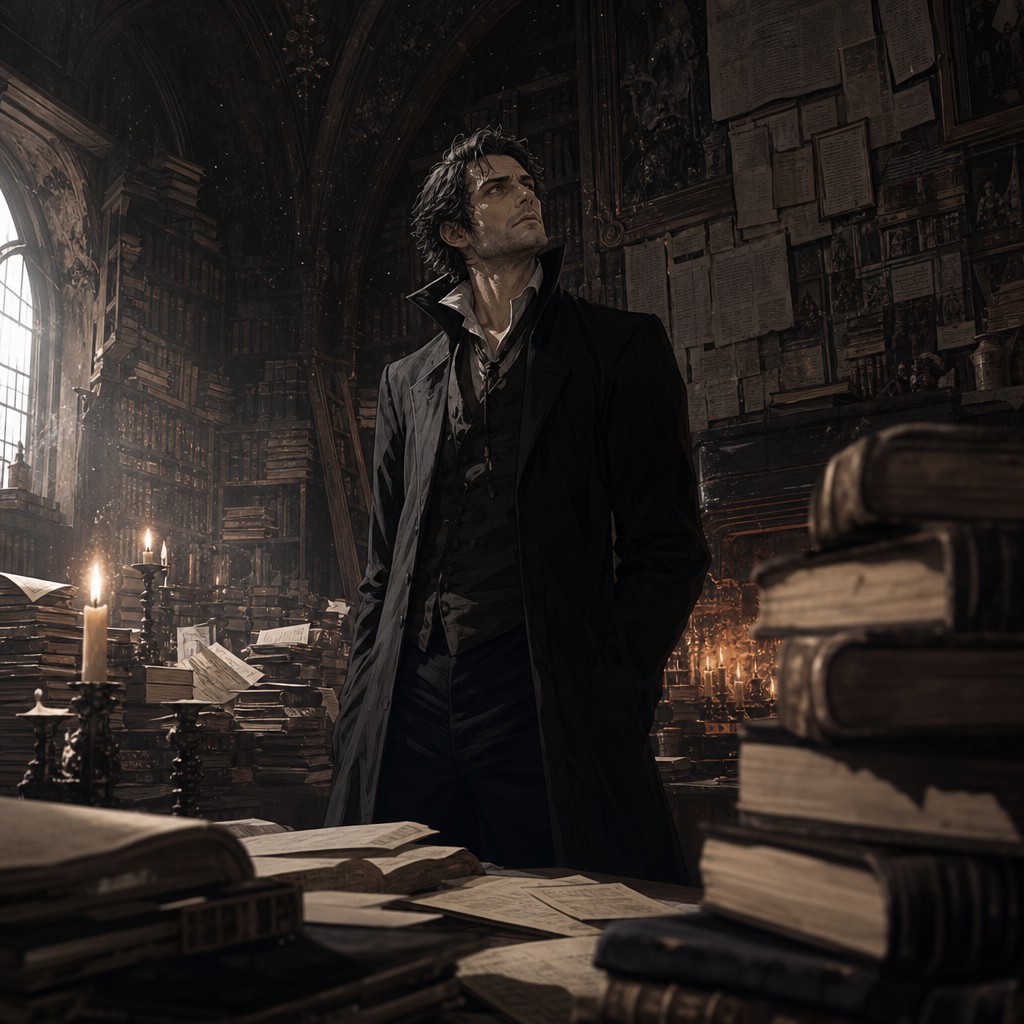
The fireplace behind him is dying. The manuscripts before him are dead. Faust stands in the wreckage of a life spent in pursuit of understanding, and what he has found is the shape of what he cannot reach. He has not failed. He has succeeded completely — and that is the crisis. Every question he has answered has opened three more, each deeper and less answerable than the last. The hunger that drove him to his books has been fed only enough to become more ravenous. He wants contact with the real — scalding, immediate, face-to-face — not mediated through the veil of another dead man's formula. The room feels haunted by everything he has failed to understand. The bargain that awaits him is not yet visible. But the conditions for it are already perfectly assembled.
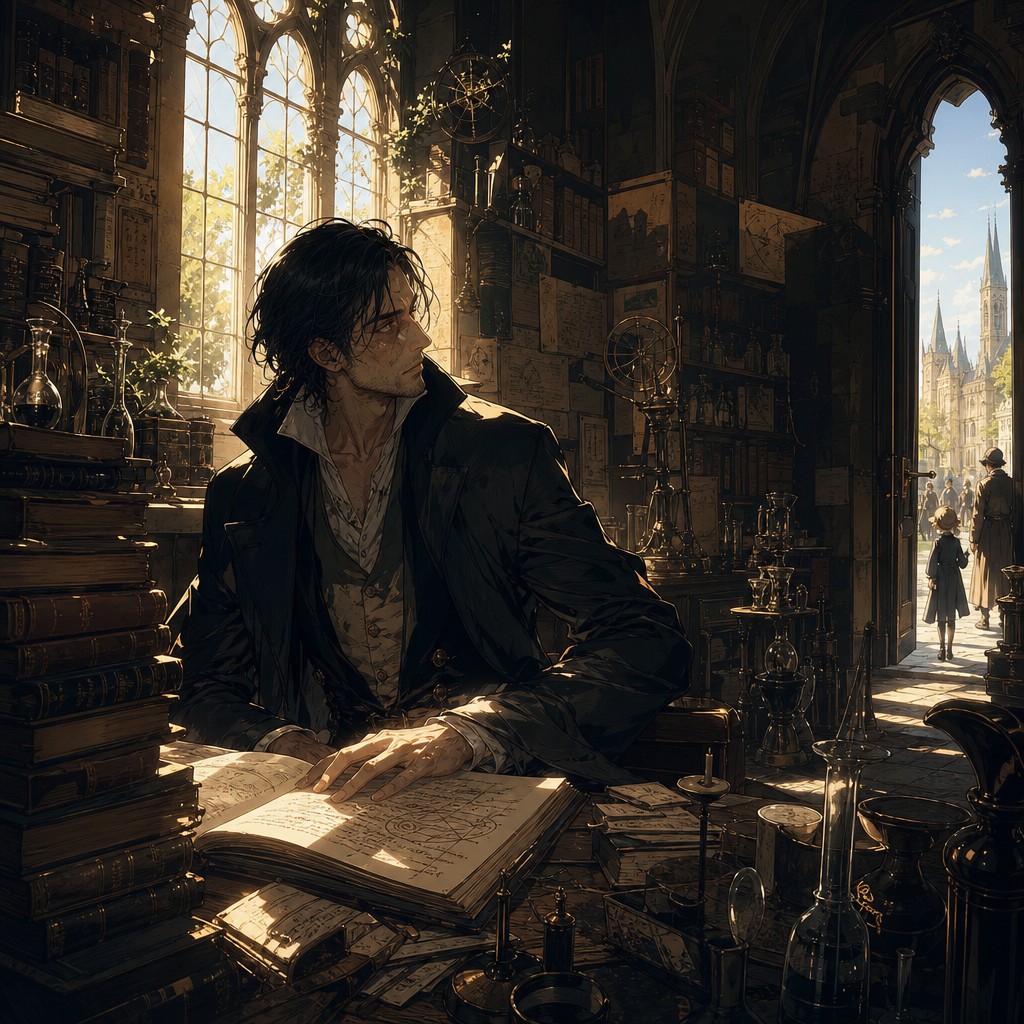
Easter morning forces itself through the walls of a room that has not known spring in years. The bells do not ask permission. They do not offer consolation or theology — only the blunt, animal fact that something stirs, that the world has survived another winter, that green things are rising again without his assistance or approval. For a single moment, standing in the sealed study with his poison cup already prepared, Faust hears the bells and hesitates. Not because he believes. Because he remembers believing — and in the gap between the man he was and the man he has become, something cracks just enough to let light through. He does not rise to join the procession. But he does not die today. That is enough. That hesitation is everything.
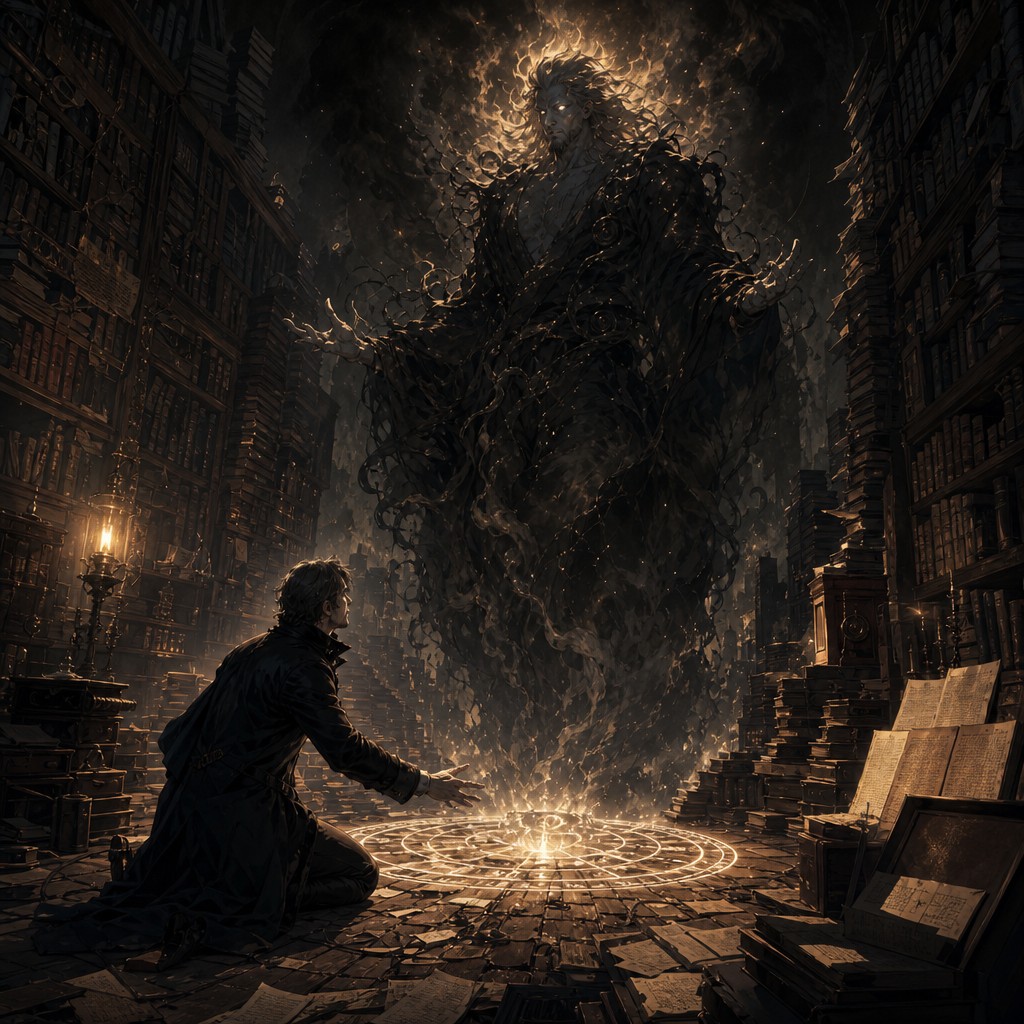
He draws the circle and calls forth what he has no right to call. The Earth Spirit rises — not as an answer to his question, but as the question itself made visible: a presence so vast, so entirely indifferent to his genius, that his intellect — once his pride, his armour, his identity — becomes, in an instant, a liability. The spirit does not speak to him as an equal. It speaks the way weather speaks: without malice, without address, without any acknowledgment that his suffering is interesting. He recoils. The spirit withdraws. The books around him seem, for the first time, theatrical — painted backdrops to a play he is no longer certain he understands. He has touched something real. And what it has taught him is the disproportionate distance between what he is and what he wanted to be.
❦ FIN ❦