FAUST · 7 / 10
Chapter VII: Classical Waters, Helen, and the Limit of Form
Faust descends into the mythic depths of antiquity in pursuit of beauty itself — and finds, in Helena, the proof that to touch the absolute is not to be fulfilled but to learn, definitively, the cost of every desire.
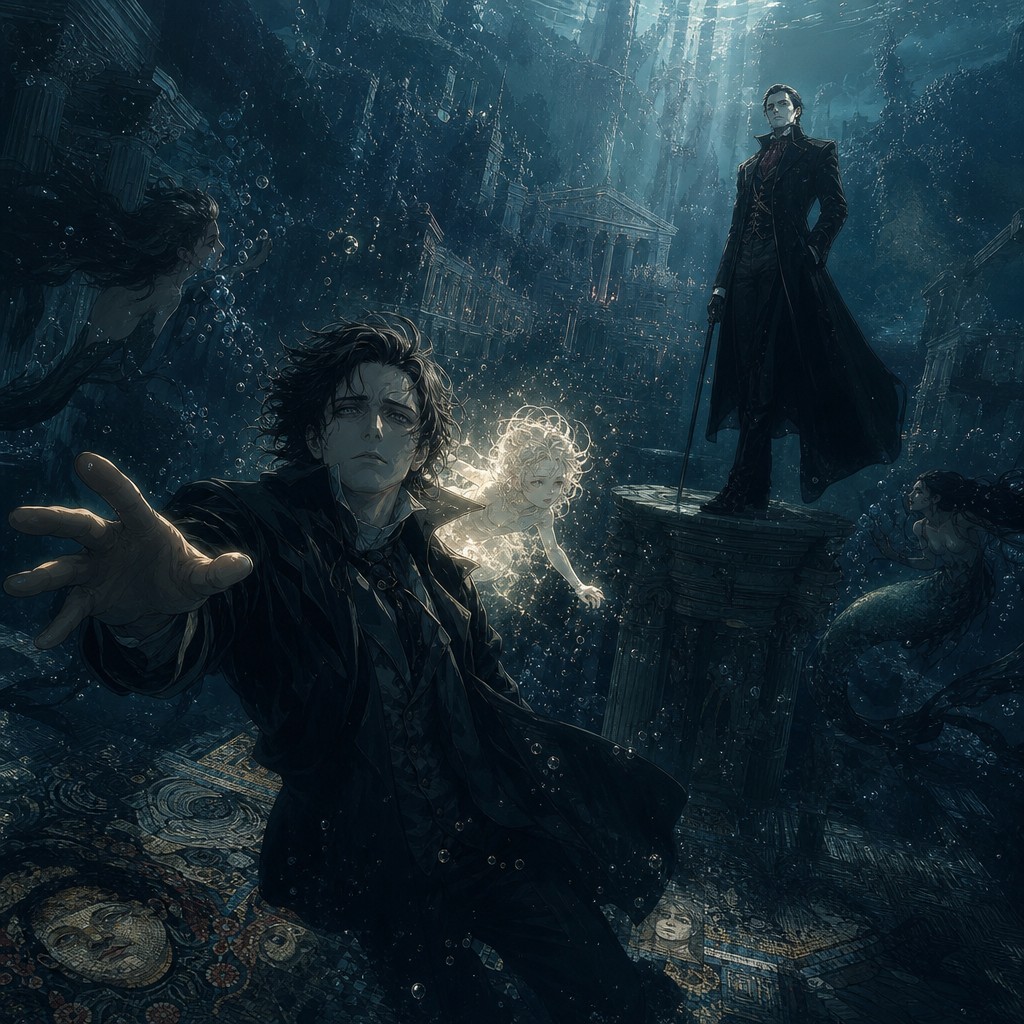
He descends into waters that are not water — a classical realm where time pools like sediment, where marble fragments surface from depths no mortal eye has charted. The landscape refuses conventional geography. Around him, the precocious dead stir. Sirens call with voices that sound like everything he has ever wanted. The finite world recedes not behind him but below, sinking like a shoal beneath fathomless classical seas. His library, his mortal ambitions — all diminished to specks. Here, the grail is not sought but encountered: Helena waits in the mosaic of myth, unreachably beautiful, the prize that will teach him, finally and definitively, the cost of desire itself. History does not chronicle this moment. History drowns in it. Faust stands alone among the harbourers of gods and ghosts, and the promise of transcendence — vast, luminous, exactly what he has always wanted — tastes, as he reaches for it, precisely like doom.
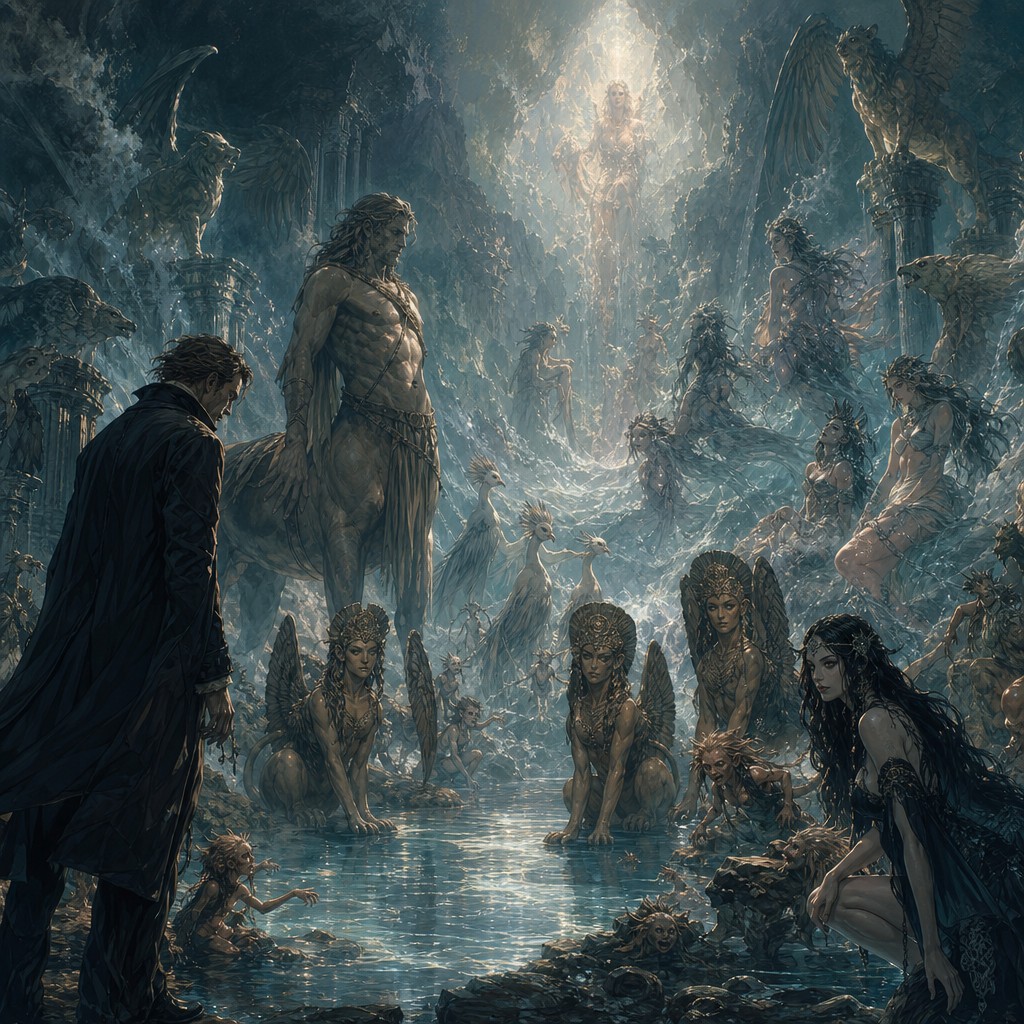
The waters thicken with presences older than memory. This is not narrative progress. This is the moment when striving encounters the limit of form itself — when the hunger for total experience meets the cold beauty of what cannot be possessed, only witnessed. Sirens rise from nebulosity. Sphinxes maintain their riddle-architecture. Lamiae move through shimmer with serpentine grace. Chiron stands as ancient witness. Helena moves somewhere within the distortion, knowable only through the refraction of myth. The communal memory of antiquity pulsates around Faust in forms that were once worshipped and are now reduced to outline and suggestion. He stands at the threshold, neither fully entering nor retreating, suspended between two hungers: the one that brought him here, and the recognition of what it will cost to satisfy it. Everything here is simultaneously at its height and already becoming shroud. The symbols speak a language thinner than words, more ruthless than reason.
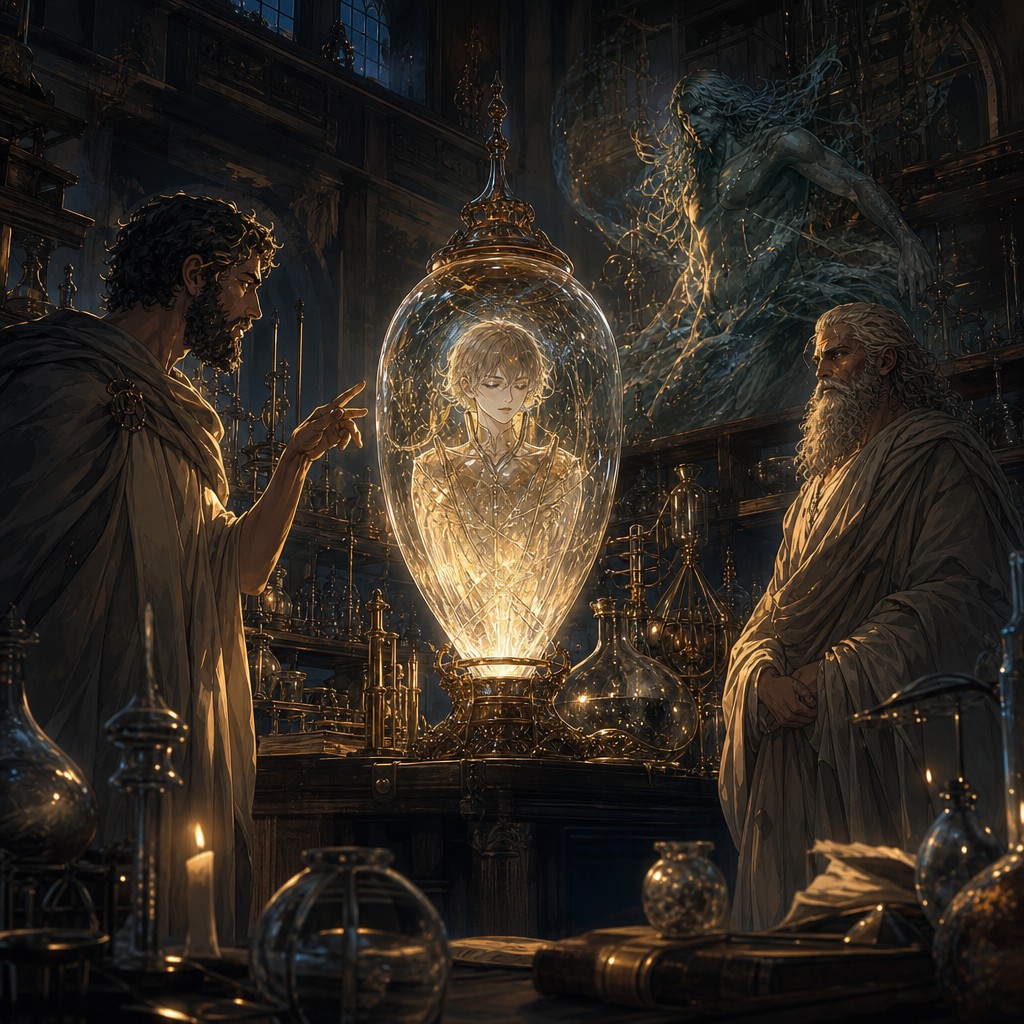
The Homunculus throbs within his crystal vessel — a consciousness without flesh, a will without weight, the ultimate scholar's dream curdled into its own specific torment. He is intellect made luminous but locked in glass. Around him, the apparatus of creation stands mute, mocking him with its reliability. He has evolved beyond the possibility of natural birth, yet cannot cross the threshold into natural life. He speaks with urgent clarity: he must find a destiny beyond this hostelry of locked potential. He knows, with the certainty of his own artifice, that embodiment lies elsewhere — in the mythical waters, in the place where forms dissolve and reform. The philosophers argue at the margins. Proteus shifts in shadow, elusive and mutable. And the Homunculus, luminous and desperate, studies the problem of how to cease being a nuisance to existence and become, at last, a thing of the world. His luminescence casts shadows that seem to move with intention they do not yet possess.
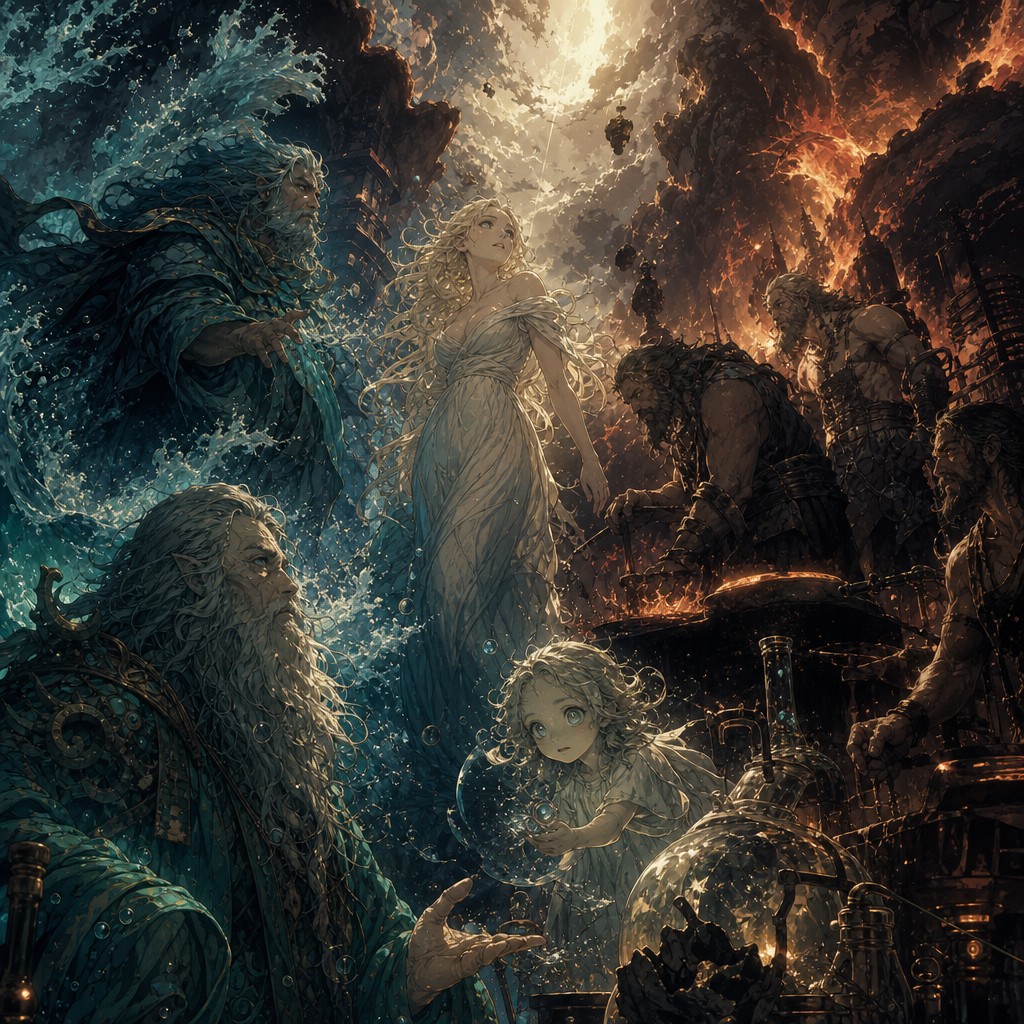
The elements themselves grow restless. Fire pulses beneath the earth. Water rises from depths that no mortal eye has penetrated. Air draws breath from the void. Earth splits, yields, transmutes. The old forms cannot hold. This is the moment before Helena steps into time, before beauty takes flesh — when the boundary between the mythic and the mortal grows so thin that a single touch might shatter it forever. Faust has pursued this convergence through knowledge, through desire, through the cardinal sin of refusing to accept any limit. Now the universe answers. The classical order trembles. Water and fire court each other in the darkness. The Homunculus shatters his vessel against Galatea's chariot in an act of self-immolation that is also self-completion — consciousness choosing dissolution over perpetual incompleteness. Something vast stirs in the marriage of opposites, and the price of witnessing it is the shattering of whatever in oneself remains too human to bear such sight.
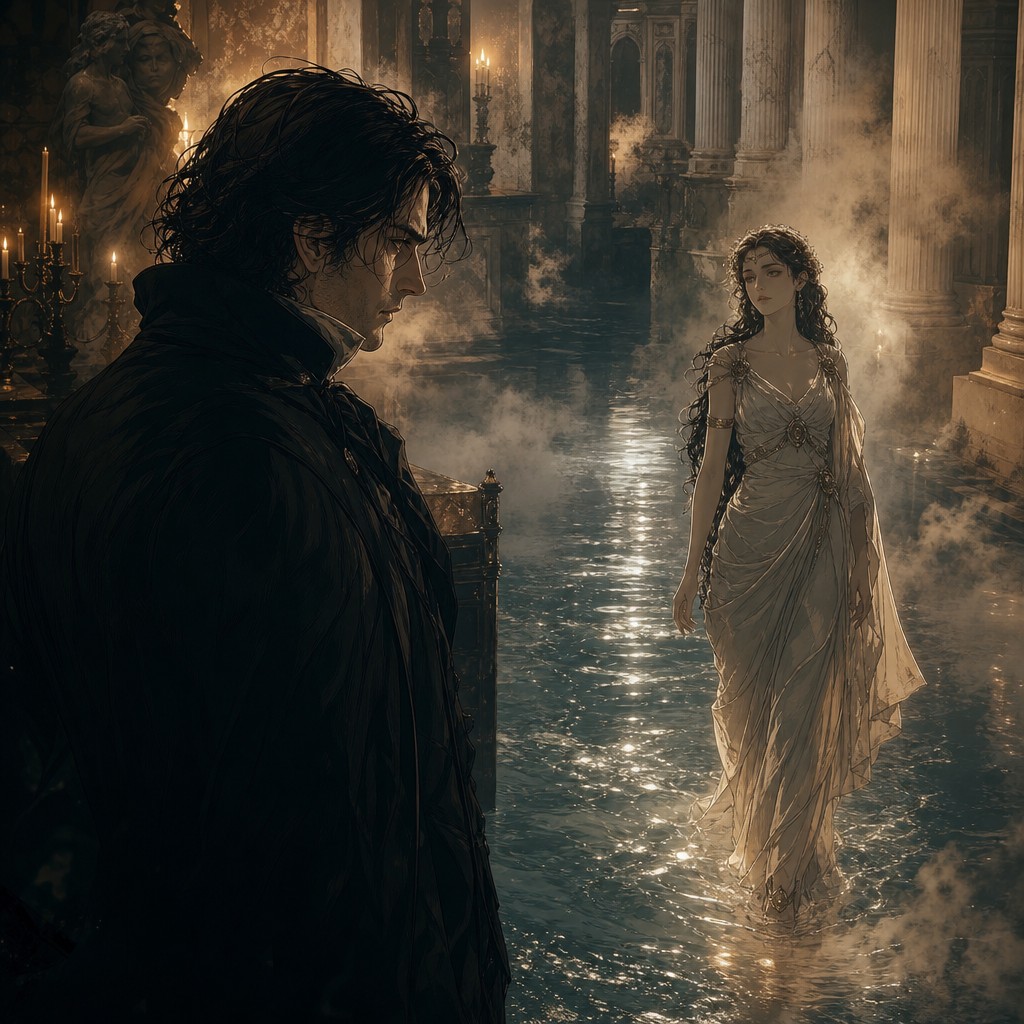
She approaches across classical waters and memory itself is gaining flesh. The reverence in the air is not the vulgar bustle of desire — it is the solemn recognition of form perfected, of beauty organized by centuries into something timeless and terribly real. She comes as Faust has imagined her: the fountainhead of all aesthetic longing, the guidepost toward which his restless striving has always pointed. But in her approach lies a paradox that will sadden even triumph: she is at once the answer to his hunger and its most inexcusable mockery. The waters shimmer with her arrival. Classical proportion, elfin grace, the texture of myth made lifelike — all converge in this threshold moment. Faust recognizes that to possess such beauty is not to stop the pendulum of desire but to enter its deepest swing. Beauty, when it finally arrives, does not fulfill the striving man. It reveals how far striving has carried him from any resting place.
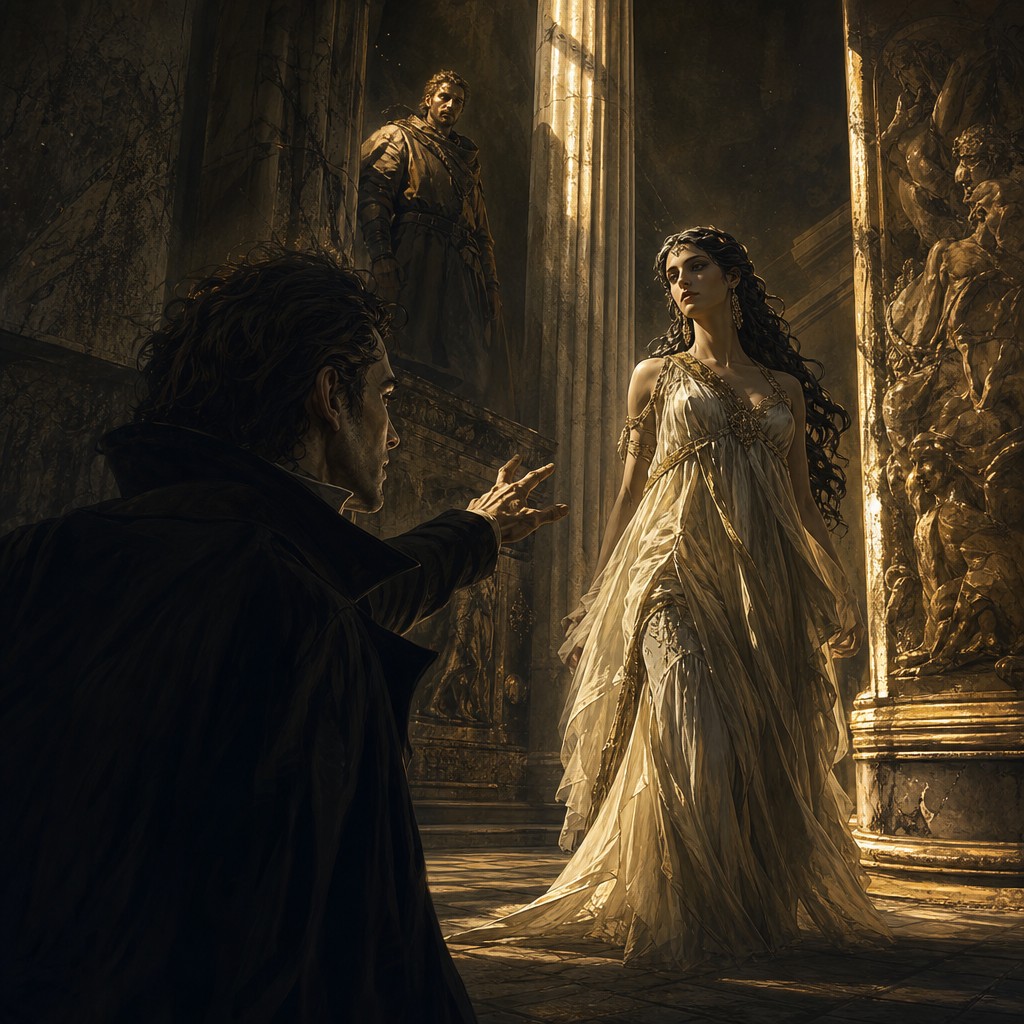
Across the threshold of time, two worlds entwine. Helena moves with the permanence of legend, yet her gaze finds him with unsettling recognition — as if she has been waiting, as if the centuries between them are a distance that desire has already crossed. The air between them vibrates with an overtone both erotic and elegiac: here is the consummation of every aesthetic hunger, the nth degree of form made flesh. Yet even as he reaches toward her, Faust intuits the cost. She is Elysian, belonging to ages before and after him. This is not seduction but entrapment wrapped in the candour of perfect beauty — a trap he walks into willingly, knowing that to touch the absolute is to lose one's moorings in the mortal and the real. The moment hangs suspended: two figures across an impassable gulf, connected by nothing but desire and the discipline of myth. Mephisto's laughter echoes faintly. This too is part of the bargain.
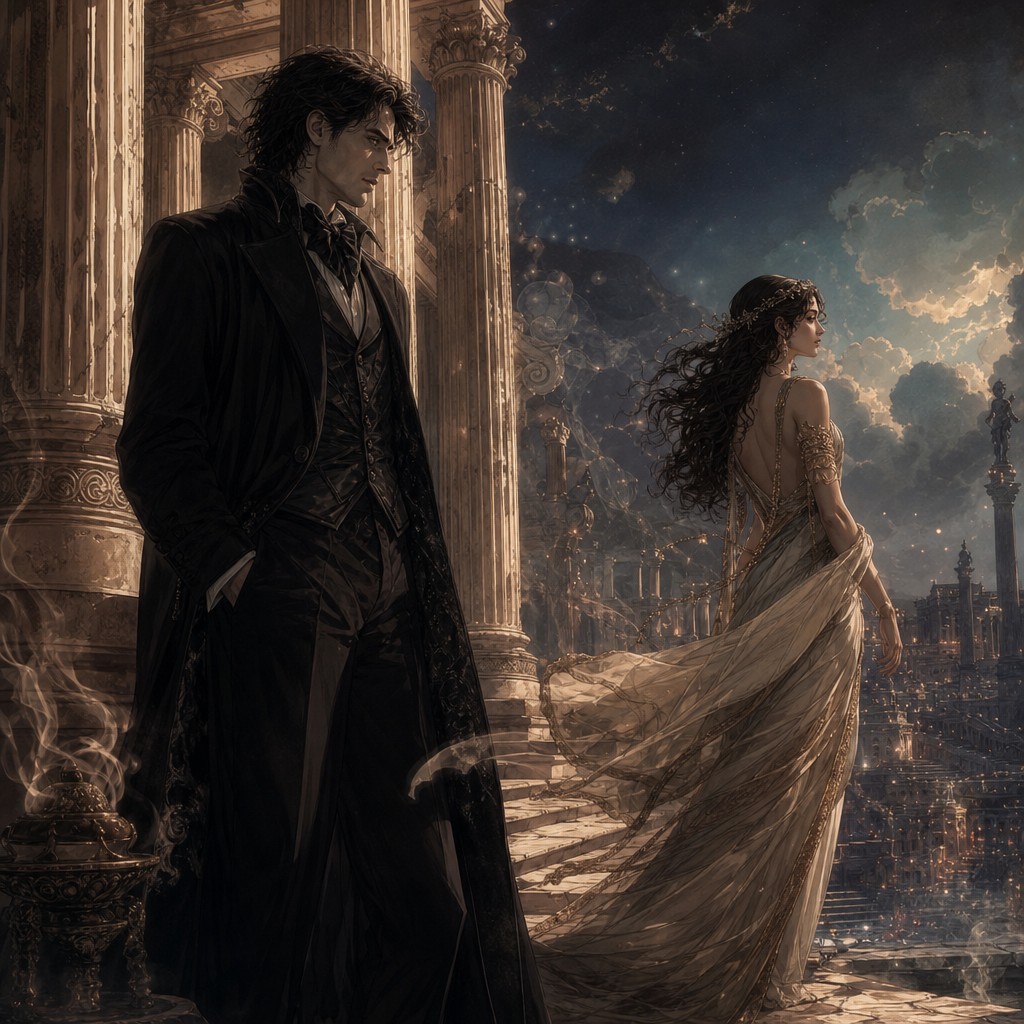
He stands where marble pediment meets unopen sky — the architectural rigour of antiquity behind him, the restless modern impulse ahead, still hungry, still unwilling to accept the limit of form. Helena moves between these territories like a figure from stolen time, neither fully classical nor wholly of his century. The air carries both incense and fume. The ground feels solid yet dreamlike. What has been wed here is not conquest but a gentler kind of rupture — two worlds joined through the recognition that each is incomplete without the other. Faust's face registers neither triumph nor daze, only the phenomenal weight of standing where contradictions do not cancel but thrum with rhythmical tension. The breakthrough he sought has arrived — not as resolution but as a new kind of striving: the marriage of boundless appetite with bounded form, the undream made briefly, precariously real. All around them, the air shimmers with artifice and authenticity in equal measure.
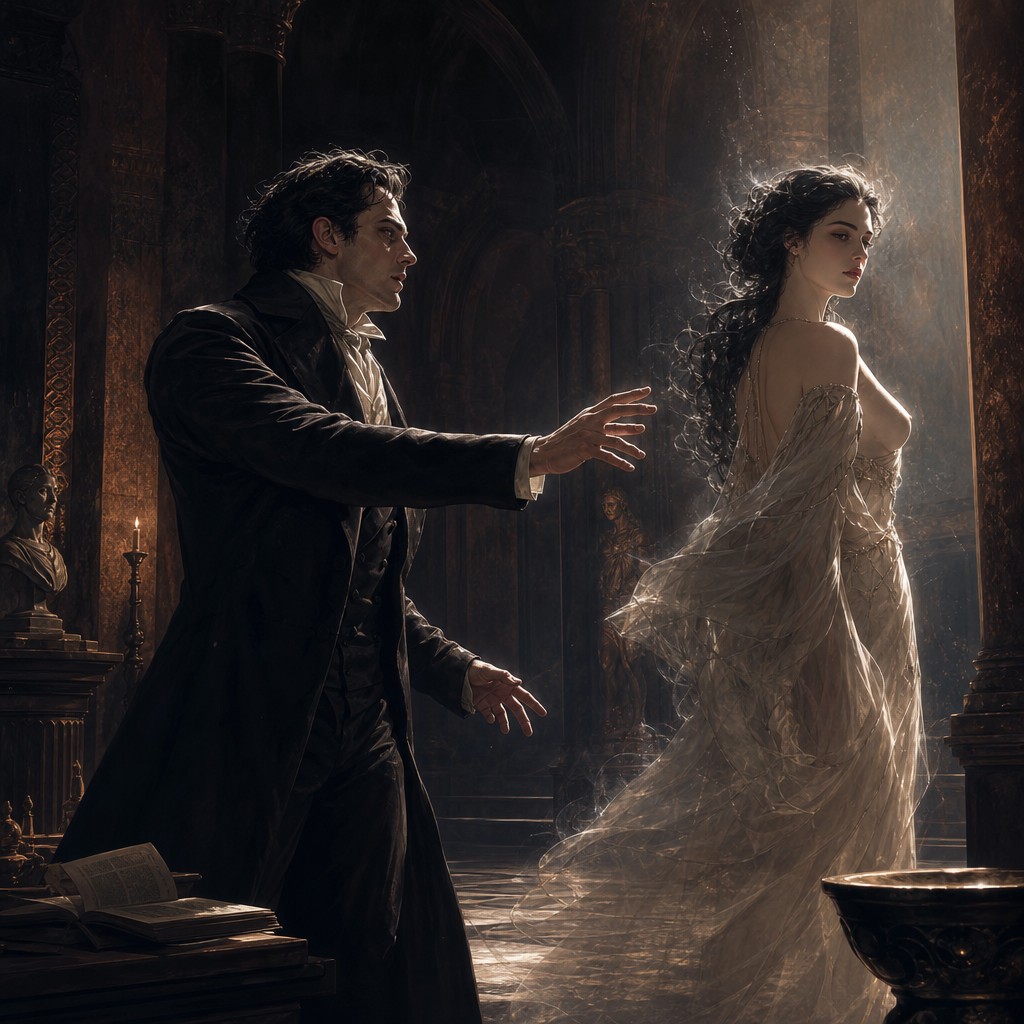
In the classical meridian of his striving, Faust stands at the threshold of completion. Helena moves before him in the sensory perfection of her form, and for an interval that feels stolen from heaven, he believes the endless hunger has found its object. Their proximity dissolves the old dissatisfaction. Her grace seems to answer something in him that scholarship and sorcery could not touch. But even as he reaches toward this dream of total union, there is a tremor in the harmony. The classical order he has summoned is precocious, perfect, and already fragile. Faust, the restless voyager, senses it: this completeness cannot hold. The gods do not yield their immortals to mortal hands without cost. Helena shimmers before him — neither fully real nor fully his, carrying within her perfection the seeds of its own dissolution. He has wittingly traded the depths of reality for the refinement of form. And form, however brilliant, cannot endure.
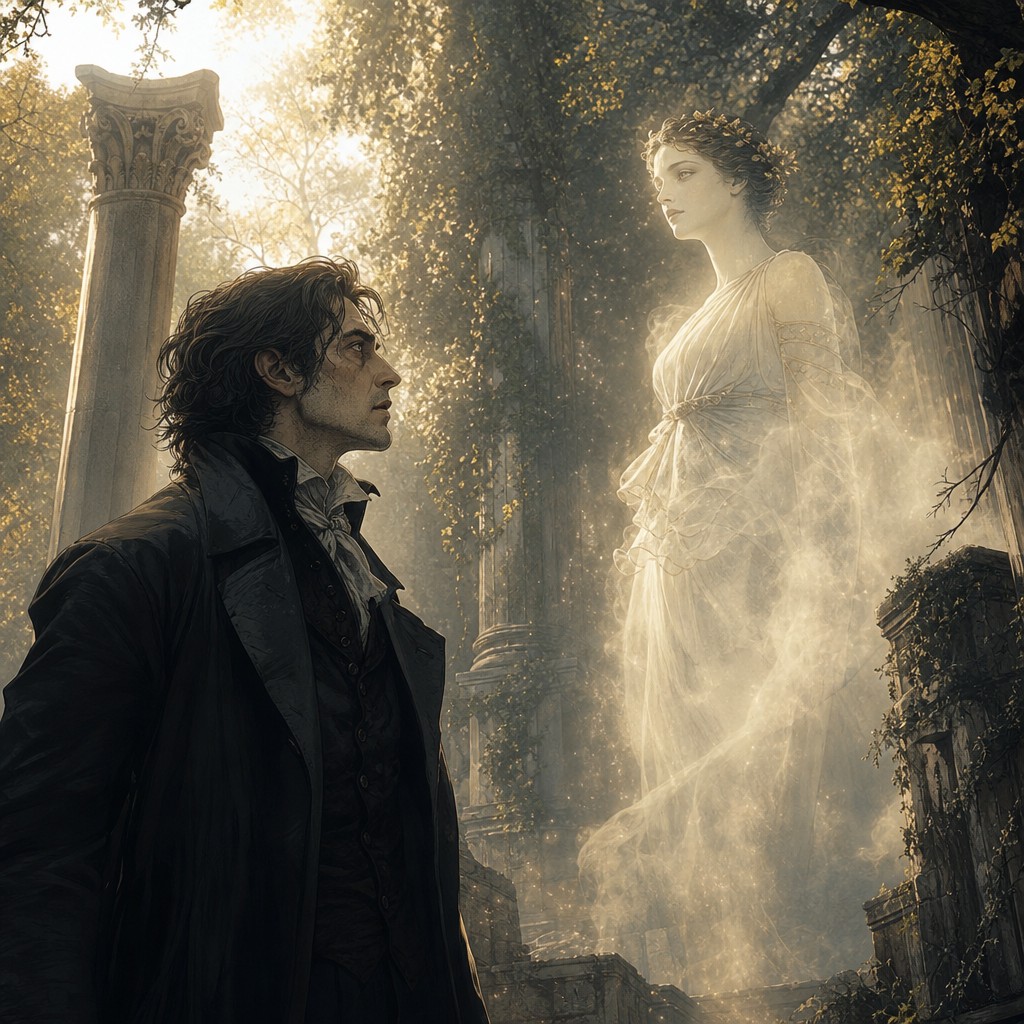
In the moment of highest radiance, the caravan of his longing reaches its terminus. Helena's features grow distant, pallidly luminous — as though seen through gauze that thickens with each breath. The form he reassembled, the ideal he brought forth from the classical depths, cannot hold. It was never meant to. The cost of touching the absolute is learning that all forms — however marvellous, however courtly in their configuration — are passages, not destinations. Faust feels the hunger that drove him here reveal itself as the very engine of loss. He has reaped what he sowed: ecstasy, and its twin, the knowledge that ecstasy cannot be made to persist. The classical world, so orderly and expansible in imagination, proves finite in the hands of a mortal. Beauty, when grasped most fiercely, teaches the only gospel worth learning: that striving itself — not possession — is the substance of a human life. He watches perfection execute its own departure.
❦ FIN ❦