FAUST · 10 / 10
Chapter X: Death, Judgment, and Transcendence
The devil arrives to collect what was promised and finds the contract void — not through virtue, but through the paradox that striving itself, pursued to its ultimate extreme, becomes the very thing that transcends the bargain.
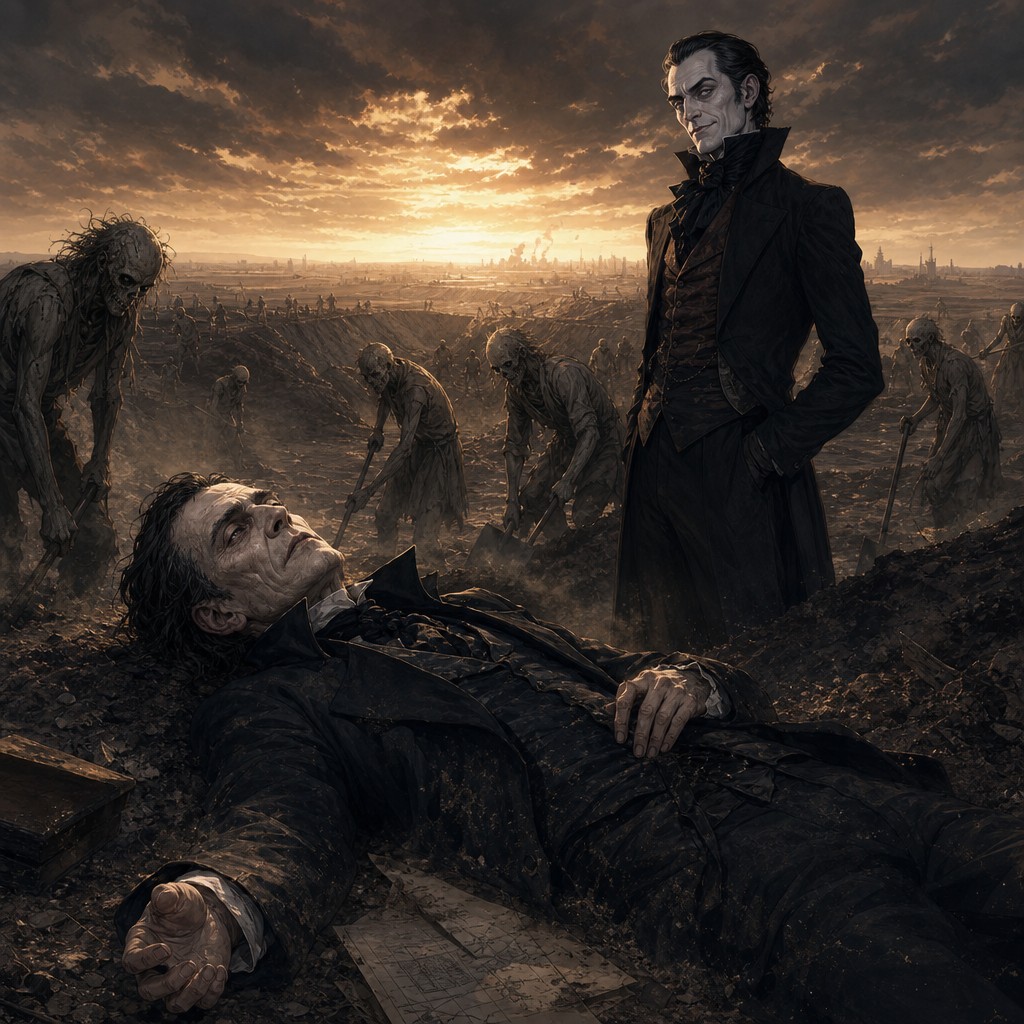
Mephisto arrives at the threshold ironclad in his certainty, the metronome of damnation beating in his chest. He has calculated every step, every compromise, every flagrant breach of Faust's covenant. The soul should be his. He reaches to claim what is written — and the machinery of his triumph jams. The recipient resists. Not through sudden piety but through something the devil never fully catalogued: the very restlessness he weaponized has been transformed. Faust's hunger — that terrible, inhuman vim that drove him to transgress — becomes the engine of his salvation. Higher powers intervene, not as afterthought but as orchestral necessity. Mephisto stands shockingly empty-handed, his elegance turned to choler, his irony evoked against him. The soul escapes upward. Transcendence awaits where calculation cannot follow. The devil retreats, outflanked not by virtue but by grace — and by the paradox that striving itself, when pursued to its ultimate trial, becomes the very thing that transcends the bargain. Even Mephisto could not have predicted this ending. Neither could Faust.
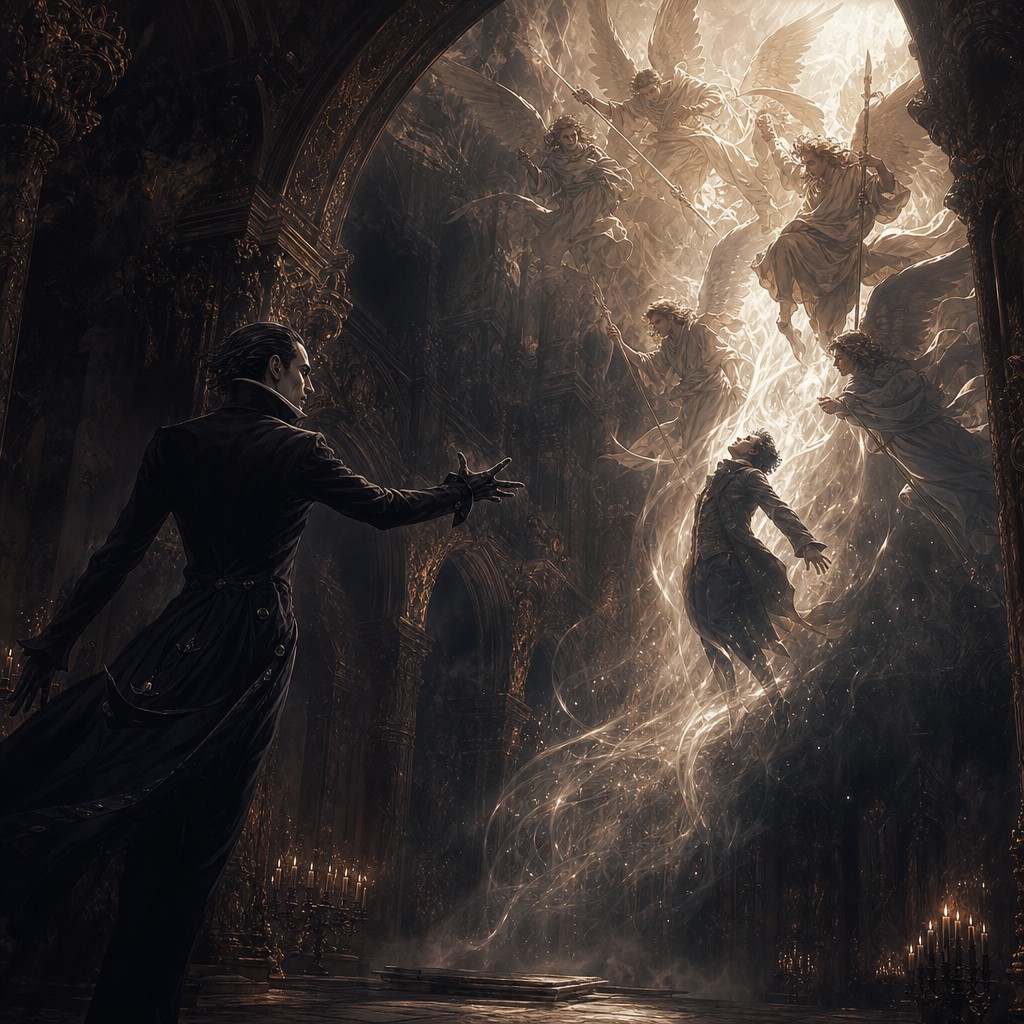
The veil parts. What remains of Faust — stripped of ambition, emptied of striving, the body consigned to earth — rises as essence. Not salvation earned through merit, but grace descending like light through water. The Eternal Feminine draws upward: a magnetic pull toward wholeness that his mortal frame could never contain. Around him, the chorus speaks what he cannot: that endless yearning itself becomes the redemptive act, that the soul saved is not the soul perfected but the soul that loved, failed, and sought still. Una Poenitentium — Gretchen redeemed — reaches toward him with uplifted hands. The women who suffered most beautifully attend. The mystic fathers ascend in sacred rapture. All the dialectic dissolves: Mephisto's jest, the pact's dark logic, Gretchen's suffering — all transfigured into the wound through which grace enters. The celestial voices do not absolve. They receive. They do not explain. They transform. The stage empties into light. The testimony of a life lived in contradiction becomes, at the threshold, a prayer answered by silence that speaks.
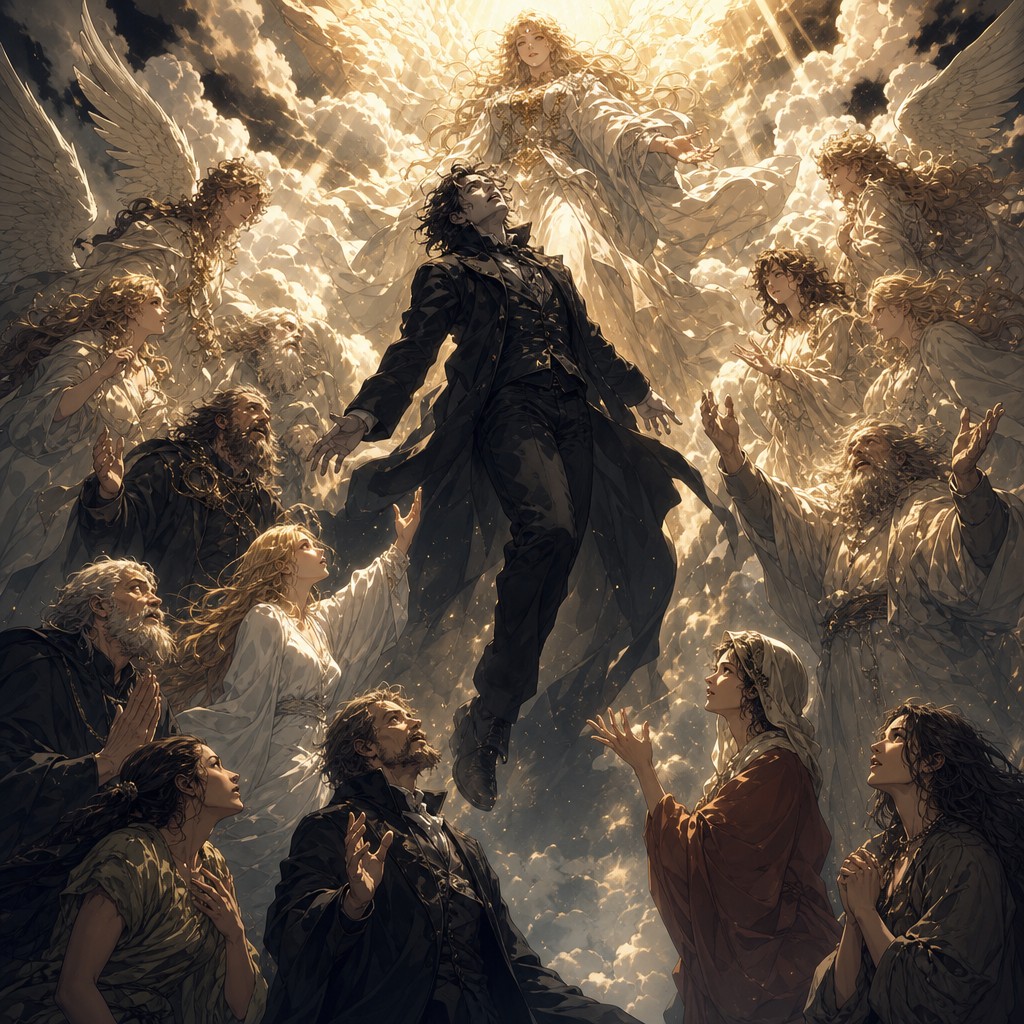
The horizontal struggle ends. The vertical ascent begins. What the Lord wagered in the Prologue is here confirmed — not by virtue, not by the absence of transgression, but by the irreducible fact of Faust's striving, his refusal to be finally satisfied, his insistence on reaching even when reaching destroyed everything within arm's length. He strove, and striving was his prayer — unbeknownst to himself, continuous and sincere. The Mater Gloriosa descends with remote yet tender presence. Una Poenitentium intercedes with the compassion of one who has known the same darkness from the inside. The mystic choir concludes: "The Eternal Feminine draws us upward." Not forward, not backward — upward. Beyond the logic of pacts and debts and the careful accounting of sin. What was broken cannot be repaired, but it can be received. What was lost cannot be returned, but it can be transfigured. The final word of the greatest poem in the German language is not conclusion. It is opening. Everything passes. Love alone endures.
❦ FIN ❦