FAUST · 5 / 10
Chapter V: Prison, Loss, and the Break into Part II
In a stone cell at the edge of everything, a broken girl refuses rescue and finds grace — and in her refusal, the intimate tragedy of Part I breaks open into the vast, strange ambition of Part II.
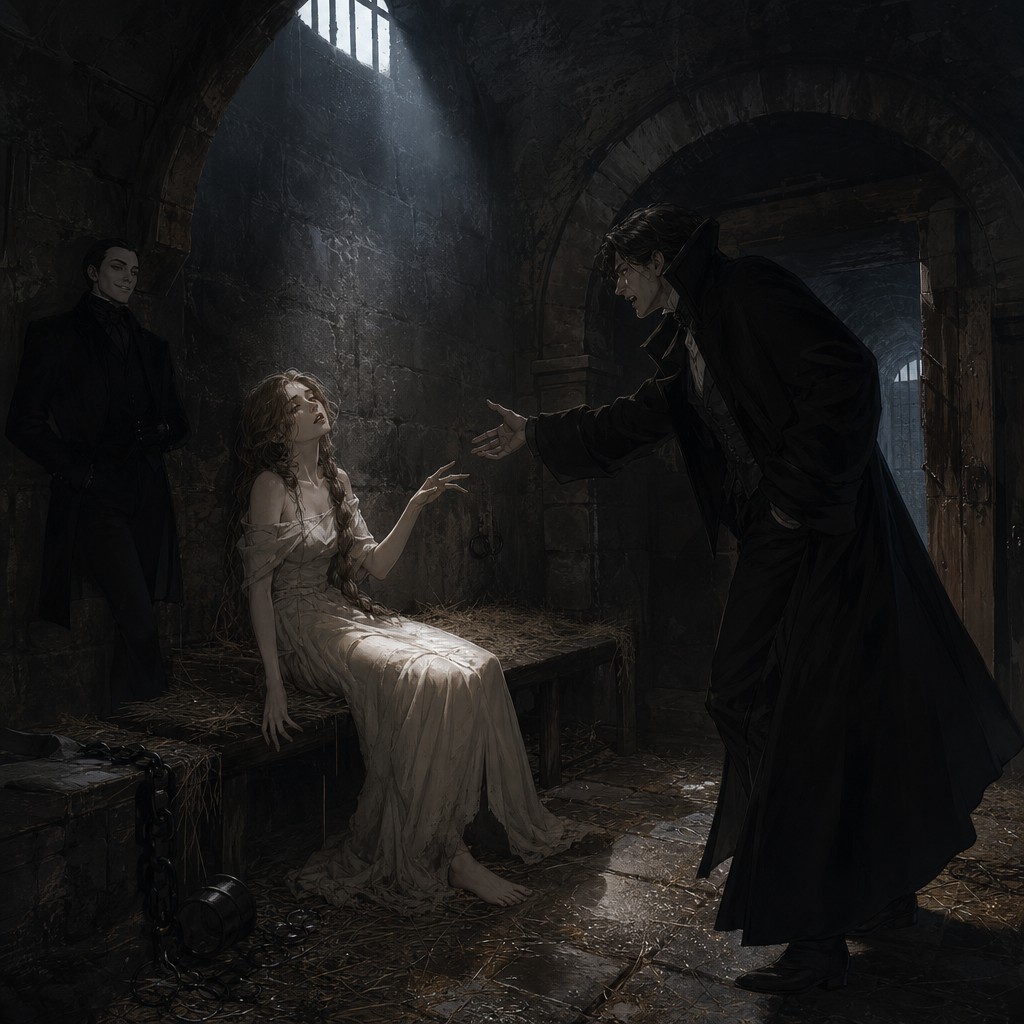
This is where the bargain has brought them: a stone cell, a broken girl, and a man who believed striving could reverse the irreversible. Faust arrives with mania in his eyes — the scholar's reflex of problem-solving applied to a catastrophe he has caused. Mephisto watches from the shadows with the amused patience of one who already knows the destination. Gretchen sits stripped of everything. Her mind has fractured under the weight of what she has done and what has been done to her. The finest agony is not the loss itself but the moment of arrival after — when rescue becomes farewell, when the rescuer discovers he is only a witness to his own wreckage. His striving has brought him here. To a cell. To a girl he loved. To the proof that no eminence of magic, no lateral escape through the devil's arts, can restore what his appetite devoured.
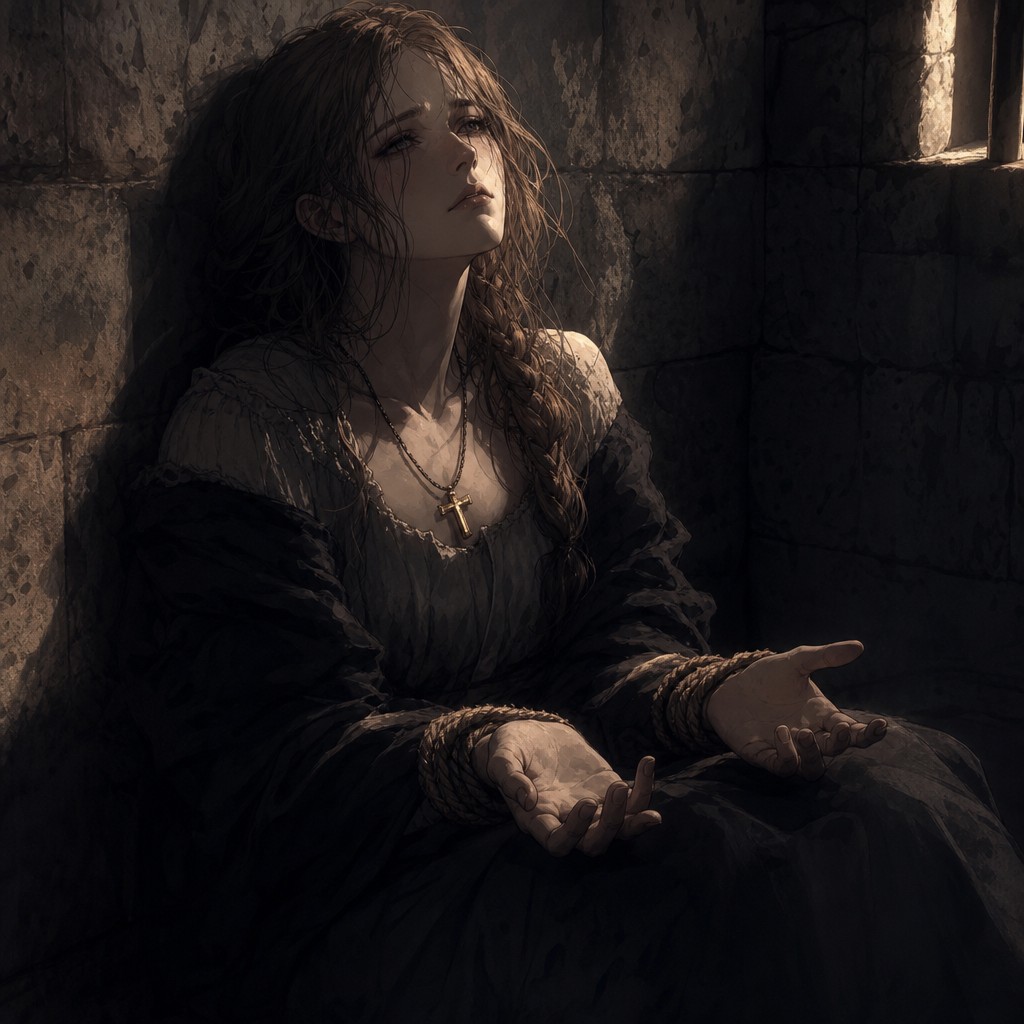
She is more truly herself now than when she was innocent. Not because suffering ennobles — that is a comfortable lie — but because it has stripped away the lie that safety and virtue can coexist in a world governed by other people's hunger. She sits in the cell's half-light with her hair undone, her hands hanging palms-up in a gesture that is neither supplication nor surrender but something between: a courage that has learned to live with its own insufferability. The madness has not left her — it lingers in the set of her jaw, in the way her eyes track nothing and everything at once. But through the fracture of her mind runs a thread of gold: she has touched something the world cannot break. In this moment, hempen-bound and forsaken, she possesses a clarity that the man who destroyed her has not yet reached and may never.
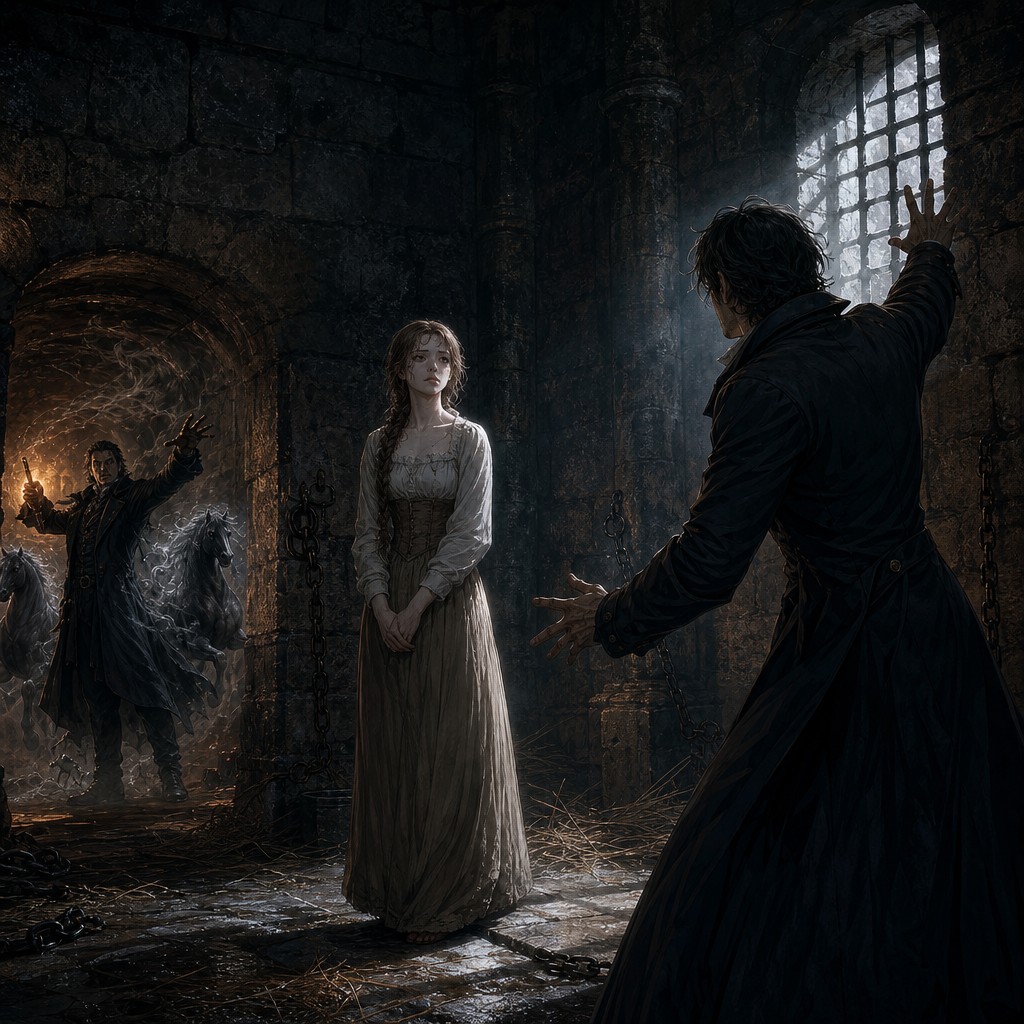
She will not run. This is her final, terrible, luminous act of will — the refusal that transforms victim into witness, that insists on a reckoning the world would prefer to avoid. Faust plots escape with Mephisto's conjured horses and windborne magic, as if salvation were simply a problem of logistics. But Gretchen has passed beyond the jurisdiction of logistics. Her child is gone. Her mother is dead. The weight of these things has settled into her bones with the permanence of winter frost. No escape arranged by the man who set the catastrophe in motion will restore what has been broken. She will stay. She will face what comes. Her refusal is not weakness — it is the hinge upon which everything that follows will turn: the acknowledgment that not all suffering can be redeemed through restless action, that some souls choose the dignity of their own reckoning over the prophet's promise of flight.
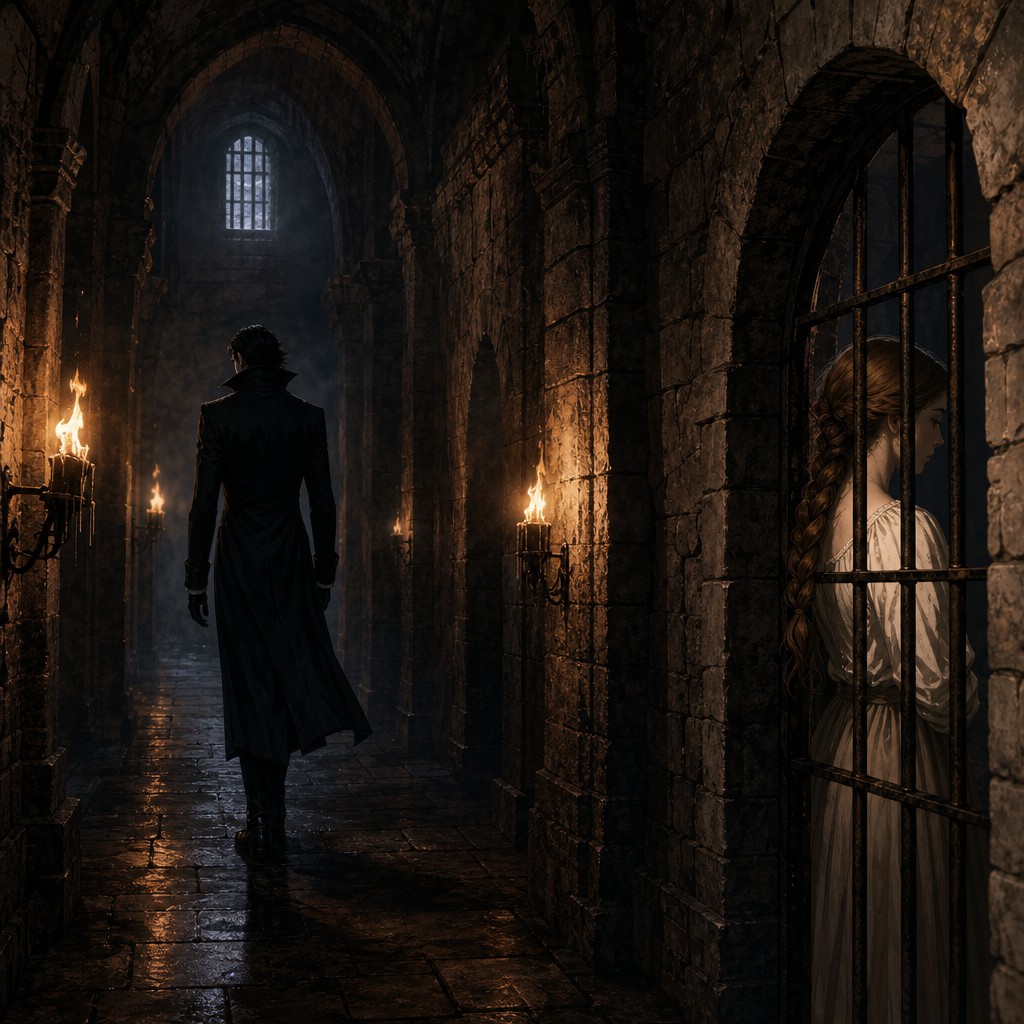
The candlelight gutters. Mephisto withdraws with the satisfaction of a merchant who has collected what is owed — no warmth, only the quiet pleasure of accounts rendered accurate. As his shadow recedes down the corridor, the architecture itself seems to shift. The walls grow taller, less intimate. The air carries a new weight — not of individual suffering but of historical consequence. The tragedy of Gretchen — intimate, wrecked, irredeemable — begins to dissolve into something larger, colder, more symbolic. Faust stands somewhere unmoored from the domestic sphere that consumed him. The pact still binds, but its landscape has changed. What was avoidable has become necessary. What was personal has become universal. Part I has broken. Part II begins its pyrotechnic unfolding across empires, classical forms, the mythic depths of human ambition. The corridors ahead stretch toward epochs. The world, vast and indifferent, opens.
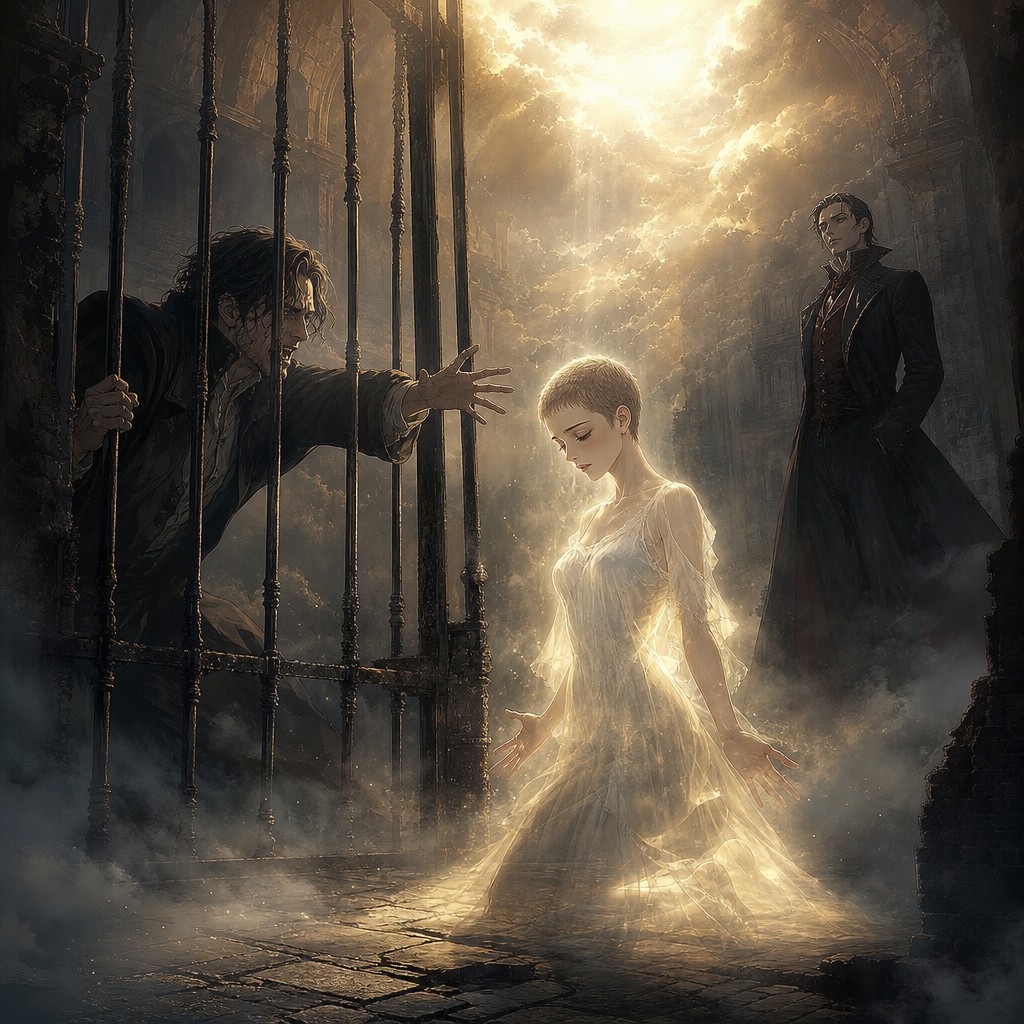
The chains fall away — not through Faust's intervention, not through Mephisto's cunning, but through a grace that neither schism nor pact can touch. Gretchen kneels with her hair shorn, her face turned inward, and she has passed through guilt into a region where guilt no longer holds dominion. She has not been forgiven by those who destroyed her. She has moved beyond the question of forgiveness entirely. She has become transparent to a light that passes through tragedy without stopping. Mephisto, lurking at the periphery with his imperturbable smile, discovers for the first time that the script has been rewritten by forces he does not command. His certainty falters. Her redemption is not rescue. It is the emergence of a soul from ruin — and it announces, unmistakably, that the deepest game in this story is not the one the devil thought he was playing. The walls recede. The light enters. Part I ends not with resolution but with aperture.
❦ FIN ❦