FAUST · 4 / 10
Chapter IV: Tragedy Takes Form
Honor dies on a cobblestone street, guilt becomes a public spectacle, and the arithmetic of ruin reaches its terrible conclusion — what desire set in motion, consequence now completes.
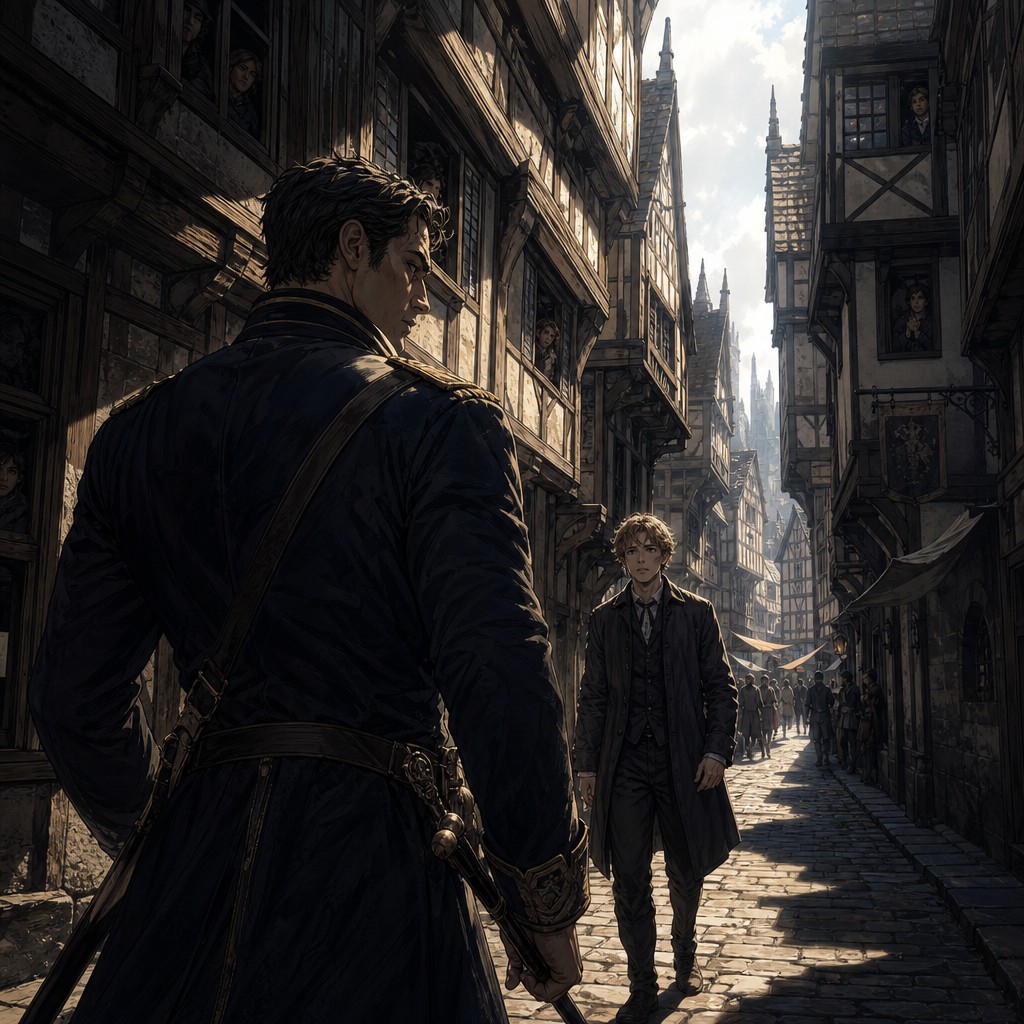
Valentin walks toward what cannot be avoided with the grim economy of a man who has seen enough of war to know that hesitation is its own form of cowardice. The street crowds inward around him. His hand rests near the sword with a deliberateness that is not threat but preparation — the body arranging itself for what the mind has already decided. Behind him, Siebel follows with the helpless devotion of a younger man who loves Valentin too much to stop him and knows too little of the world to succeed if he tried. The family honor has been named aloud in the streets. In Valentin's world — and it is a world Faust has never understood — such a naming has only one answer. He is not thinking of mercy. He is not thinking of consequences. He is thinking of the standard, and of the morning's blade, and of his sister's name.
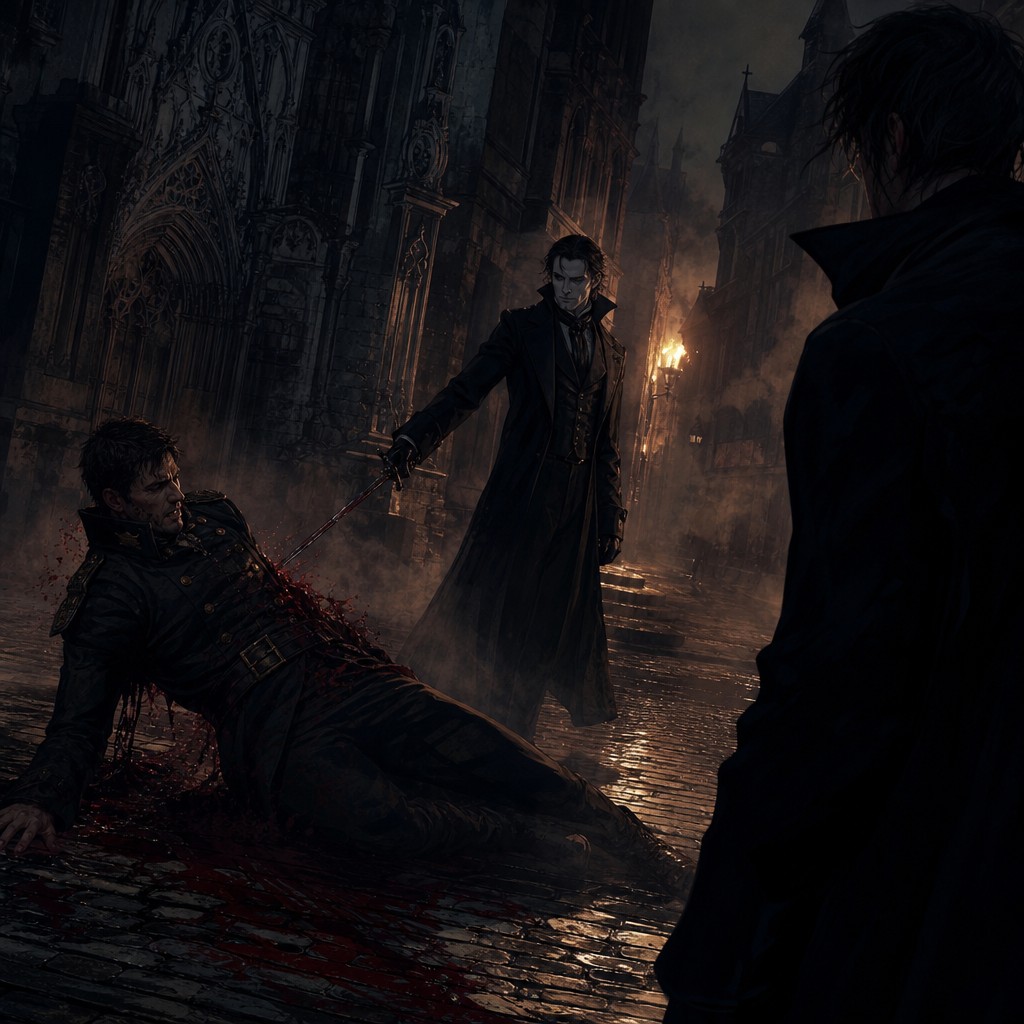
The pact shows its teeth in blood on a cobblestone street. Mephisto's blade finds Valentin with taxidermic precision — not in a duel of equals but in the swift transaction of a man who has made violence into a refinement. Valentin falls as soldiers fall: still reaching, still trying, the protective instinct intact until the final moment. Faust stands and watches, complicit in silence, learning what the fine print of his bargain actually says. He wanted experience without restraint. Here is experience: the brother of the woman he loves, dead on the stones, killed by the companion his ambition required. The pact has moved beyond philosophy. It draws blood. And the blood does not wash clean — it spreads forward through every scene that follows, staining Gretchen's trial, her madness, her execution, everything. The littoral between love and destruction was crossed here, on this ordinary evening, in this ordinary street.
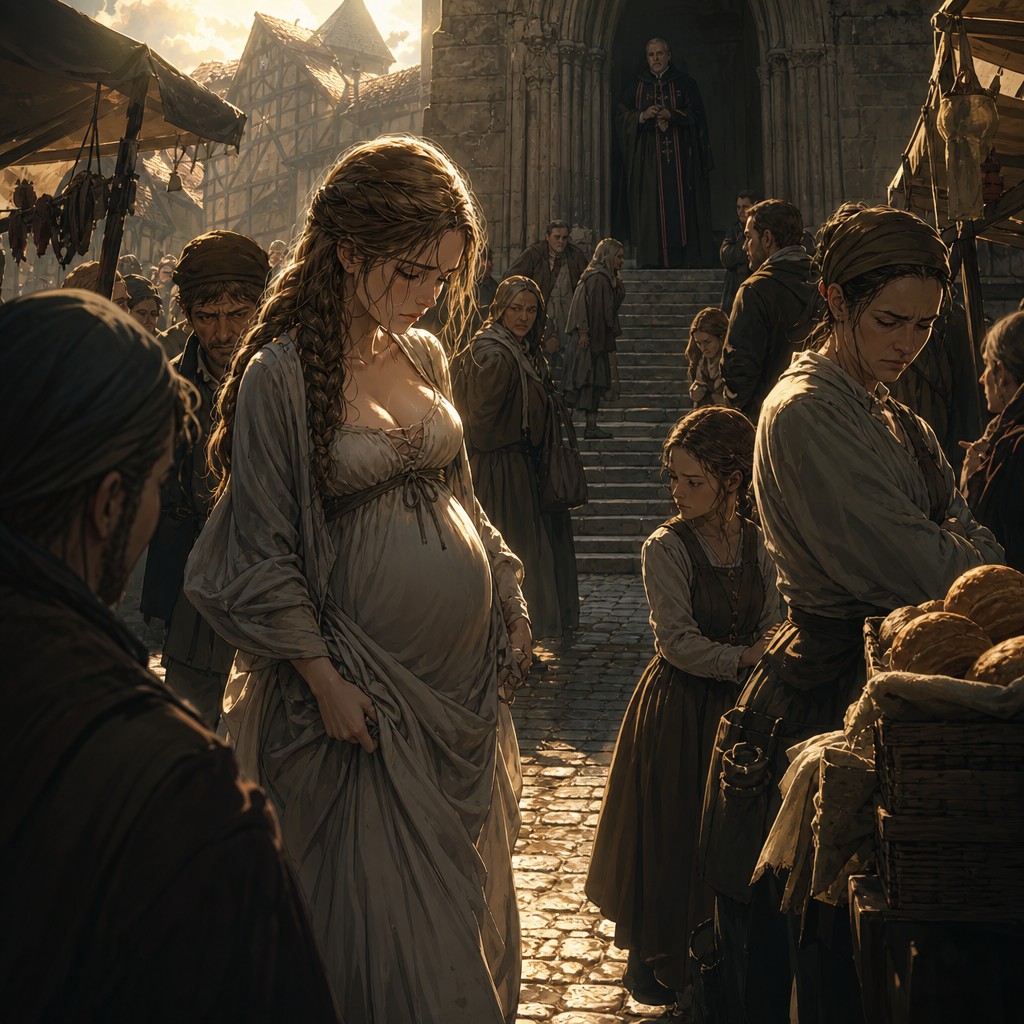
Shame, once it ripens, becomes collective property. Gretchen had believed her transgression private — a weight she alone would carry. She understands now, moving through the market with her altered silhouette and the averted gazes that follow her like shadows, that privacy of sin is a luxury the innocent imagine and the guilty are denied. The baker's wife turns away. A mother gathers her daughter close. The priest's eyes narrow in the church doorway. The social machinery that once afforded her protection — the respectability of her family name, the warmth of neighborly regard — has reversed its polarity and now grinds toward her condemnation. Faust is absent. He has moved through her life and beyond it, leaving only consequence. Mephisto grins from some unseen corner. And Gretchen stands alone before the tribunal of ordinary decency, which has never been — and will never be — particularly merciful.

She has come to the one place that should offer comfort and finds that it has become a mirror. The cathedral, which once held her in the unselfconscious warmth of inherited faith, now reflects back at her the precise contours of what she has done. The other worshippers kneel in their intact devotion, their souls unburdened, their prayers genuine. She kneels among them and cannot pray. The candlelight that once felt like grace now feels like illumination of a more merciless kind — every shadow a verdict, every movement of light across the vault a silent accusation. Her fingers work the rosary beads with mechanical precision but her lips form nothing. The conscience speaks in a language the liturgy cannot answer. She came seeking absolution. What she has found, in the house of God, in the one place designed to receive the broken, is that she is most alone.
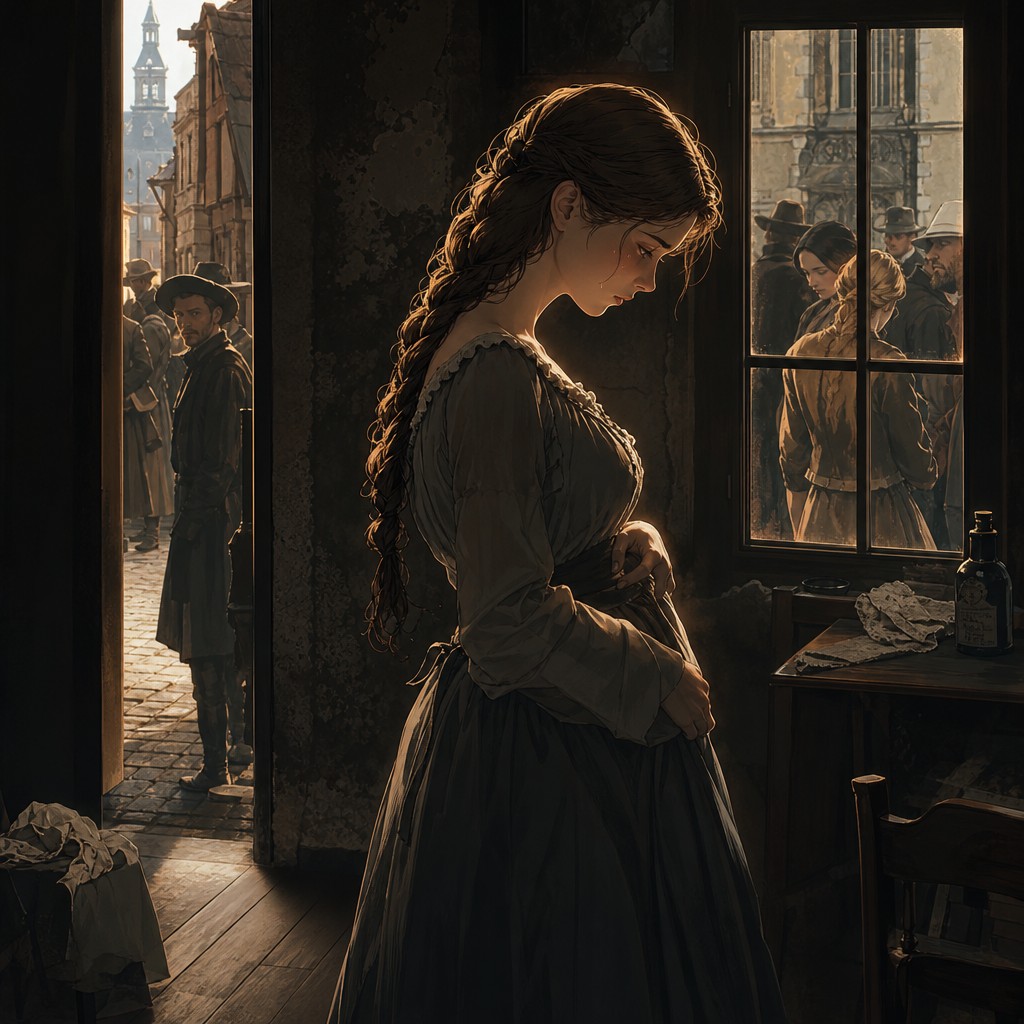
This is what remains when philosophy descends into flesh. Not romance. Not even tragedy yet — just the terrible mathematics of survival: the unwanted thing growing, the lover dissolved into absence, every attempt to conceal what cannot be concealed failing before the evidence of her own body. Her beauty, once her only currency of hope, has become her indictment. She moves through the world diminished, a record of what desire leaves behind when it has taken what it wanted and moved on to new horizons. The child, when it comes, will be the living proof that striving has a cost — and that cost, in Faust's economy of hunger, is always paid by those too innocent to have negotiated for themselves. She did not sign the pact. She did not choose the terms. And yet the terms have chosen her, with the impartial cruelty of consequences that know no distinction between the guilty and the adjacent.
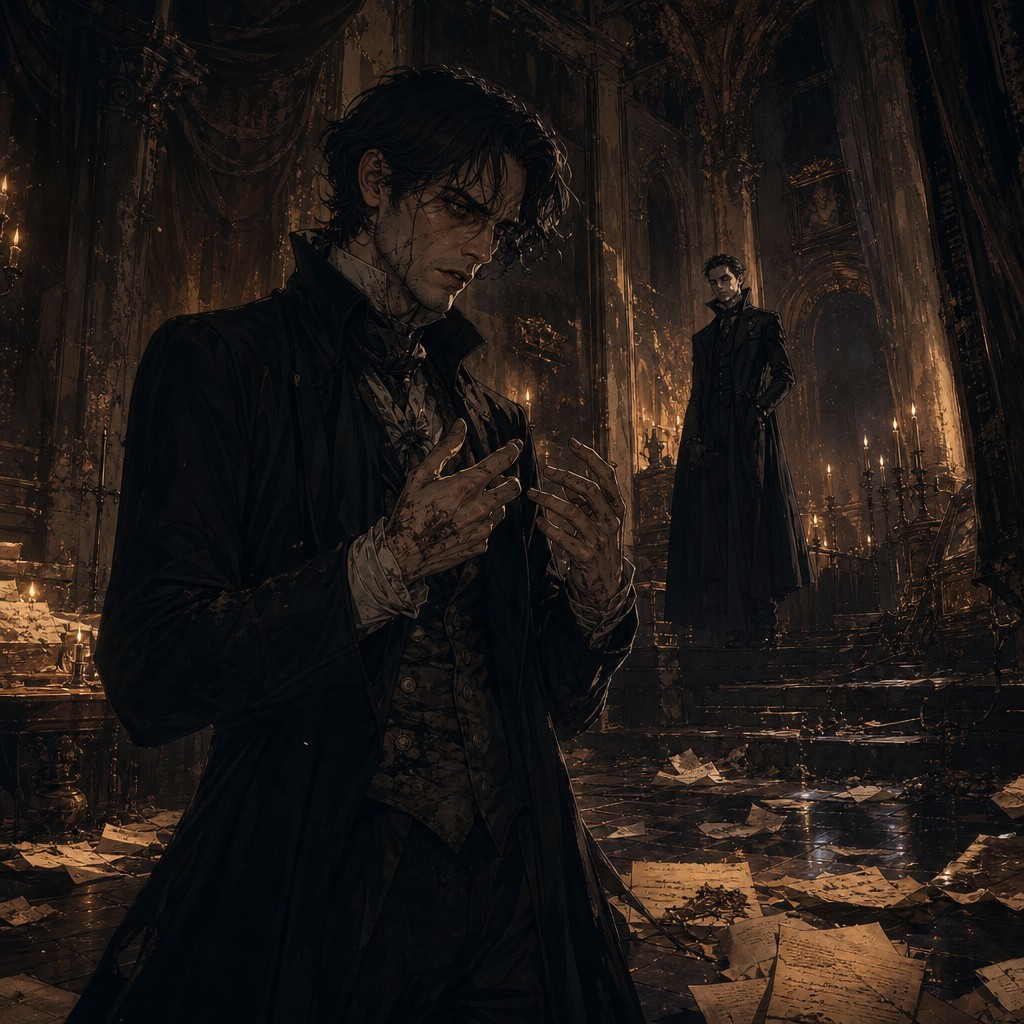
He wanted to possess innocence without destroying it. That was the fundamental impossibility — and he is only now, standing in the wreckage of his own making, beginning to understand it. The machinery of the pact, his own hunger, Mephisto's deceptive arithmetic — all of it has ground forward, and Gretchen pays. He sees it now: that seduction and destruction are sewn from the same thread, that his boldest desires have become her blackest suffering. And the recognition arrives, as moral recognition always arrives in Faust's story, too late and incomplete. His hands still tremble from touching her. His mind still rationalises while his conscience screams. He chose this — and choosing it again, moment by moment, even now. Mephisto's irony is perfect: the lover is the destroyer, and there is no position from which Faust can stand outside this entanglement and call himself innocent.
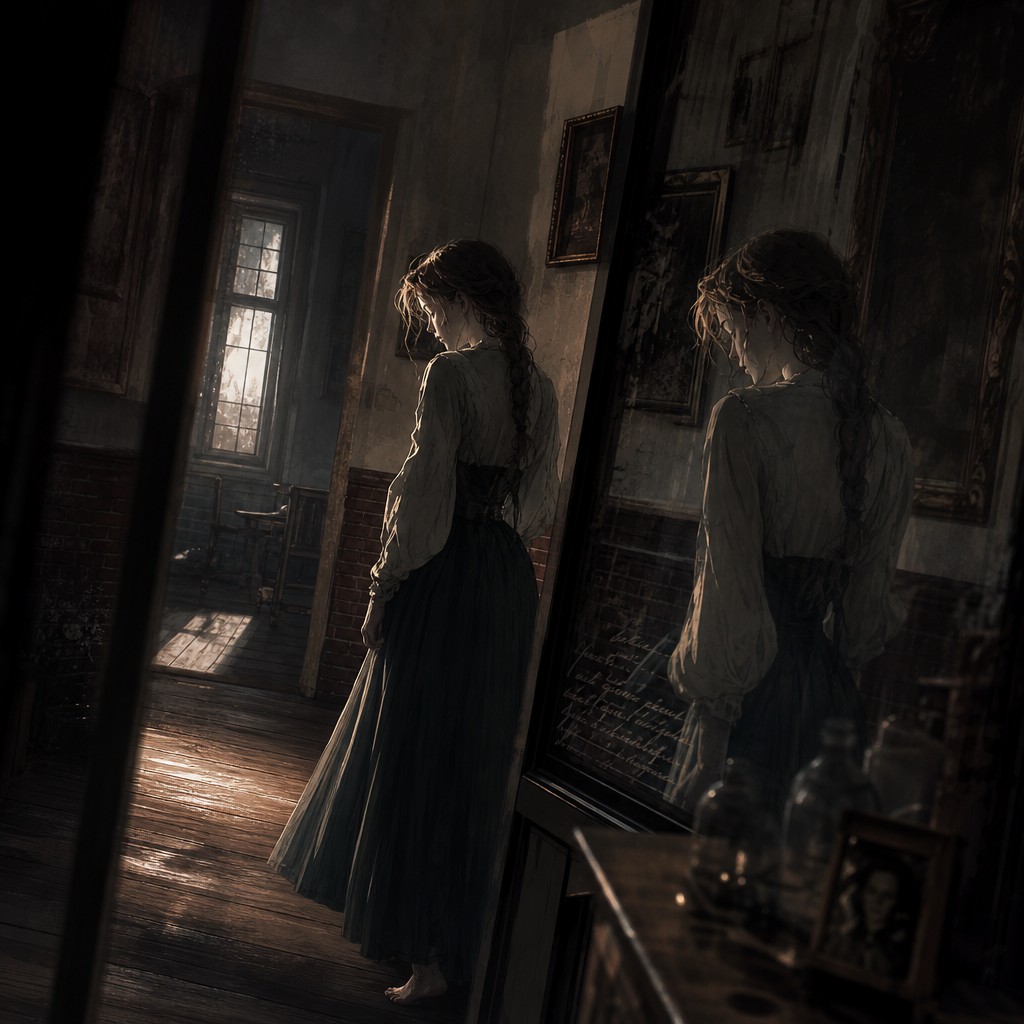
Her mind has become a machine of torment that she cannot turn off. She moves through rooms she once kept with perfect order and finds them strange — accusatory, hostile, every ordinary surface a witness to what has been done and cannot be undone. She catches her reflection in glass and barely recognizes the face that looks back. Has something essential drained away? The guilt is no longer a whisper. It is a procession through her skull, relentless and baroque. She thinks of the child, and the thought arrives without mercy — again and again, a transmission that cannot be interrupted. Her body moves but her will has abandoned it. There is no peace here. No ataraxy. Only the terrible knowledge that innocence, once lost, has no renovation — and that the woman who once sang at her spinning wheel has been replaced by someone who will never sing again.
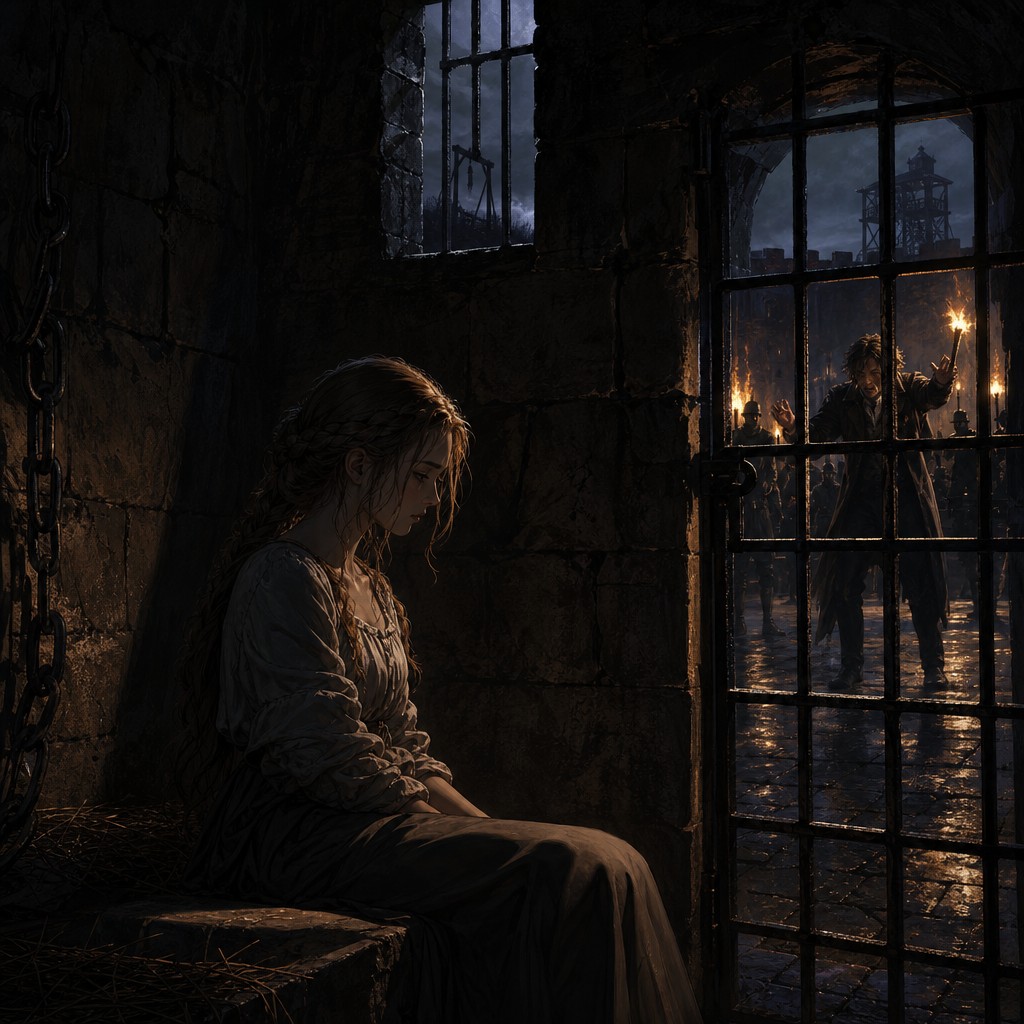
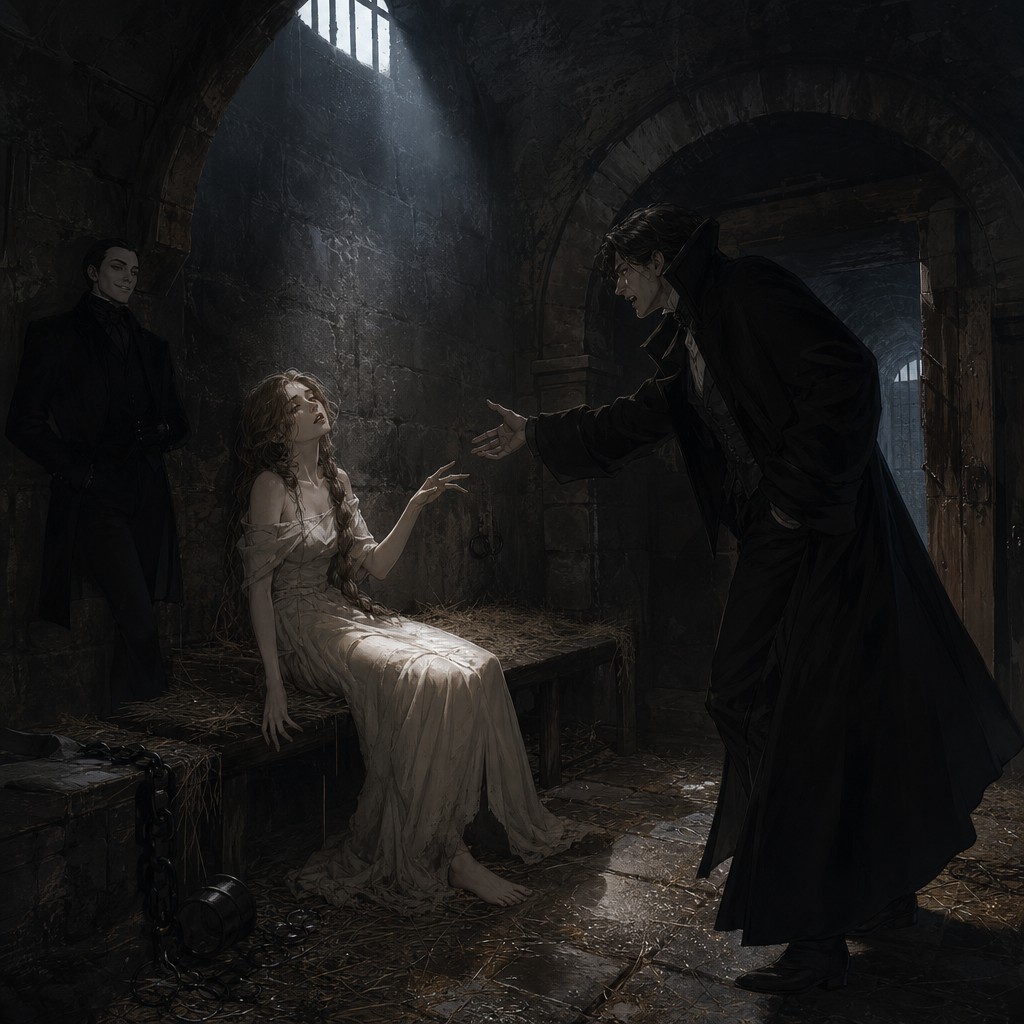
The gallows waits outside and she knows it. She has confessed everything — her sin, her lover's name, the terrible arithmetic of her ruin — with the completeness of someone who has already moved beyond the need for hope. Faust comes with promises of escape, conjured horses, magical flight to distant lands. She sees his desperation as a mirror of her own powerlessness and is not moved by it. He broke her not with malice but with desire — and desire, she understands now with absolute clarity, is simply deviltry wearing a human face. She will not run. Not because she cannot, but because flight would mean leaving behind the one thing that remains to her: the dignity of owning what was done. Some debts cannot be outrun. Some guilts cannot be asphyated by clever exits. The door stands shut between them. Her innocence was the price. The price has been paid.
❦ FIN ❦