FAUST · 8 / 10
Chapter VIII: Euphorion and the Fall of the Ideal
From the impossible union of modern hunger and classical perfection, a child blazes into existence — and burns away, proving that the synthesis Faust sought cannot survive the atmosphere that produces it.
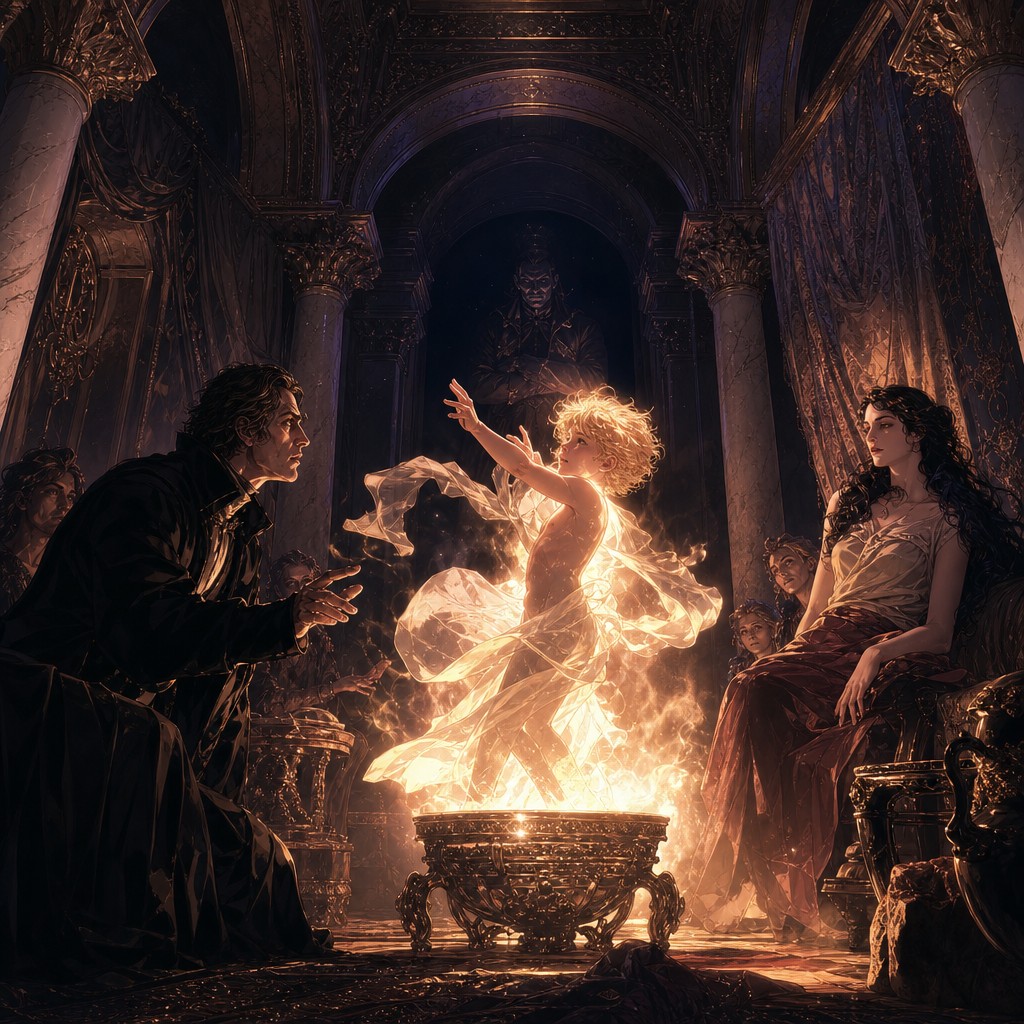
The boy blazes into existence as if summoned from myth itself — Euphorion, son of Faust and Helena, born not of flesh but of poetry's own momentum. He is brilliant fever made manifest: all quicksilver limbs and crackling intellect, a creature who cannot be still because stillness would mean dying. His eyes hold a semivision of something larger than the world can contain — ambition without anchor, genius without mercy. There is beauty in him, yes, but also menace: the menace of a force that acknowledges no limit, respects no boundary. The child laughs, but underneath the laughter runs a current the ancient Greeks would have recognised instantly. Intensity this pure cannot endure. A spirit this unyielding will inevitably collide with the unyielding world. In this moment, before the fall, he is apotheosis — the living proof that mortals might birth something divine. But divinity, as the ancients knew, was never designed for long residence among us.
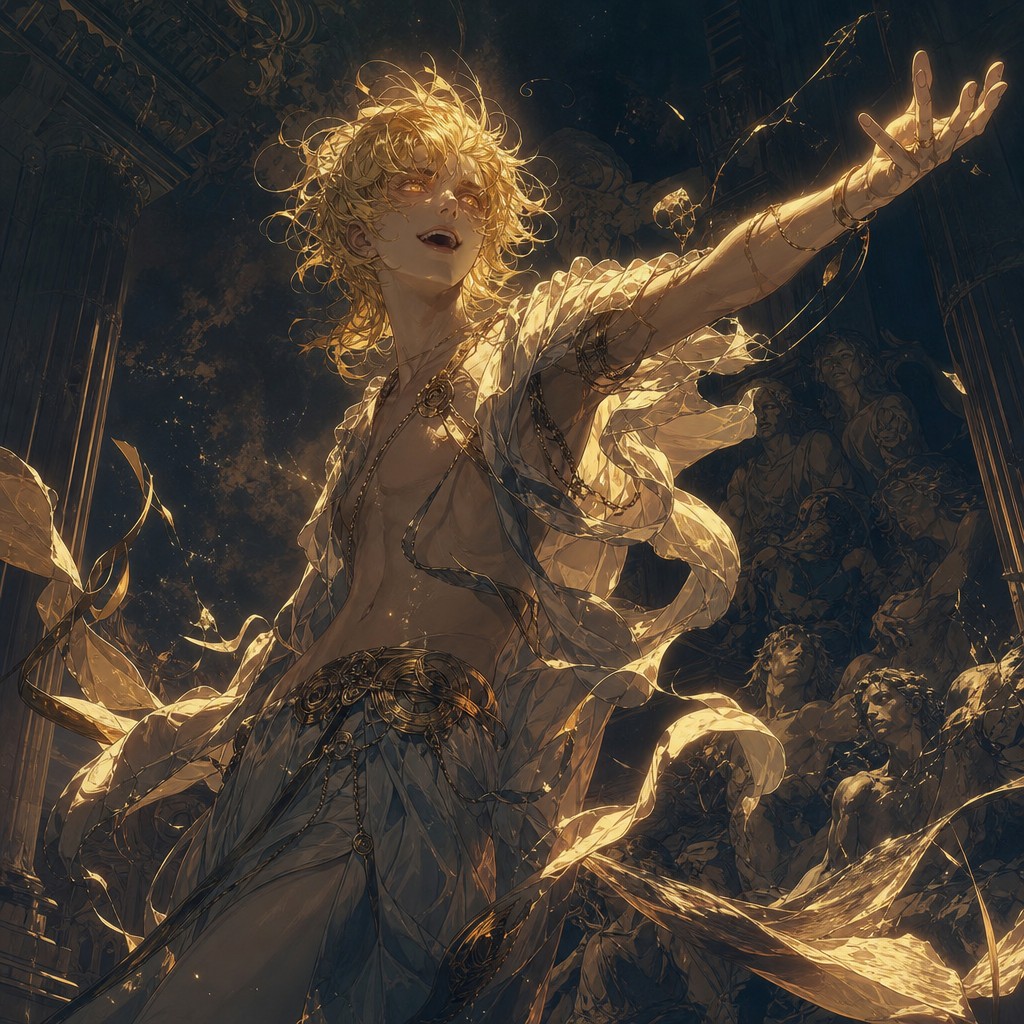
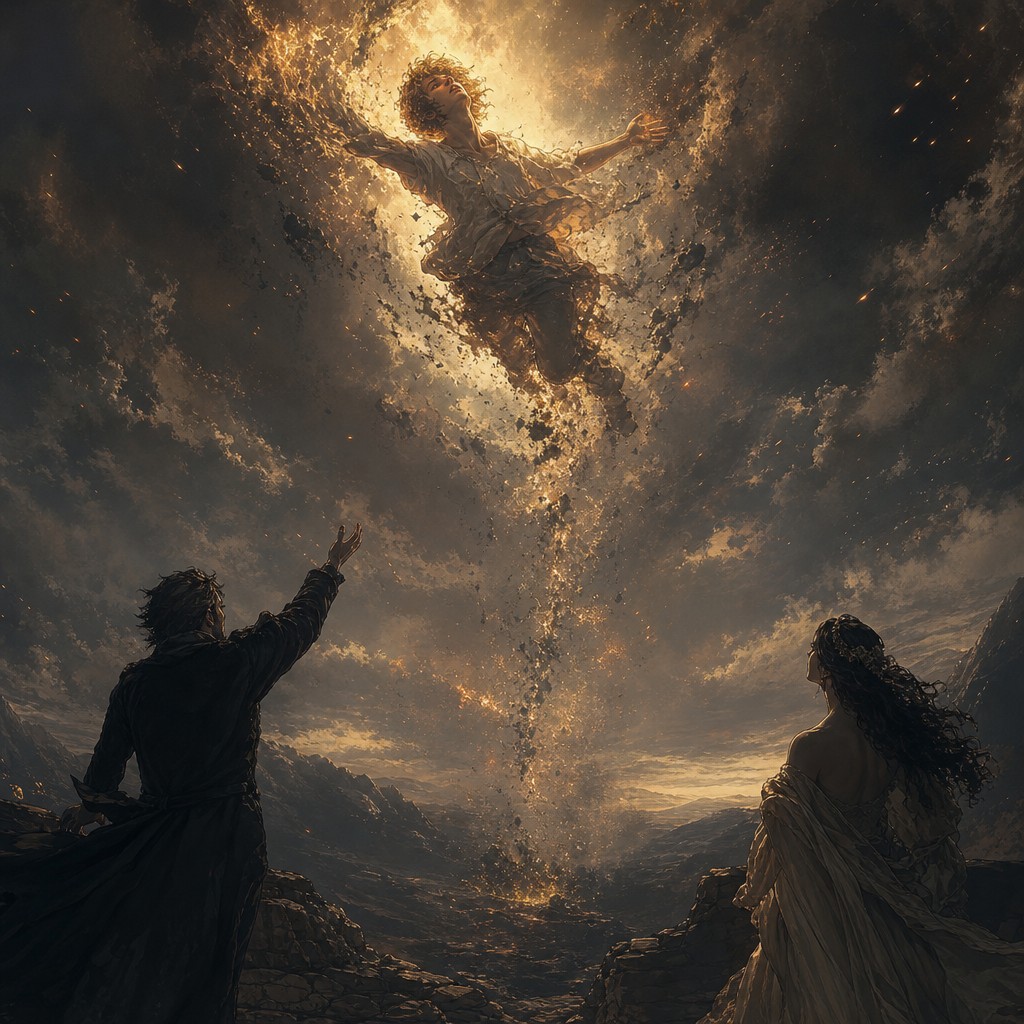
Euphorion, that wondrous child born of Faust and Helena, rises — not slowly, not with the docile obedience of earthbound things, but with the fervently ascending urgency of a spirit that has glimpsed the unlimited and cannot brook containment. His wings, fashioned from desire and impossible dreams, dissolve into smoke and ash. Below, his parents watch in helpless horror as beauty completes its arc and breaks against the stone. The boy who embodied the fusion of classical perfection and human passion cannot survive the extreme polarity of his own magnificence. His immaturity as a mortal being, his inability to contain the vast energies that animate him, betrays him. In the terrible clarity of descent, Faust understands: not all strivings yield transcendence. Some aspirations consume themselves in their own brilliance, leaving only the signal of what was lost. The earth receives him. Silence follows — that clamouring silence that swallows the dead and offers no answer.
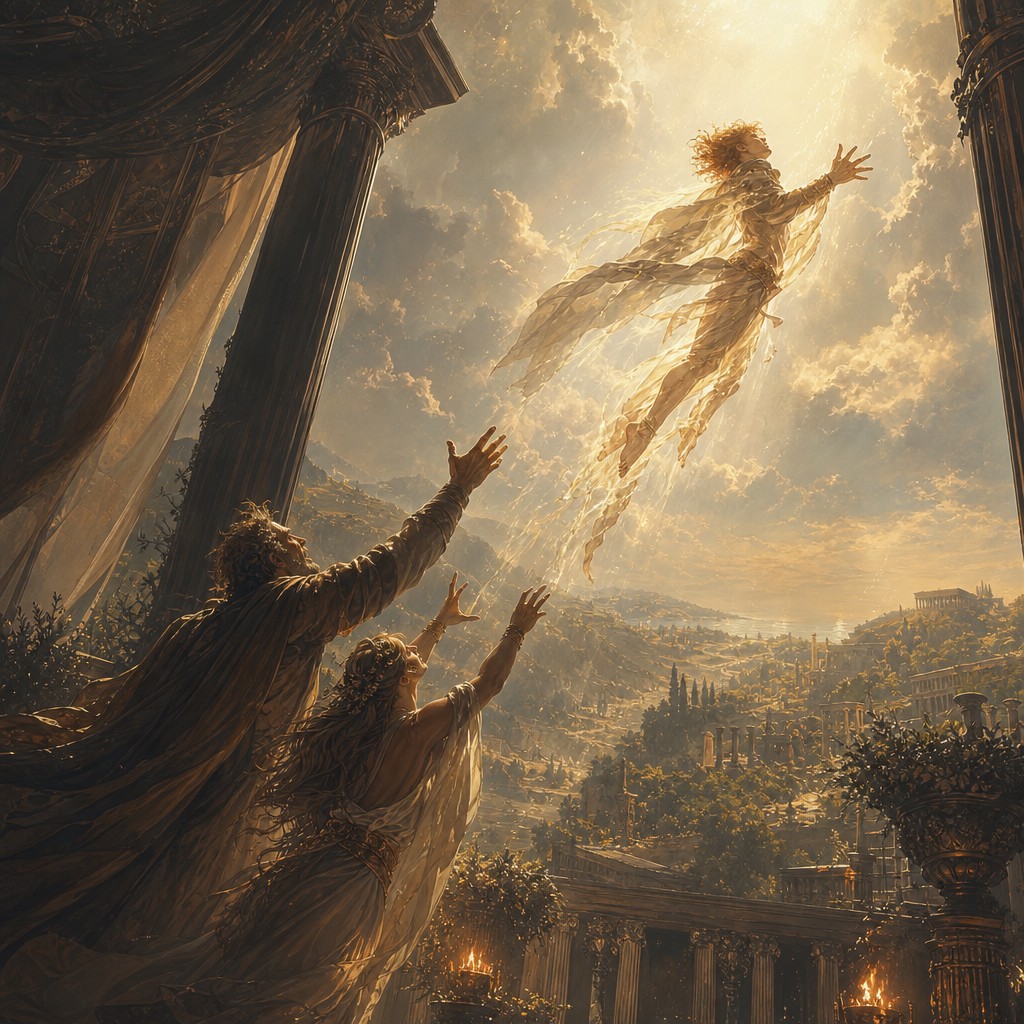
He soars not toward heaven but through it — masterfully defying every law that would ground a mortal frame. The shiver of transcendence runs through him, and through all who witness. His cry is not triumph but intensely burning necessity: to climb, to illuminate, to reach the briefest fraction beyond the horizon that mortal eyes can follow. His parents stretch upward in desperate gallantry, but their hands fall short. The distance between earth and sky, between aspiration and its cost, opens like a chasm. In his flight lies the saga of every artist who mistook boundlessness for freedom — who believed the striving itself was salvation. The structural collapse comes not from outside but from within: the very plasticity that made his upward motion possible becomes his petrifying weight. He cannot descend. He will not. The limit he refuses to acknowledge becomes the force that strikes him down. His ascent is indescribably beautiful. And indescribably fatal. This too was written from the beginning.
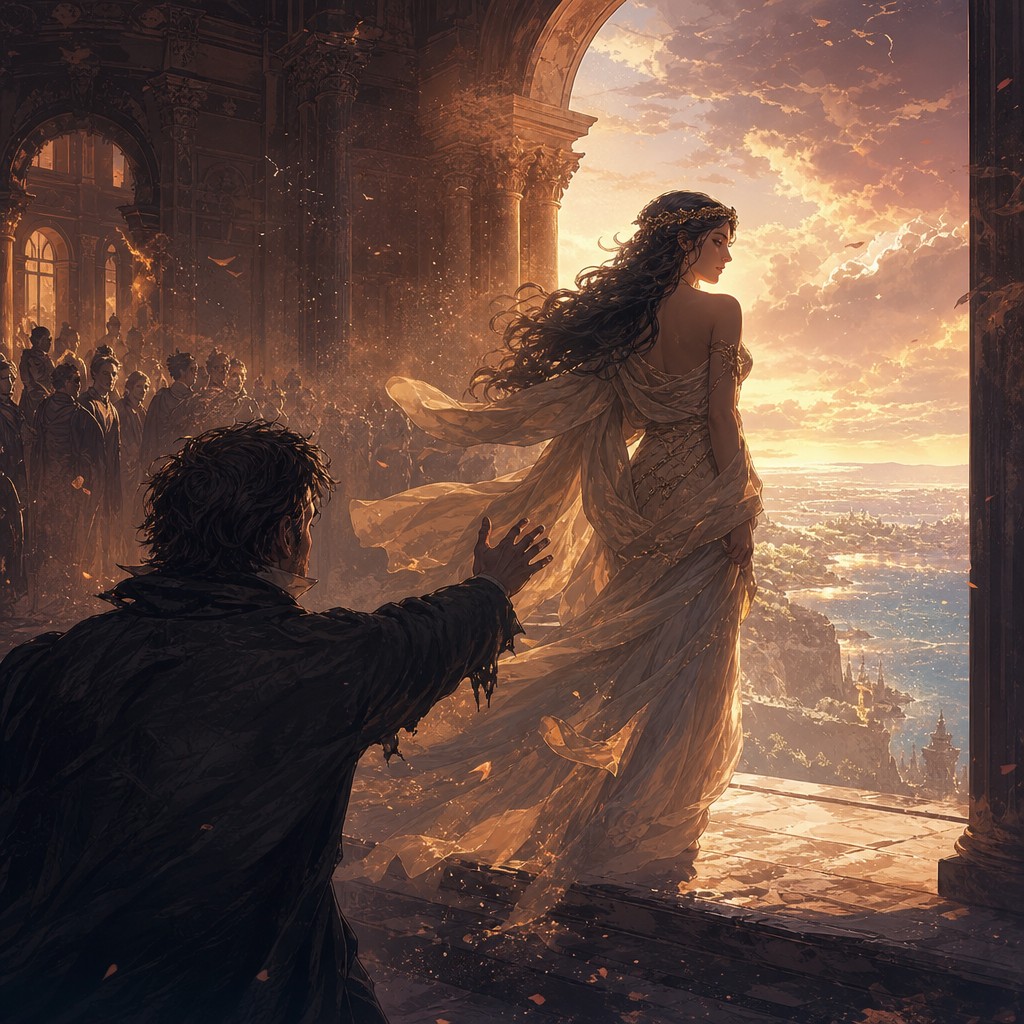
Helena stands at the threshold where classical form dissolves into myth. Her vestments catch the last light — not the ecstatic radiance of union but the twilit glow of necessary parting. Faust reaches, but his hand passes through air that has already begun its return to the Ionian shores. She does not turn in anger or sorrow. Her face bears the serene acceptance of beauty that knows its season. Around her, the imperial court grows thin, insubstantial — the grand overreach of mortal ambition dissolving before the older order. Her departure is not abandonment but restoration: the visible world releasing what belongs to myth, what cannot be held by striving or the citizenship of this realm. Faust remains earthbound, diminished, watching the impossible recede with the grace of inevitability. In this moment, the cost of yearning becomes clear: not loss of love, but loss of the delusion that love could transcend its own nature. Helena returns to legend. Faust remains with consequence.
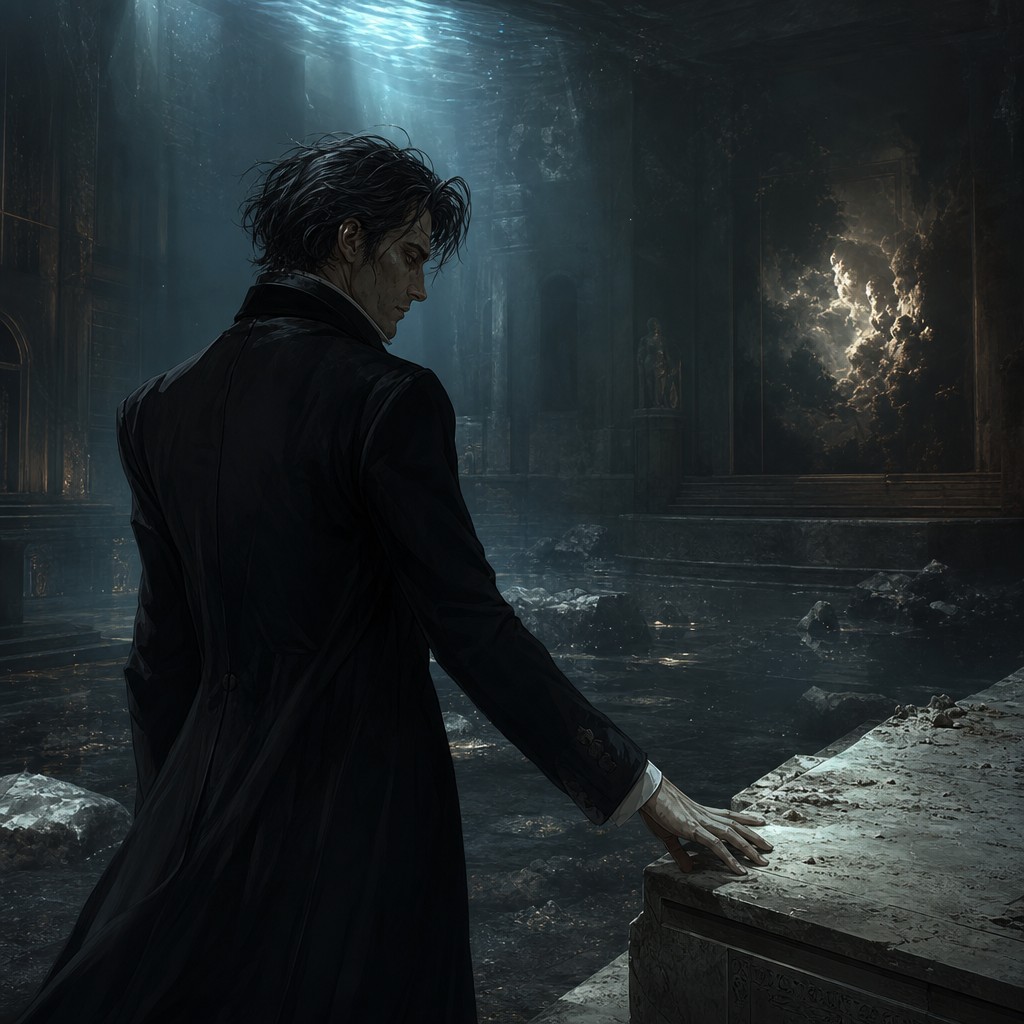
The clarion call of Euphorion's brief ascent has faded. Faust stands alone in the chamber where the boy-poet burned too bright and fell — where the ideal itself proved mortal. The stage is stripped, almost makeshift in its emptiness, a kind of archaeological ruin of wonder. He does not move with urgency. He strolls through the space uncertainly, as one might through a mortuary of one's own making. His hand touches the stone where the child-genius vanished and there is no comfort in the gesture — only the invigorating ache of having witnessed something indestructible burn away. The longing remains, splendidly intact, but it has changed. It is no longer hunger for the thing itself, but hunger sharpened by the knowledge of its cost. He has learned what the cosmic permits and what it denies. This is the quality of striving after all — not bliss, but the terrible, indestructible memory of bliss.
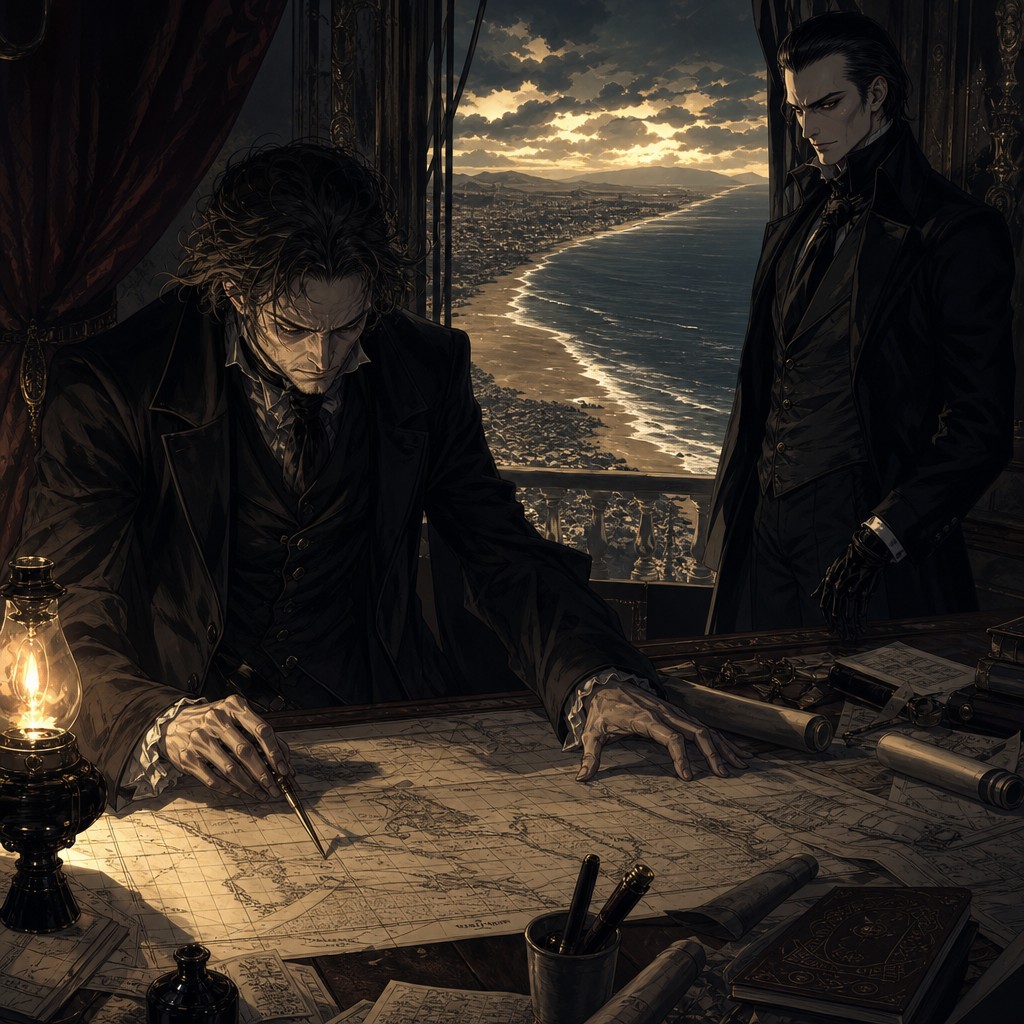
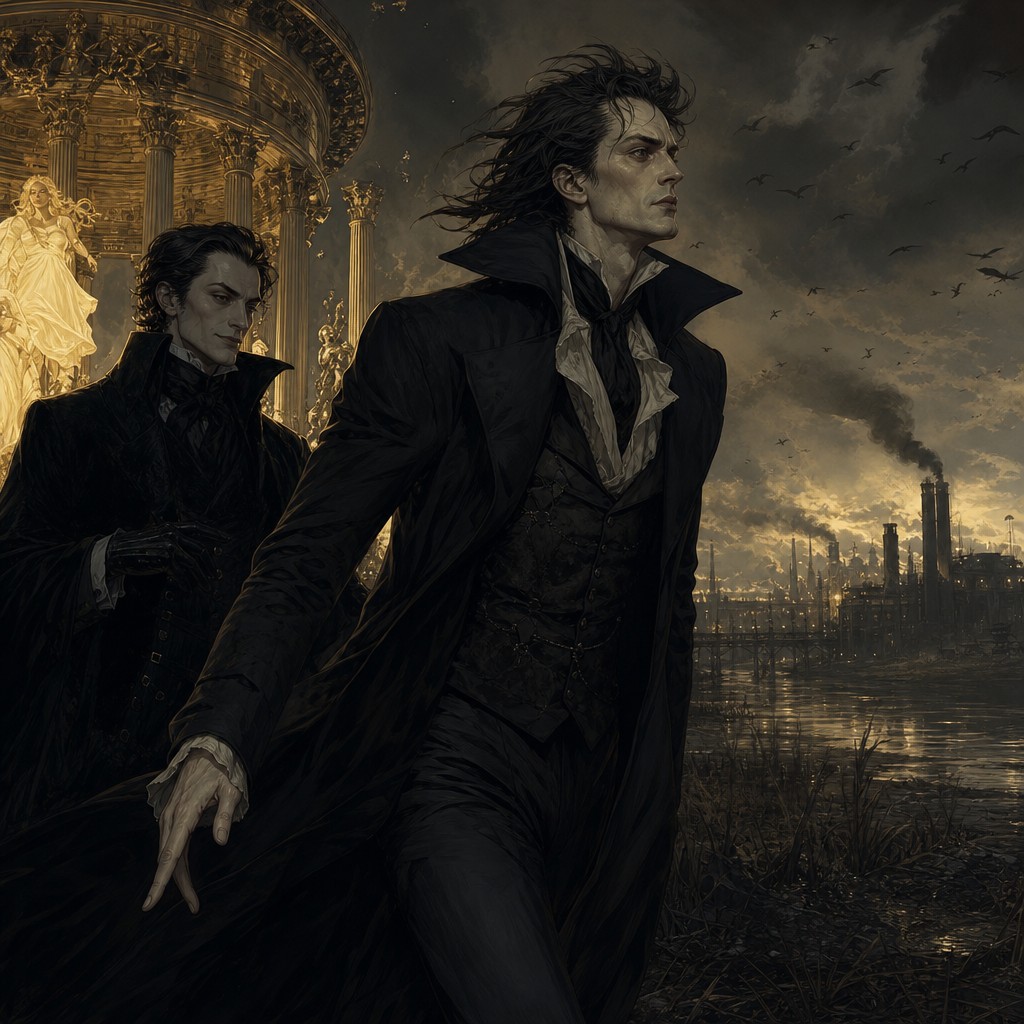
Beauty held him suspended — but only for a moment. He turns from Helena's luminous visage, from the languorous communion with the perfect, and pivots toward the estuary beyond, toward the gross and muddied world of matter and making. He has glimpsed the divine. Now he must build. There is no repose in transcendence for one who strives. The framework of his ambition reasserts itself — not intellectual appetite now, but something rawer: the hunger to remake existence itself through action, through will, through the technological sublime of draining swamps and raising cities where only pasture lay. Euphorion lies fallen behind him — a casualty of the gap between vision and flesh. The lantern of contemplation dims. The battle begins anew. Faust strides forward, visionary and ruthless, ready to excel or perish in the attempt. Behind him, Mephisto follows with aristocratic poise, haunting charismatic demonic nobility intact, entirely unsurprised by any of this.
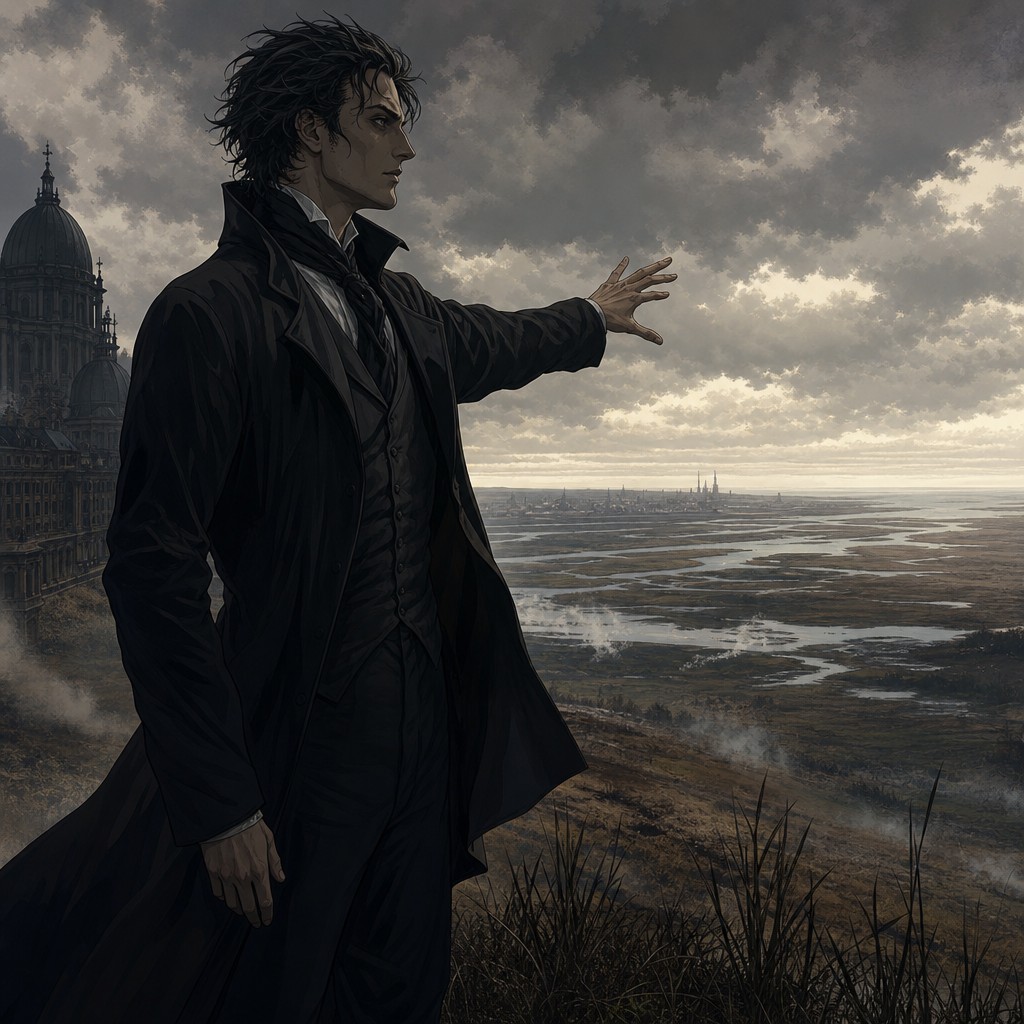
He stands upon a rise of meadowland, his gaze sweeping across a landscape where earth meets sky in a blur of possibility. The imperial court recedes into shadow — its classical forms now merely backdrop to a newer hunger. Before him stretches territory: wetland, fen, patient turf waiting to be drawn into order. His hand extends toward the horizon with the gesture of a man who has exhausted metaphor and now demands material consequence. This is no longer the restless scholar grappling with invisible forces. This is Faust as merchant of transformation — questioning what the earth might yield when subjected to will and engineering. The light falls grey and even, neither dawn nor dusk: the illumination of work itself, of projects incumbent upon the living, of monumental labor that extends beyond love, beyond knowledge, beyond even the pact itself. The Faustian hunger has found its final, most dangerous form: not to know, not to possess, but to remake the very ground beneath civilization's feet.
Maps and charts scatter across the table — grids of measurement, penciled boundaries, the geometry of ambition made visible and grievously literal. He has moved beyond the scholar's tower, beyond the lover's torment, into a new register of striving: the conquest not of souls but of earth itself. The shore stretches untrodden, a bauble of nature awaiting his hand. There is no dialogue here — only the weight of command, the sensation of standing atop a penthouse of power looking down at what might be reclaimed, engineered, made to serve the will. The surveyor's lancet marks the map. The coastline hums with potential. Faust's face bears the peculiar gravity of a man who has ceased to ask permission and begun to eliminate all obstacles. The dreg of hesitation has burned away. Only the hunger remains — vibrant, shockingly clear, frighteningly vast. And behind him, Mephisto watches with uncanny intelligence, entirely unimpressed and entirely complicit.
❦ FIN ❦